REVIEW · YEREVAN
Private Tour: Garni-Geghard-Tsaghkadzor-Sevan
Book on Viator →Operated by Memory Maker Travel Armenia · Bookable on Viator
Sun-temple to lake views in one day. This private Armenia route strings together Garni, the Geghard monastery, Tsaghkadzor, and Lake Sevan so you get big variety without changing hotels or doing extra planning. I like that it runs with a private, air-conditioned vehicle plus pickup offered, which keeps the day smooth even if your schedule is tight.
I also like the human touch: Friendly local English/Russian-speaking drivers share key info on each stop and focus on safe, steady driving. One thing to consider: even though the itinerary lists admission ticket free for the main sights, entrance fees aren’t listed as included, and the cable car costs extra.
In This Review
- Key Highlights at a Glance
- The Real Value of This Private Garni–Geghard–Sevan Day
- Garni Temple: Ionic Columns and a Sun-God Origin Story
- Geghard Monastery: Why It’s Called The Spear
- Tsaghkadzor: A Mountain Town With Cable Car Engineering
- Lake Sevan: The Big High-Altitude Lake in Armenia
- Sevanavank: A Monastery That Changed Shape With the Lake
- Pickup, Private Group Size, and How the Day Flows
- Who Will Enjoy This Tour the Most?
- Price and Logistics: Is $150 a Good Deal?
- The Human Factor: Drivers Levon and Teresa
- Should You Book This Private Tour?
- FAQ
- What places does this private tour include?
- How long is the tour?
- Is pickup from Yerevan included?
- How many people are in a group?
- What language is the driver?
- Is Wi-Fi available during the tour?
- Are entrance fees included?
- Are cable car tickets included?
- What is the cancellation policy?
Key Highlights at a Glance
- Private door-to-door style pickup from Yerevan with your own group (up to 3)
- English/Russian driver + Wi-Fi during the tour to keep you informed and connected
- Garni Temple in Ionic style with a story that shifts from sun worship to Christian-era reuse
- Geghard as a UNESCO site tied to the spear relic legend and a serious medieval setting
- Tsaghkadzor’s cable car numbers (including the 6175 m ski-lift and big altitude change)
- Lake Sevan + Sevanavank on a peninsula created when the lake level fell about 20 m
The Real Value of This Private Garni–Geghard–Sevan Day
This tour is priced at $150 per group for up to 3 people, running about 7 to 8 hours. That pricing matters, because it turns a long drive through Armenia into something you can share—especially if you’re a small family or two friends who want comfort and conversation instead of waiting around with a crowd.
What you’re really paying for is time and attention. You get a single private vehicle (air-conditioned), a local English/Russian-speaking driver, and Wi-Fi during the tour—small things that add up on a day that includes several major sites. If you’ve only got a short window in Armenia, this kind of routing helps you see a lot without burning hours on logistics.
The route also has built-in contrast. You start with a pre-Christian temple at Garni, move into UNESCO-listed medieval architecture at Geghard, then head to the modern mountain town of Tsaghkadzor before ending at high-altitude Lake Sevan and the dramatic Sevanavank peninsula monastery. It’s not just check-the-box sightseeing; the stops tell a story of faith, power, and landscape change across centuries.
You can also read our reviews of more private tours in Yerevan

Garni Temple: Ionic Columns and a Sun-God Origin Story
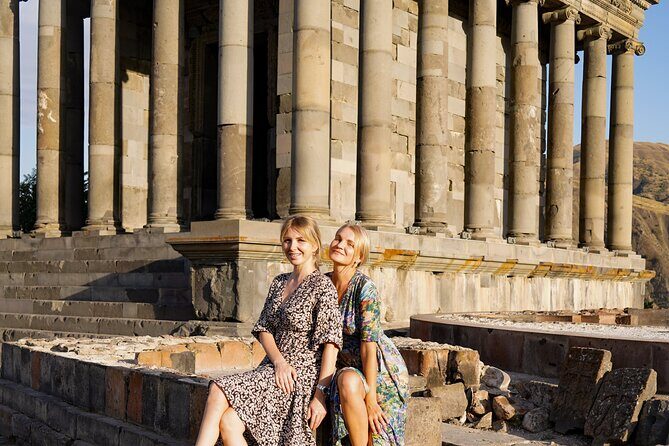
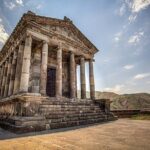
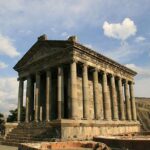
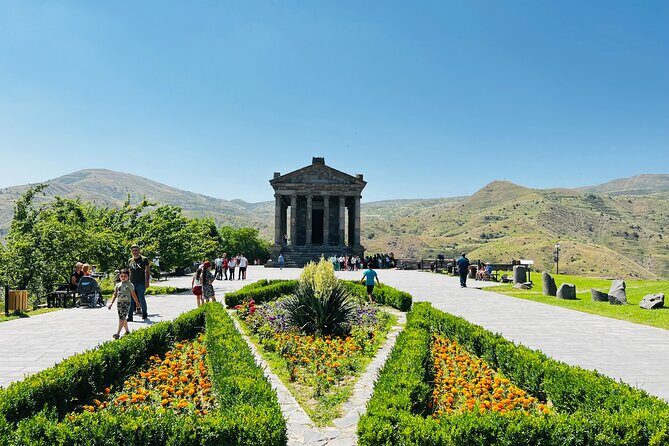
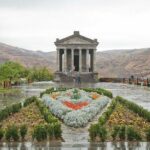
Your day begins in Garni, where the famous temple stands out because it’s built in an Ionic style—a clear sign of how connected Armenia was to wider Mediterranean architectural ideas. This is the most well-known building in pre-Christian Armenia, and the simple fact that it still looks so formal and precise makes the whole site feel important, even before you learn the details.
The likely timeline goes like this: the building was most likely constructed by King Tiridates I in the first century AD as a temple for the sun god Mihr. Then Armenia converted to Christianity at the start of the fourth century, and the temple was transformed into a royal summer residence connected to Khosrovidukht, the sister of Tiridates III. Some academics even argue it may have been closer to a mausoleum than a temple, which is part of why pagan buildings were reportedly destroyed while this one survived.
How long it feels depends on what you care about. You’ve got about 1 hour here, and that’s enough to read the key background, walk the main areas, and take in the scale. The main drawback is that a single hour can feel short if you want extra time for photos and a slower pace of reading. But for a packed day, Garni works because it gives you a strong starting “wow” and then sets you up for the next stop’s medieval depth.
Practical note: the itinerary lists admission ticket free for this stop, but since entrance fees aren’t stated as included overall, it’s smart to stay flexible and confirm on the day what applies.
Geghard Monastery: Why It’s Called The Spear
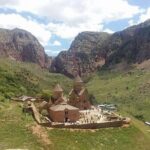
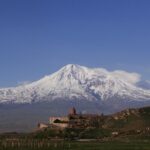
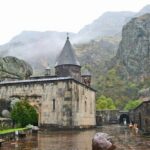
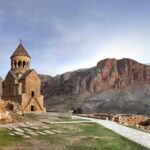
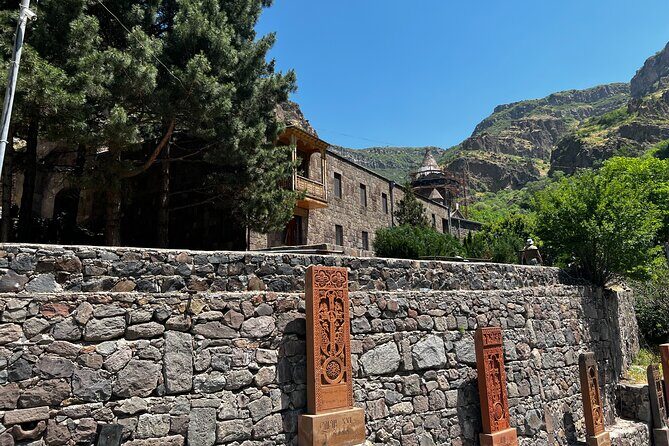
Next comes Geghard—the name means spear, and the story attached to it gives you instant context for why people make a point of visiting. It’s a medieval Armenian monastery and part of a UNESCO World Heritage Site, so the setting is not only beautiful, it’s protected and recognized for its cultural importance.
Here’s the relic legend that makes Geghard stand out in people’s minds: the spear that wounded Jesus at the Crucifixion is allegedly connected to Armenia via Apostle Jude, also known here as Thaddeus. The idea is that the spear was brought to Armenia and kept among other relics. Today, you can understand the chain of custody through the fact that it’s now exhibited in the Treasury of Echmiadzin.
You’ll have about 1 hour at Geghard. That’s usually a good match for a site like this because there’s a lot to see in a compact time window, but it’s not so short that you feel rushed in every direction. The main consideration is language and pace: a site can become overwhelming if you don’t get the story. The tour’s driver-led explanation is useful here, and it’s especially helpful if you’re more interested in the meaning than just the stones.
If you like your history tied to specific names and places, Geghard delivers. It’s not vague. You leave knowing what the name refers to and how the relic story links Armenia to early Christian tradition.
Tsaghkadzor: A Mountain Town With Cable Car Engineering
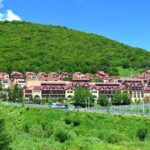
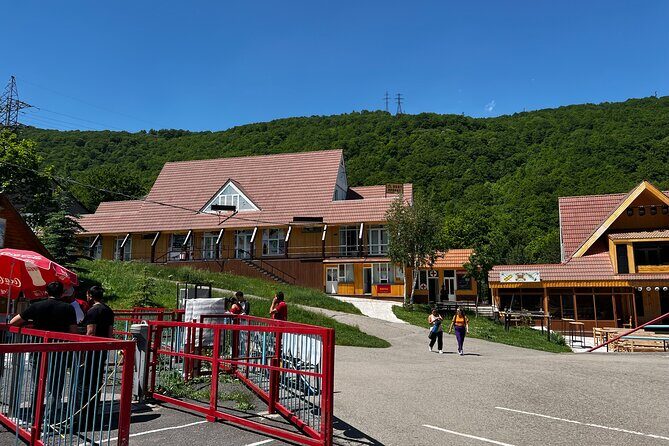
After the sacred weight of Geghard, Tsaghkadzor changes the mood. It’s described as a very hospitable city where nature shows up in full view, and a big part of the experience is the cable car system built with high European standards.
The headline number is that there’s a 6175 m long ski-lift that takes skiers from 1966 m up to 2819 m above sea level. Even if you’re not skiing, those altitudes help you understand why the place feels different from Yerevan: you’re going higher into a thinner, colder-feeling air where views tend to widen and the atmosphere shifts.
Your time here is about 1 hour, which fits the purpose of this day trip. You can enjoy the town feel and see how people use Tsaghkadzor for rest and activity. One important cost reality: the itinerary notes that cable car tickets are not included. If you want the full experience, plan for that extra add-on.
Also, because Tsaghkadzor is a place people associate with skiing, it can feel more seasonal than some church-and-monument stops. Still, the cable car infrastructure is the feature you’d come for year-round if you enjoy vantage points and structured mountain transport.
Lake Sevan: The Big High-Altitude Lake in Armenia
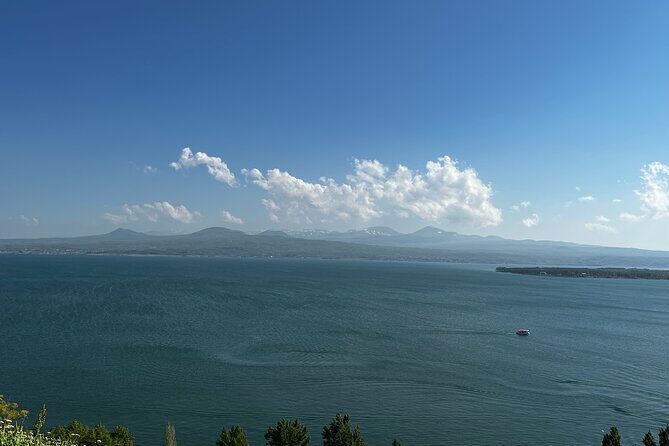
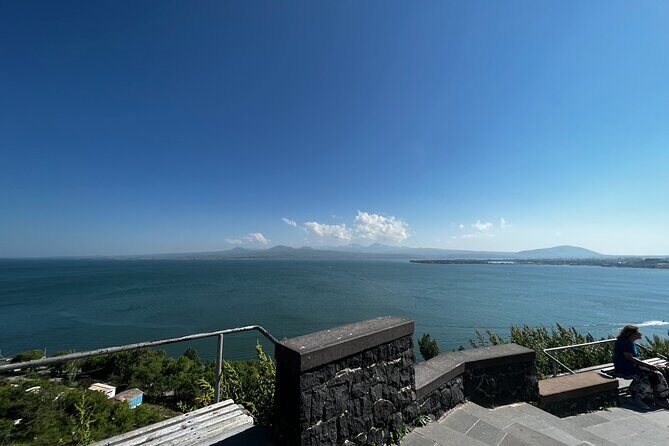
Then you hit the big finish: Lake Sevan. It’s the largest body of water in Armenia and the Caucasus region, and it’s one of the largest freshwater high-altitude (alpine) lakes in Eurasia. The lake sits at an altitude of 1,900.44 m, which matters because it affects how the day feels—cooler air, wide open skies, and a different kind of light.
Sevan is also described as being fed by 28 rivers and streams, which helps you understand why it functions like an ecosystem, not just a view. It has serious economic and cultural weight too. The numbers in the itinerary are striking: Sevan provides about 90% of the fish catch and 80% of the crayfish catch of Armenia. That’s a practical detail that turns the lake from scenery into something tied to everyday life.
You’ll spend about 30 minutes here. That’s not a long sit-and-stare time, but it’s enough to appreciate scale and get photos without losing the rest of your day. If you’re the type who likes long breaks, you might wish you had more time at the water. But this tour keeps moving so you also reach Sevanavank on the peninsula.
Again, admission is listed as ticket free for the Lake Sevan stop. Entrance fees aren’t listed as included overall, so if you see anything that requires a ticket, it’s worth understanding what’s required before you assume it’s covered.
Sevanavank: A Monastery That Changed Shape With the Lake
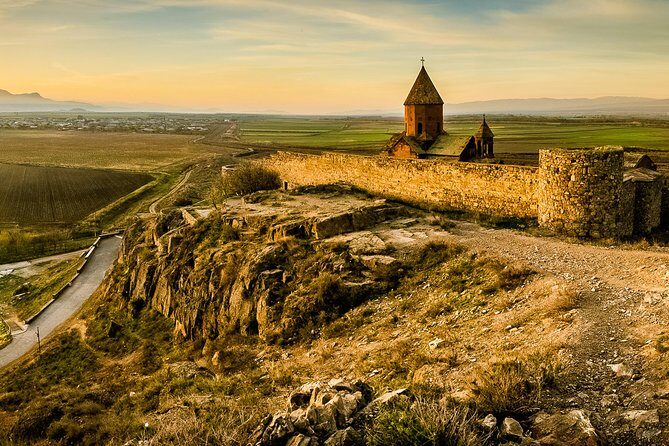
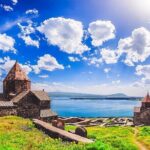
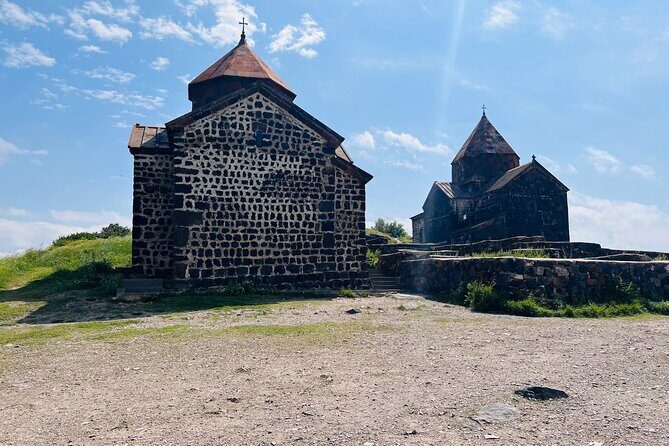
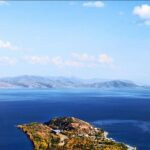
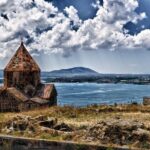
Your final spiritual and visual highlight is Monastery Sevanavank, sitting on a peninsula at the northwestern shore of Lake Sevan. The story of how it got there is part of the point.
Sevanavank was initially built at the southern shore of a small island. Then an artificial draining of Lake Sevan began during the era of Joseph Stalin, and the water level fell about 20 metres. That shift turned the island into a peninsula—so the monastery’s setting is literally the result of a major human intervention.
The tour context also mentions how different parts of the shoreline developed after that change. A guesthouse of the Armenian Writers’ Union was built at the southern shore of the newly formed peninsula. The eastern shore is associated with the Armenian president’s summer residence, while the monastery’s active seminary moved to newly constructed buildings at the northern shore. In other words, this isn’t an isolated ruin. It’s a living monastic site in a region with modern institutions nearby.
You’ll have about 45 minutes at Sevanavank. That’s a good length for a peninsula monastery: enough time to walk, take in views, and understand how the lake’s water-level change reshaped the place around it.
This is also where the day makes emotional sense. Garni and Geghard focus on religious identity across eras; Tsaghkadzor offers a modern high-mountain experience; Sevanavank lands you at the intersection of religion, nature, and history shaped by policy and engineering.
Pickup, Private Group Size, and How the Day Flows
This is a private tour/activity, so it’s just your group—up to 3 people. That small size can be a big deal on a day with multiple stops. You’re not stuck waiting for others, and you can move at a pace that fits your interests.
Pickup is offered, and you travel in an air-conditioned vehicle with a driver who speaks English/Russian. The itinerary includes Wi-Fi during tours, which helps for quick maps, translation support on the phone, or just cooling off mentally after a long drive.
The pacing is built around short, focused visits: about 1 hour at Garni, 1 hour at Geghard, 1 hour at Tsaghkadzor, 30 minutes at Lake Sevan, and 45 minutes at Sevanavank. Add travel time between stops and you get your 7 to 8 hours total.
For most people, that structure is efficient. For some, it can feel like a lot if you like to linger. If you’re the type who wants slow mornings and long, quiet contemplation, you’ll want to accept that this day is designed to pack in the landmarks.
Who Will Enjoy This Tour the Most?
This tour fits best if you want a classic Armenia route with minimal friction. I think it’s especially good for:
- Small groups who can split the cost and want a private vehicle
- People who prefer a driver who explains stories, not just drives you
- Visitors who like variety: ancient temple, UNESCO monastery, mountain town, and high-altitude lake
It also seems like a safe bet for couples who want a full day without coordinating multiple tickets and transport options. The big advantage is that the route is structured, and the driver handles the flow.
The itinerary describes the tour as suitable for most travelers, which suggests it’s not aimed only at hardcore hikers or people seeking intense physical challenges.
Price and Logistics: Is $150 a Good Deal?
Let’s talk value plainly. The tour is $150 per group (up to 3) for roughly 7 to 8 hours. If you fill the group, that’s about $50 per person for a full day with private transport and a local English/Russian driver. For Armenia, that’s the kind of pricing that makes sense when you compare it to the cost of separate taxis plus the time spent coordinating.
Your included items are also useful:
- Air-conditioned vehicle
- Private transportation
- English/Russian speaking driver
- Wi-Fi during tours
What’s not included is also clear:
- Entrance fees (listed as not included)
- Cable car tickets (also not included)
So the real cost picture depends on what you do at Tsaghkadzor. If you plan to use the cable car, budget extra. For the church and monastery stops, the itinerary lists admission ticket free, which can keep the day predictable—but because entrance fees are not stated as included, keep a little wiggle room in your planning.
The Human Factor: Drivers Levon and Teresa
One reason this tour seems to work for people is the care in communication and driving. The experience notes highlight fast, reliable service, and names like Levon and Teresa come up in the context of making the day feel supportive and smooth.
In practice, that means you’re not just being dropped at the door. The driver is described as informative on history and taking good care on the road. Even on a scenic day, safe driving and clear explanations can make the difference between a rushed outing and a trip you feel good about afterward.
If you value a calm, confidence-building guide presence, that’s a big plus.
Should You Book This Private Tour?
Book it if you want a well-paced sampler of Armenia that covers Garni, Geghard, Tsaghkadzor, and Lake Sevan/Sevanavank in one day, with private transport and a driver who explains the meaning behind the places. The group size cap and the $150 per group price make it especially attractive for up to three people who want comfort and structure.
Think twice if you’re planning to use the cable car and want it included in the base price, because the tour specifically notes that cable car tickets aren’t included. Also, if you hate time limits and prefer slow visits, the fixed stop lengths may feel a bit tight—though they’re reasonable for seeing five major sights in one day.
Bottom line: if you’re here for a short stay and you want the highlights connected by a single, friendly team, this is a strong way to spend your day.
FAQ
What places does this private tour include?
It includes Garni, the Monastery of Geghard, Tsaghkadzor, Lake Sevan, and Monastery Sevanavank.
How long is the tour?
It runs about 7 to 8 hours.
Is pickup from Yerevan included?
Pickup is offered.
How many people are in a group?
This is a private tour for only your group, up to 3 people.
What language is the driver?
The driver speaks English and/or Russian.
Is Wi-Fi available during the tour?
Yes, Wi-Fi is provided during tours.
Are entrance fees included?
Entrance fees are not included. The itinerary lists admission ticket free for the listed stops.
Are cable car tickets included?
No, tickets for the cable car are not included.
What is the cancellation policy?
Free cancellation is available up to 24 hours in advance for a full refund. If you cancel less than 24 hours before the start time, the amount paid is not refunded.