REVIEW · YEREVAN
Yerevan: Garni, Geghard, Symphony of Stones & Lavash Baking
Book on Viator →Operated by ONE WAY TOUR · Bookable on Viator
Ararat appears quickly on this Armenia day trip. You start at Charents Arch for a Mount Ararat viewpoint, then move through UNESCO sites like Geghard and the Symphony of Stones, with a final stop for lavash baking. I love how the route ties Armenia’s symbols to real places, not just photos.
Two things I really liked: the stories from guides such as Igor, Yegor, Gyorg, Hasmik, and Taku—you can tell they enjoy connecting history to what you’re standing in front of—and the scenery that changes from cliff-carved monastery to basalt “organ” formations. The day runs at a comfortable pace for a group up to 20, and the big monuments are paired with short, focused time for looking around.
One thing to consider: some parts of the day depend on weather and sky conditions. If Ararat is hidden by clouds or if conditions are rough (snow, etc.), your experience can shift—so build in a bit of flexibility and keep expectations realistic.
In This Review
- Quick takes from this Yerevan Garni–Geghard day
- A practical 6-hour Yerevan plan: history plus nature in one go
- Charents Arch viewpoint: Rafael Israelyan, Mount Ararat, and a poem in stone
- Geghard Monastery: UNESCO cave-carving and the Monastery of the Spear meaning
- Symphony of Stones in Azat Canyon: the basalt organ that looks engineered
- Garni Temple: Mithra shrine, pagan Armenia’s surviving temple, and earthquake history
- Lavash baking master class: learning the bread that anchors Armenian meals
- Price and logistics: is $23 worth it?
- Weather, Ararat visibility, and why the plan can flex
- Who should book this tour (and who might not)
- Should you book this Yerevan Garni–Geghard–Symphony of Stones tour?
- FAQ
- What’s included in the tour price?
- How long is the tour?
- Where does the tour start?
- What time does the tour begin?
- What language is the tour offered in?
- Do I need to pay entrance fees at every stop?
- Is the lavash master class included?
- What’s the group size?
- What if the weather is poor?
- Is there a mobile ticket?
Quick takes from this Yerevan Garni–Geghard day
- Charents Arch: poem engraved in stone, plus a prime Mount Ararat viewpoint
- Geghard Monastery: UNESCO cave-carved complex with the Spear legend tied to Thaddeus
- Symphony of Stones (Azat Canyon): basalt hexagons that look like an organ across the gorge
- Garni Temple: Mithra shrine, the only preserved pagan temple in Armenia and the former USSR
- Lavash master class: watch how Armenian flatbread gets made, then taste your way into the story
- Small group feel: maximum 20 people, with guided context at every major stop
A practical 6-hour Yerevan plan: history plus nature in one go
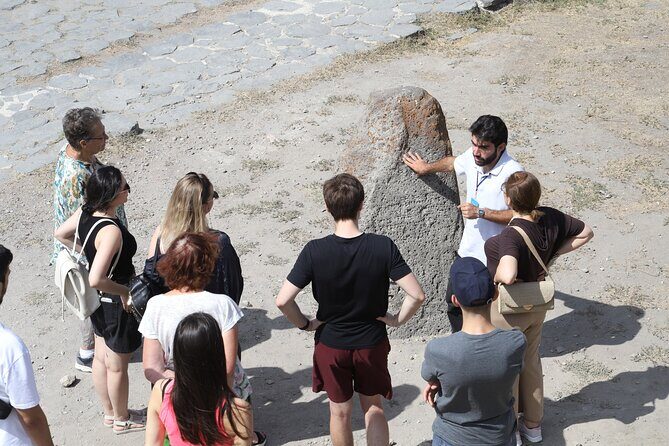
This is a smart day from Yerevan if you want more than a drive-by. You get a full sweep of Armenia’s key themes: early faith and empire (Garni), medieval spiritual life (Geghard), and nature-made sculpture (Symphony of Stones). It’s also timed so you’re not stuck in one place for hours, which matters when you only have a short stay in town.
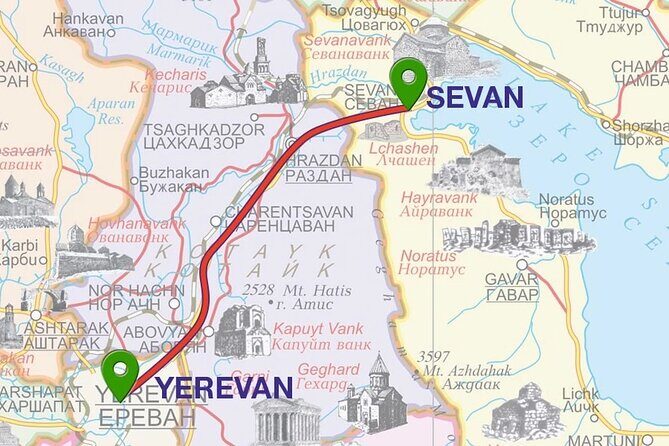
The tour runs about 6 hours, starting at 9:00 am and ending back near the meeting point by the Komitas Yerevan State Conservatory area. Transport and a guide are included, with a max group size of 20, which usually keeps the day organized without feeling like a cattle call.
If you like guided context, this is a good format. You’ll hear the why behind what you’re seeing—names, meanings, and legends—right as you arrive, not after you’ve already walked past the important details.
You can also read our reviews of more tours and experiences in Yerevan.
Charents Arch viewpoint: Rafael Israelyan, Mount Ararat, and a poem in stone
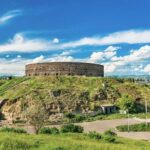
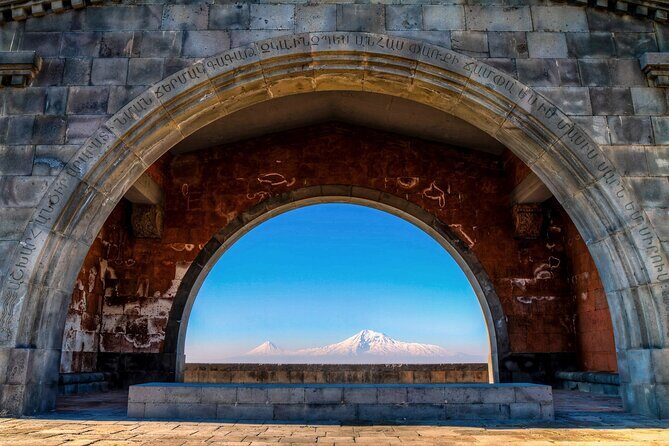
Your first stop is Charents Arch, built in 1957 by architect Rafael Israelyan. It’s called the Mount Ararat Temple in some references, but most people know it today by the more popular name linked to the poet Yeghishe Charents. The front entrance has the poet’s words engraved in big letters, including the line about loving the Masis mountain (Ararat).
Why this stop matters: it sets the mood for the whole day. You’re not just traveling to temples and ruins—you’re starting with Armenia’s Mount Ararat symbol, and you get the visual anchor before the history lessons get heavier.
You’ll be at the viewpoint for about 1 hour. It’s usually enough time to get photos, read the inscription, and enjoy the view. If the sky is clear, Ararat can look stunning. If it’s not, at least you still get a meaningful monument and a calm opening to the day.
Geghard Monastery: UNESCO cave-carving and the Monastery of the Spear meaning
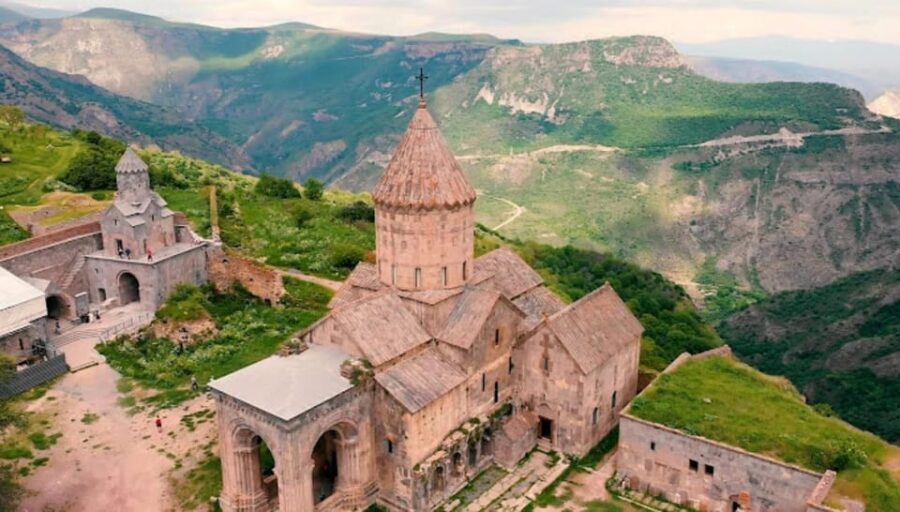
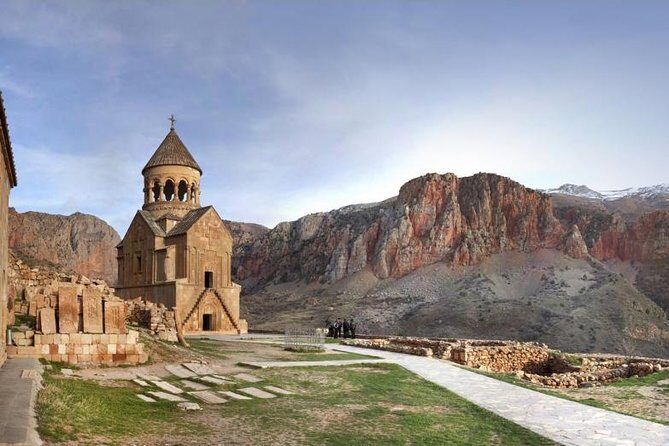
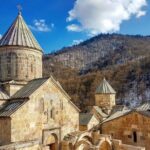
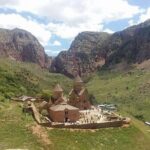
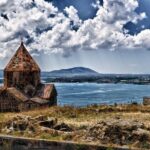
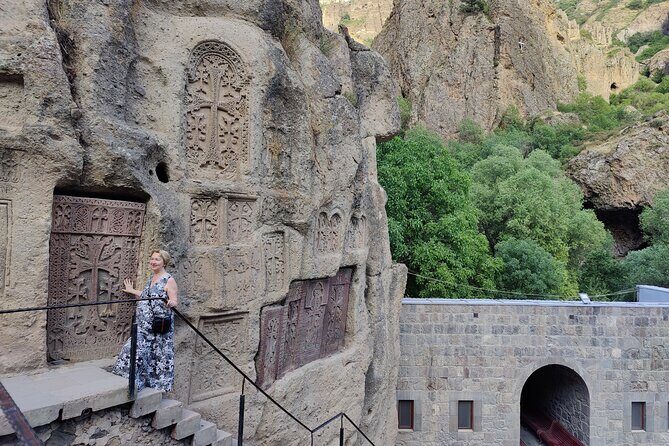
Next comes Geghard Monastery (Geghardavank), a medieval complex partially carved into the mountain and surrounded by cliffs in Kotayk province. It’s UNESCO-listed, and the protection status matters because the site’s fabric is delicate—this is one of those places where you see how architecture and landscape work together.
The name Geghard is tied to a spear legend. The monastery’s name, meaning “the Monastery of the Spear,” connects to a spear associated with the Crucifixion. The story says Apostle Jude is the one who brought the relic to Armenia (often connected here with Thaddeus), and that it was stored among other relics and is now displayed in the Echmiadzin treasury.
You get about 1 hour here, which is ideal for soaking in the main carved spaces without feeling rushed. The best way to enjoy Geghard is to slow down when the guide explains what you’re looking at—carved chambers, stone surfaces, and the way the complex sits in a rocky setting.
One small drawback to plan for: Geghard is visually impressive, so it’s easy to lose track of time. Keep an eye on the group, especially if you want to take extra photos inside darker carved sections.
Symphony of Stones in Azat Canyon: the basalt organ that looks engineered
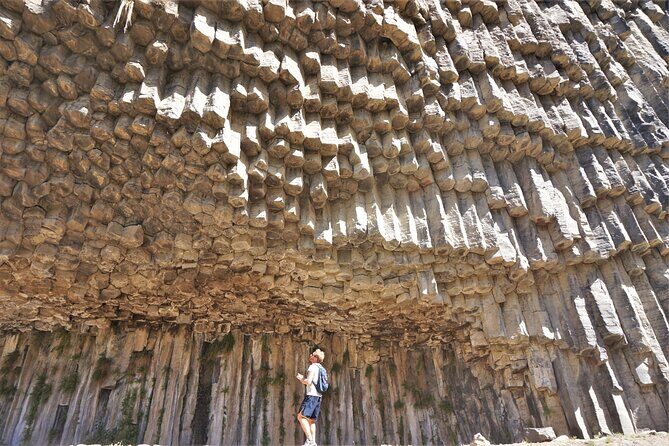
The Symphony of Stones is a natural wonder tied to UNESCO protection, and it’s one of those sights that reads instantly. The basalt formations form a “basalt organ,” with naturally cut stones laid out in long lines across the canyon. The stones are described as hexagonal, and the symmetry is what makes it feel like a sculptor had a plan.
This stop is also linked with Azat Canyon nature time. You’ll have about 1 hour, which is enough to walk around at the viewpoint edges, absorb the geometry, and let the scale sink in.
Important practical note: this is one place where weather can affect what you can see and how comfortably you move around. If snow or rough conditions hit, your day can change. That’s not a deal-breaker—the monastery and Garni are still major anchors—but it’s smart to accept that this stop is the most weather-sensitive feeling in the mix.
There’s also a small entrance fee here (listed as 300 AMD, not included). If you’re watching costs, keep that amount in mind when budgeting your day.
Garni Temple: Mithra shrine, pagan Armenia’s surviving temple, and earthquake history
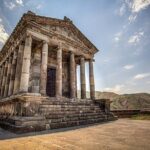
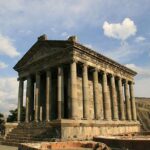
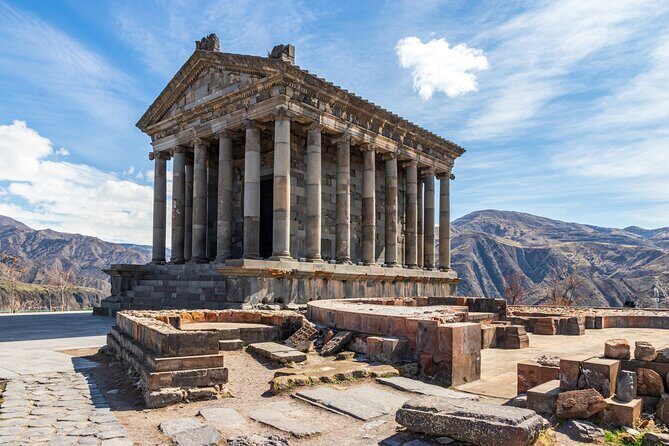
After the canyon stop, you’ll reach Garni Temple, built in the first century. This is a pre-Christian Armenia site dedicated to Mithra, the sun god. The big headline: it’s described as the only preserved pagan temple both in Armenia and in the territory of the former USSR.
Garni also has a recovery story. The temple was destroyed in a devastating earthquake in 1679, then restored later over about eight years, from 1968 to 1975. That restoration timeline is worth remembering because it helps you see the temple as something that was rebuilt with care, not just rediscovered as a ruin.
You’ll have about 1 hour here. There’s an entrance fee (listed as 1500 AMD, not included), so plan on paying that on-site.
If you love ancient architecture or you’re the type who reads inscriptions and construction details, Garni rewards that attention. And if you’re less into architecture, it still works because it’s a clear, iconic site with a strong story behind it.
Lavash baking master class: learning the bread that anchors Armenian meals
The day ends with lavash baking. You’ll spend about 40 minutes, and the master class is included in the tour price.
Lavash is more than bread in Armenia—it’s cultural glue, the kind of food that shows up in daily life and celebrations. Watching it get prepared helps you understand why it matters so much. Even if you don’t think you’re a “food person,” this is a good stop because it’s short and tied to the bigger theme of identity.
Do note a timing reality: the master class is brief. Based on past experiences with this type of stop, the format can vary from more explanation to a quick demonstration with a chance to taste. Either way, the value is in connecting the idea of lavash to the real process—flour, dough, heat, and the skill of getting the timing right.
Price and logistics: is $23 worth it?
For $23 per person, you’re paying for a lot of structure: guide service, transport, and the lavash baking master class. On top of that, several key areas have free admission (Charents Arch and Geghard are listed as free), so your main extra costs are the paid sites: Garni (1500 AMD) and Symphony of Stones (300 AMD).
Whether it feels like a good deal depends on how you would otherwise spend your time. If you were to hire separate transport or go without a guide, you’d likely lose the story layer that makes Geghard and Garni click. And that story layer is the reason this tour gets such high satisfaction—guides named in feedback like Igor, Yegor, Gyorg, and Hasmik are praised for explaining what you’re seeing without making it boring.
This is also a tour with enough built-in stops to count as a full day. You’re not just “driving to one thing.” You’re getting viewpoints, UNESCO sites, and the bread experience.
Weather, Ararat visibility, and why the plan can flex
Ararat visibility is the big wildcard. The tour starts with a viewpoint designed for that exact symbol, but clouds happen. If fog or low visibility hides the peak, you may feel the impact most at Charents Arch.
Snow and winter conditions can also affect whether you can access parts of the route comfortably. When that happens, the schedule can adjust. The good news: even with a change, you still hit the other major anchors like Geghard and Garni.
My advice: pack for a range of conditions (layers beat one heavy coat). And don’t let a missed Ararat view ruin the day—this route is built on more than a single photo moment.
Who should book this tour (and who might not)
This tour fits best if you want a guided intro to Armenia’s monuments without building a complicated plan yourself. It’s also a strong match for solo travelers—small-group pacing makes it easier to connect with people, and you’re not stuck negotiating transport or tickets.
You might look elsewhere if you need long free time at each site. The stops are designed to be focused—about 1 hour per main monument and 40 minutes for lavash—so deep, slow wandering isn’t the format.
Also consider your tolerance for short, sometimes-demo-style food experiences. If you’re expecting a long hands-on workshop, you’ll want to set expectations accordingly, because the lavash baking segment is intentionally brief.
Should you book this Yerevan Garni–Geghard–Symphony of Stones tour?
I think you should book it if your goal is a high-value day that blends UNESCO sites with real local culture, starting with a classic Mount Ararat viewpoint. The route is efficient, the stop sequence makes sense, and the extra guide context is the kind of value that’s hard to recreate on your own.
If weather scares you, don’t cancel your optimism—just go in knowing that skies and access can shift. Even then, the combination of Geghard and Garni alone makes the trip worth it, and the lavash finish gives the day a friendly, human ending.
FAQ
What’s included in the tour price?
The tour includes guide service, transport service, and the lavash baking master class.
How long is the tour?
The tour lasts about 6 hours.
Where does the tour start?
It starts at the Komitas Yerevan State Conservatory, 1a Sayat-Nova Ave, Yerevan 0001, Armenia.
What time does the tour begin?
The start time is 9:00 am.
What language is the tour offered in?
The tour is offered in English.
Do I need to pay entrance fees at every stop?
No. Charents Arch and Geghard are listed as free. Garni has an entrance fee of 1500 AMD, and Symphony of Stones has an entrance fee of 300 AMD (both not included).
Is the lavash master class included?
Yes. Lavash baking is included, and it lasts about 40 minutes.
What’s the group size?
The maximum group size is 20 travelers.
What if the weather is poor?
This experience requires good weather. If it’s canceled due to poor weather, you’ll be offered a different date or a full refund.
Is there a mobile ticket?
Yes, you get a mobile ticket.