REVIEW · YEREVAN
Tsitsernakaber-Hripsime-Echmiatsin-Noy brandy factory
Book on Viator →Operated by central tour · Bookable on Viator
A morning in Armenia can hit hard fast. This small-group tour strings together UNESCO church sites and the Armenian Genocide memorial, then finishes with a classic Yerevan-style brandy tasting.
I really like that you get an organized rhythm: first the memorial and its museum context, then the medieval church world at Etchmiadzin/Echmiatsin, and finally the easy, fun tasting stop. I also love the guide angle—Nvard, for example, gets people oriented fast and helps with details (including solo-photo help). One consideration: Echmiatsin Cathedral itself is under restoration, so you’ll see it from the outside rather than going inside that main space.
You’ll want to be ready for two very different moods. Tsitsernakaberd is solemn, with an eternal flame and a museum that doesn’t look away. After that, the day turns practical and enjoyable at the Noy factory, where the tasting includes port wine from 1941 and two brandies. The drawback is simple: the program is paced, so if you’re the type who wants hours inside churches, you might feel a bit rushed at the end.
In This Review
- Key highlights worth planning around
- Tsitsernakaberd: a clear, moving start in Yerevan
- Saint Hripsime Church and Catholicos Komitas’s legacy
- Echmiatsin (Holy Sea): outside views now, with the museum doing the heavy lifting
- Saint Gayane Church: why Armenia’s conversion story matters
- NOY Yerevan Ararat Brandy-Wine-Vodka Factory: port wine from 1941 and two brandies
- Price and logistics: does $100 feel fair?
- A small-group tour where the guide matters
- Should you book the Tsitsernakaberd–Hripsime–Echmiatsin–Noy tour?
- FAQ
- How long is the tour and what time does it start?
- Is pickup offered?
- Is Etchmiatsin Cathedral accessible during the visit?
- Is admission free at Tsitsernakaberd and Saint Hripsime?
- What relics are shown at the Echmiatsin museum?
- What’s included in the NOY factory tasting?
- Is lunch included, and how much does it cost if I want it?
- How big is the group?
- Can I cancel and get a refund?
Key highlights worth planning around
- Tsitsernakaberd starts your day with the Armenian Genocide memorial and museum
- Saint Hripsime is a 7th-century UNESCO church tied to Catholicos Komitas
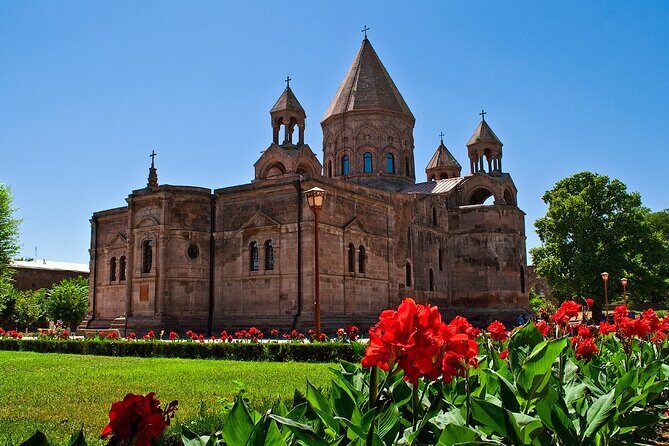
- Echmiatsin Cathedral is outside-only right now, but the museum is part of the stop
- You’ll also visit Saint Gayane and learn about Armenia’s religious conversion
- NOY tasting includes port wine from 1941 plus two types of brandy
- Max 15 people means the guide can actually manage the group
Tsitsernakaberd: a clear, moving start in Yerevan
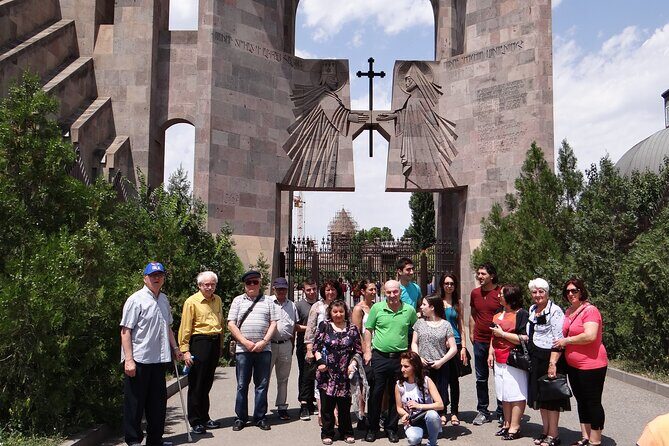
Tsitsernakaberd (you’ll hear it as Tsitsernakaberd in English) is where this tour begins, and it’s the kind of first stop that sets the tone. The memorial complex centers on a tall granite stele, surrounded by twelve slabs meant to represent the twelve provinces of historic Western Armenia. At the base, there’s an eternal flame—a detail that sounds symbolic on paper, but lands differently in person.
You’ll also have museum time, and that’s important. The memorial is powerful, but the museum gives you the background—history, context, and the atrocities—so you aren’t just looking at monuments without knowing what they’re pointing to. The stop runs about 45 minutes, and since admission is free, this is one of those high-value segments where you don’t have to negotiate the cost or worry about hidden ticket fees.
Practical tip: Tsitsernakaberd is reflective. Plan to dress respectfully and take a moment before you rush to photographs. If you’re prone to sensory overload, give yourself a minute to breathe before you step into the museum spaces. This is the day’s emotional anchor.
You can also read our reviews of more tours and experiences in Yerevan.
Saint Hripsime Church and Catholicos Komitas’s legacy
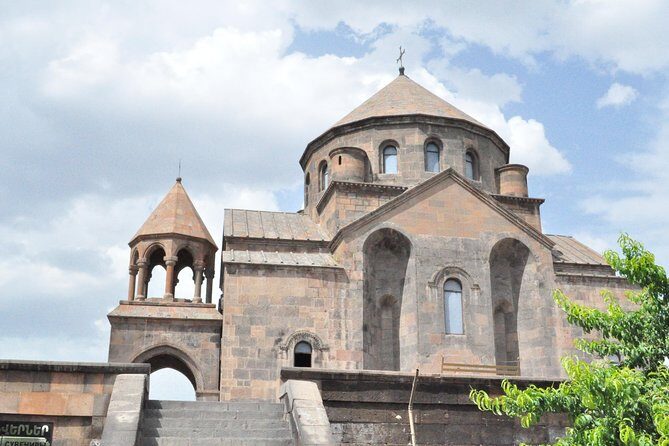
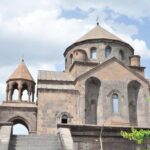
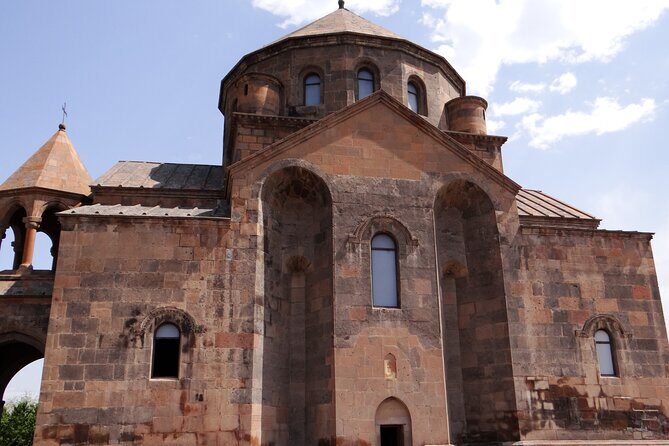
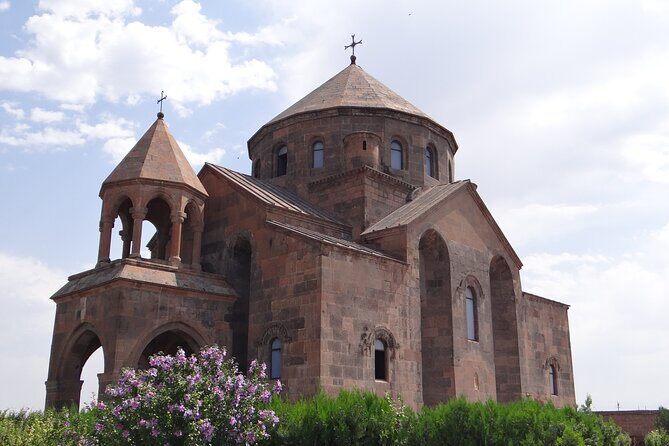
Next comes Saint Hripsime Church, one of the older pillars of the Etchmiadzin area’s UNESCO story. This is a 7th-century church, and the tour schedule gives you about 30 minutes on site.
The connection to Catholicos Komitas matters. The church is linked to the life and work associated with Komitas, and that makes the architecture feel less like frozen stone and more like a marker in a living timeline of Armenian Christianity. Even with limited time, a focused stop like this helps you notice the basics: stonework, proportions, and why older churches have such a steady pull. You also get the guide to help connect what you see to what Armenians believe and celebrate.
Admission is free here, which is a nice bonus. The value is in the interpretation, though. In a short visit like this, your guide’s explanations do more work than you’d expect. So if you’re the kind of person who likes to ask questions, this is a good stop for it.
What to consider: 30 minutes is not long. If you want slow reading of every detail, pair this stop with an earlier arrival to Etchmiadzin another day—or plan to spend your energy on the guide’s key points.
Echmiatsin (Holy Sea): outside views now, with the museum doing the heavy lifting
Echmiatsin—often referred to as the Holy Sea—is the main destination, and it’s one of the most important Christian cathedral centers in the world. The tour’s approach is practical: the cathedral is currently under restoration, and you can see it only from the outside. That means you don’t get the full interior experience on this particular program.
But don’t assume that makes the stop weak. Instead, the tour includes the Echmiatsin museum, and that’s where you’ll spend about an hour. If you’ve ever visited a famous site where access is limited, you’ll recognize the trade-off: you get fewer minutes “in” the cathedral space, but the museum fills in the gaps with artifacts and context.
Two museum highlights are explicitly part of the visit: a part from Noah’s arch and the Holy lance. You might not know what to expect from that in advance, but the point isn’t just the object—it’s the religious and cultural meaning built around them. This is where the site becomes more than a building. You see how relic traditions, Christian identity, and local belief systems come together.
I also like the pacing here. After Tsitsernakaberd and Saint Hripsime, the Echmiatsin stop is a change of gears—from historical tragedy to religious endurance and continuity, told through objects and place-based meaning. It gives your mind a place to land.
If you’re hoping for maximum photo time: outside views are usually best in softer morning light. Wear shoes you can stand in, and keep your camera ready for a few minutes of “quiet looking.” It’s not a drive-by.
Saint Gayane Church: why Armenia’s conversion story matters
The Etchmiadzin UNESCO area isn’t only one church. Saint Gayane is included as the third of the landmarks connected with the UNESCO listing, and the tour frames it around Armenia’s conversion to Catholicism.
You’ll learn that this wasn’t just a political shift—it’s a story people carry through rituals, sacred spaces, and church foundations. The practical value of having a guide here is that Saint Gayane becomes part of a sequence: first you see the older church atmosphere at Saint Hripsime, then you move toward the broader historical religious narrative at the Gayane site.
Time-wise, you won’t spend a full, standalone day there. This is a program with multiple stops, so Gayane is best treated as an interpretive piece. You’re there to understand the “why,” not just to count arches and windows.
Considerations: if you’re particularly focused on art history, you may want more time at the churches. But for most people, the mix works well because the day already balances emotion (Tsitsernakaberd) with architecture and belief (the UNESCO sites), and then ends with a lighter cultural moment.
NOY Yerevan Ararat Brandy-Wine-Vodka Factory: port wine from 1941 and two brandies
After churches and memorials, the tour pivots to a completely different kind of Armenia: craft spirits and tradition. The stop is at Noy Brandy Factory in the Ararat Valley, established in 1877. It’s known for Armenian brandies aged in oak barrels for decades, and the tour makes room for the story behind that aging process.
The best part for many people is the tasting included with admission. You’ll sample port wine from 1941 and two types of brandy. That’s not just a token sip. The program is structured like a mini education in flavors—how time in barrels changes aroma and smoothness, and how local grape inputs and distillation methods shape the final product.
This stop runs about an hour. That’s enough time to take in a guided tour and get a feel for the brand’s style, without turning your afternoon into a long stretch of waiting. It’s also a smart way to end the day: you finish with something pleasant and shareable, and your guide can help translate the basics into plain terms.
A practical note if you’re driving or taking the metro after: you’re tasting alcohol. Even if the amounts aren’t stated, follow your guide’s lead and keep your evening plans in mind.
Price and logistics: does $100 feel fair?
At $100 per person, this tour is priced like a true bundled day: transportation, a local guide, site time, and included tastings. You’re not paying separately for every stop either. Tsitsernakaberd and Saint Hripsime have free admission in the schedule, and Echmiatsin museum admission is included.
The alcohol component also matters for value. Port wine from 1941 plus two brandies isn’t something you’d normally tack on for free, and the inclusion is one reason the price feels reasonable instead of inflated. Add air-conditioned vehicle transport and it starts to make sense as a “time-saver” day—especially if you don’t want to manage intercity timing, tickets, and driving logistics on your own.
Timing-wise, the tour is listed as about 5 hours (approx.), and the UNESCO circuit itself is often presented as a 4-hour experience. Either way, it’s a compact day. You’ll be moving between key places rather than lingering all day. That works best if you like focused sightseeing and don’t need deep museum hours at every stop.
Lunch is not included, but it’s offered as a $15/person add-on if you want it. That’s a fair heads-up so you don’t show up hungry without a plan. I’d treat this as a morning-to-early-afternoon outing, then eat afterward based on your energy.
A small-group tour where the guide matters
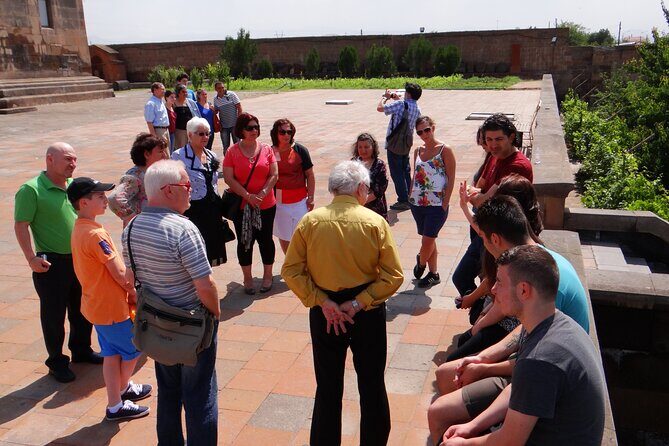
This tour caps at 15 travelers, and that size changes how the experience feels. You get less scrambling, and you’re more likely to hear explanations clearly without your ears constantly fighting background noise. You also get enough flexibility for the guide to help people ask questions and take photos without losing the whole group to one slow moment.
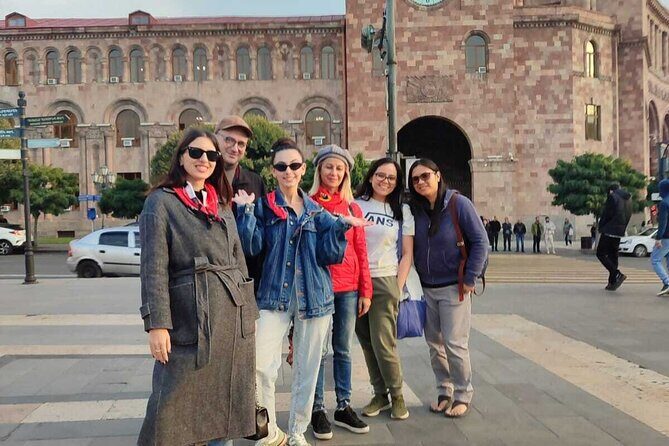
One real standout detail from the experience: the guide can actively support individuals. For example, Nvard is described as speaking English well and being very helpful with questions and history, and even volunteering to help a solo traveler take photos. That’s the kind of “small, human detail” that makes a tour feel less mechanical.
If you’re a first-time visitor to Yerevan and you want a structured day that doesn’t leave you guessing, this is the kind of tour format that helps. And if you prefer to learn from a guide rather than chasing information yourself, you’ll likely appreciate how the stops connect into one storyline—memory, faith, and Armenian cultural craft.
Should you book the Tsitsernakaberd–Hripsime–Echmiatsin–Noy tour?
Book it if you want a focused day that mixes the big emotional center of Armenia with its most meaningful Christian sites, and you also want a fun end point at a real spirits producer. The included tasting—port wine from 1941 plus two brandies—adds real value, and the free admission at Tsitsernakaberd and Saint Hripsime helps keep the cost from feeling like it’s inflated by ticket fees.
Skip it (or look for a longer version) if you’re hoping to spend lots of time inside Echmiatsin Cathedral itself. The cathedral is under restoration, and you’ll see it only from the outside during this program. Also, if you prefer unhurried church time and museum time, you may want a separate, longer visit.
If you’re up for a morning with a serious start and a satisfying, culturally rooted finish, this is a strong pick.
FAQ
How long is the tour and what time does it start?
The tour runs about 5 hours (approx.) and starts at 9:30 am.
Is pickup offered?
Yes, pickup is offered.
Is Etchmiatsin Cathedral accessible during the visit?
No. The cathedral is under restoration, so you can see it only from the outside. The tour includes the Echmiatsin museum as part of the visit.
Is admission free at Tsitsernakaberd and Saint Hripsime?
Yes. Tsitsernakaberd and Saint Hripsime Church both list admission as free on the tour.
What relics are shown at the Echmiatsin museum?
The museum visit includes a part from Noah’s arch and the Holy lance.
What’s included in the NOY factory tasting?
The tasting includes port wine from 1941 and two types of brandy.
Is lunch included, and how much does it cost if I want it?
Lunch is not included. If you need it, it’s listed at $15 per person.
How big is the group?
The tour has a maximum of 15 travelers.
Can I cancel and get a refund?
No. The experience is non-refundable and cannot be changed for any reason.