REVIEW · YEREVAN
6 days in Armenia: Garni, Tatev, Echmiadzin, Sanahin, Haghpat
Book on Viator →Operated by Land of Noah Travel Agency · Bookable on Viator
Armenia hits hard, in a good way. This 6-day private route strings together UNESCO churches and cliff-hugging monasteries, from Garni and Geghard to Echmiadzin and the Lori masterpieces at Haghpat and Sanahin. You also get one big modern wow moment: the Wings of Tatev cable car.
What I like most is how the days feel efficient but not rushed. I especially enjoyed the mix of early Christian sites (Echmiadzin area) with older pagan and medieval architecture (Garni and the forts), so the story of Armenia doesn’t flatten into one style.
One thing to plan for: several stops have admission or special tickets not included, including Garni Temple and the Wings of Tatev cable car. If you’re tight on time for paid entries, budget a little extra on top of the tour price.
In This Review
- Key highlights worth centering your plan
- Armenia in 6 days: from pagan stones to UNESCO churches
- Getting the most out of the Garni Temple and Geghard day
- Garni Temple: Armenia’s Greek-flavored surprise
- Geghard Monastery: the cave monastery vibe actually makes sense
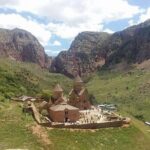
- Noravank and Tatev: monasteries that feel built for height
- Noravank Monastery: medieval Armenian architecture in layers
- Tatev Monastery: give wings, then go see how it works
- Wings of Tatev cable car: the modern shortcut with real payoff
- Kari Lake, Armenian alphabet sculptures, and Amberd Fortress
- Kari Lake: a cold high-altitude pause
- Armenian Alphabet Monument: why 39 letters matter
- Amberd Fortress: fortress in the clouds, and it earns the name
- Sevanavank and Haghartsin: monasteries shaped by water and detail
- Sevanavank Monastery: a peninsula monastery with a view
- Haghartsin Monastery: Dance of the Eagles
- Echmiadzin: the spiritual center and the churches that shaped everything
- Etchmiadzin Monastery: why the name is a clue
- Saint Gayane Church: a 7th-century design with continuity
- Saint Hripsime Church: classical Armenian style and UNESCO status
- Zvartnots Temple: the bright medieval landmark
- Haghpat and Sanahin in Lori: UNESCO monasteries with a real sense of place
- Haghpat Monastery: founded in 976 and built for function
- Sanahin Monastery: the administrative and educational center feel
- Odzun Church: a basilica with a rare gallery feature
- Price and logistics: what $855 buys you, and where you’ll spend extra
- What to wear, how to pace, and how to stay comfortable
- Dress for churches without overthinking it
- Expect altitude moments
- Build lunch into your plan
- Should you book this 6-day Armenia monastery route?
- FAQ
- What areas does this tour cover?
- How many days is the tour?
- How much does the tour cost and how big is the group?
- Is hotel pickup and drop-off included?
- What transportation is provided?
- Are tickets included for all sites?
- Is food included?
- What dress code should I follow?
- Do I need strong physical fitness?
- Is free cancellation available?
- When do I get confirmation after booking?
Key highlights worth centering your plan
- Private group up to 3 with hotel pickup and drop-off
- Mobile ticket and an air-conditioned vehicle for long drives
- UNESCO concentration: Etchmiadzin churches, Zvartnots, Haghpat, Sanahin
- Tatev day with the Wings of Tatev cable car (longest at 5.7 km)
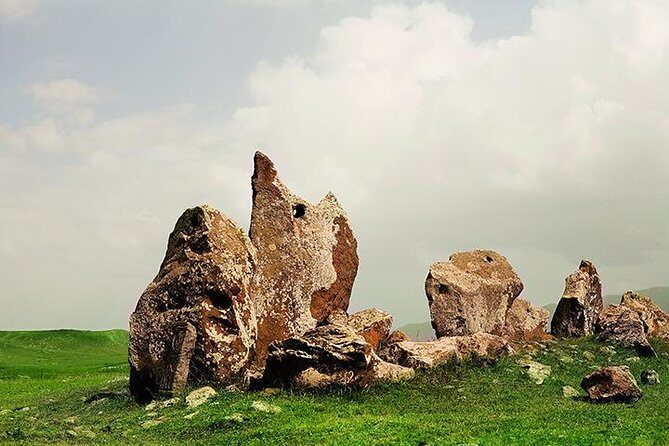
- High-altitude stops like Kari Lake and Amberd Fortress
Armenia in 6 days: from pagan stones to UNESCO churches
This is the kind of itinerary that makes you stop guessing what Armenia is. One day you’re looking at a sun-temple built in the 1st century. Another day you’re in the church complex tied to Armenian Christianity’s center. Then you bounce north toward Lori, where monasteries sit like they were planted into the cliffs over a thousand years ago.
The whole thing works best if you like architectural details and you’re willing to spend time inside churches and monasteries, not just take photos and sprint to the car. Even the “short” stops usually land on the parts that explain why people come here: the setting, the design, and the sense that each building has a job to do in the landscape.
Also, this is private. That matters. You’re not squeezed into a noisy herd. If you have questions, you can ask them and get real answers. In my case, my guide for the first four days was Arman, and he put real energy into explanations and pacing. The last day he was quieter, but the route still flowed well, and you still get enough time at each site to actually absorb it.
You can also read our reviews of more tours and experiences in Yerevan.
Getting the most out of the Garni Temple and Geghard day
Day 1 is a sharp opener: pagan classicism, then sacred rock-cut architecture.
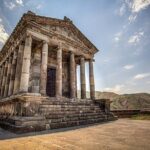
Garni Temple: Armenia’s Greek-flavored surprise
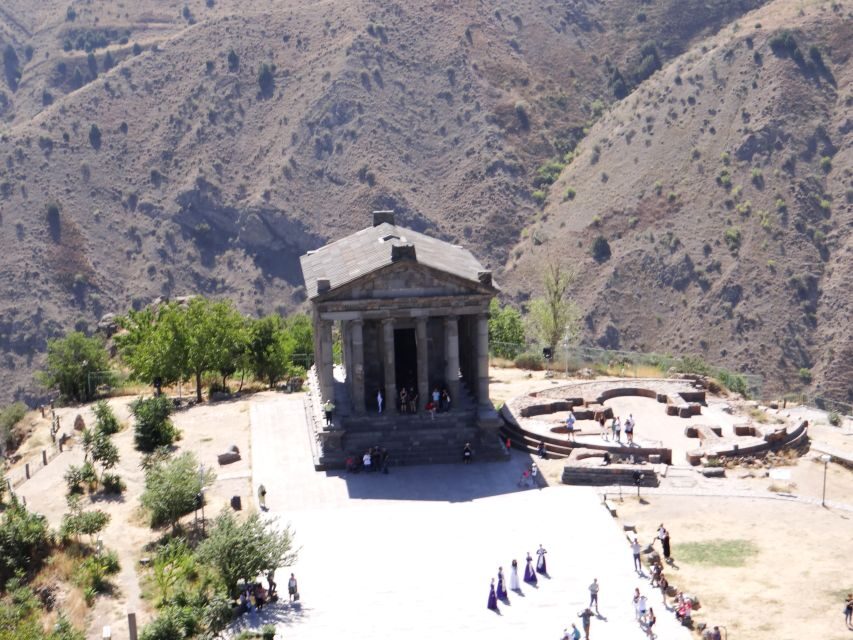
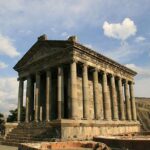
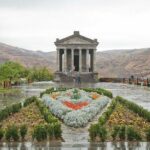
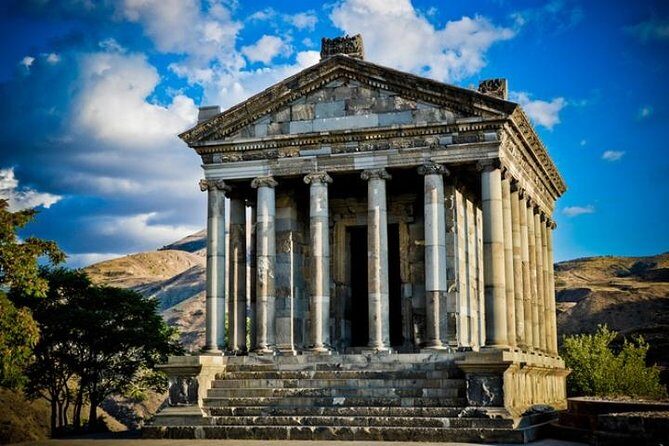
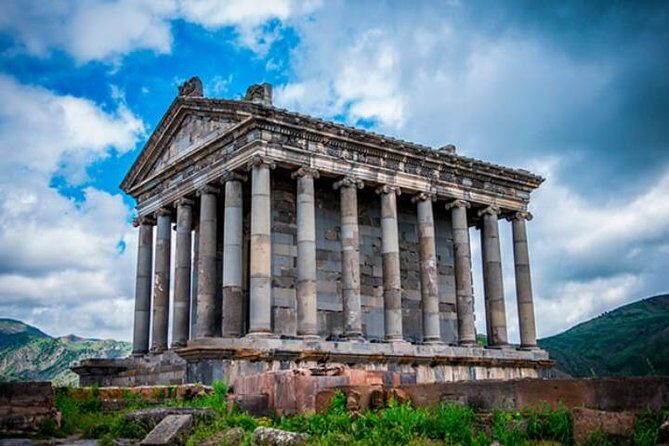
Garni Temple is the only monument connecting directly with Armenia’s pagan and Hellenistic era. It was built in the 1st century AD by King Trdat and dedicated to the sun god Mithra. The style follows classical Greek rules, and you’ll feel the resemblance to famous Greek temples once you’re standing in front of it.
What’s worth your time here: don’t treat it like a quick stop. The temple’s proportions are the point. Step back and look at the full structure, then walk closer. If you’re the kind of person who likes “how did they build this” details, Garni gives you a satisfying answer in stone.
Watch-outs: the admission ticket isn’t included, so you’ll pay separately. The visit is listed at about an hour, so keep your “photo panic” under control.
Geghard Monastery: the cave monastery vibe actually makes sense
Geghard (sometimes associated with the cave-monastery story) has a long timeline. The monastery dates back to the 4th century, built by Gregory the Illuminator, and it was initially called Airivank. Later it became known as Geghard, meaning spear—tied to the story of the Roman soldier who pierced Jesus.
Even if you don’t catch every historical thread, you’ll understand Geghard quickly because the place is physically dramatic. Carved rock space changes your sense of scale. It feels like you’re moving through both a building and a natural formation.
Timing tip: this stop is listed as about an hour and is free entry. Use that head start to slow down: look for the interplay of stone surfaces and how the monastery functions as a sacred complex, not just a single view.
Noravank and Tatev: monasteries that feel built for height
Day 2 turns up the vertical factor: Noravank first, then Tatev.
Noravank Monastery: medieval Armenian architecture in layers
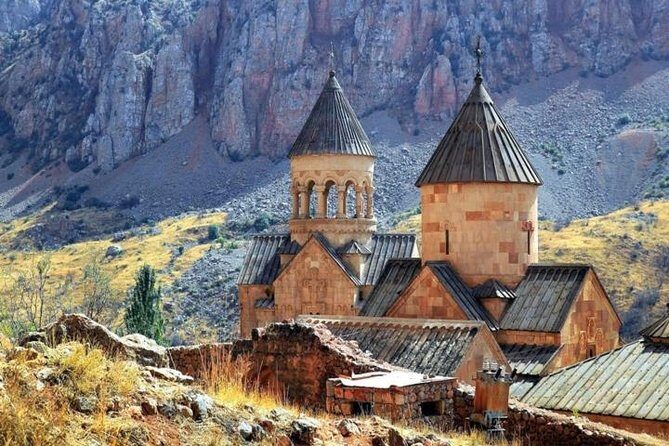
Noravank dates to the 13th–14th centuries. The complex includes St. Astvatsatsin (Burtelashen) with a sepulchre-church from 1339, plus churches and chapels that create a layered medieval feel. There’s also St. Stepanos Nakhavka and gavit, and the St. Grigor Church and Stepanos Orbelian Sepulchre.
What I like about Noravank on an itinerary like this is that it teaches you something quickly: Armenian monastic complexes often work like a set of connected functions—worship, burial, teaching, and community space—rather than isolated monuments.
Tatev Monastery: give wings, then go see how it works
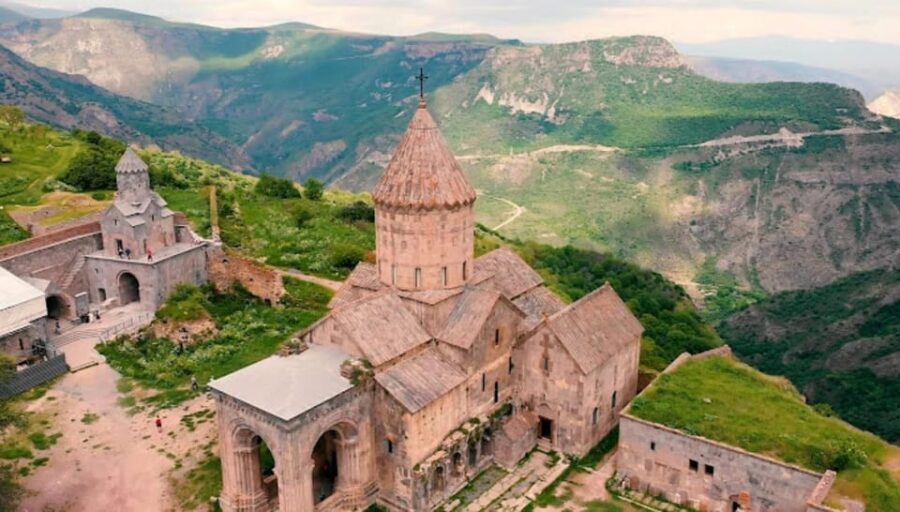
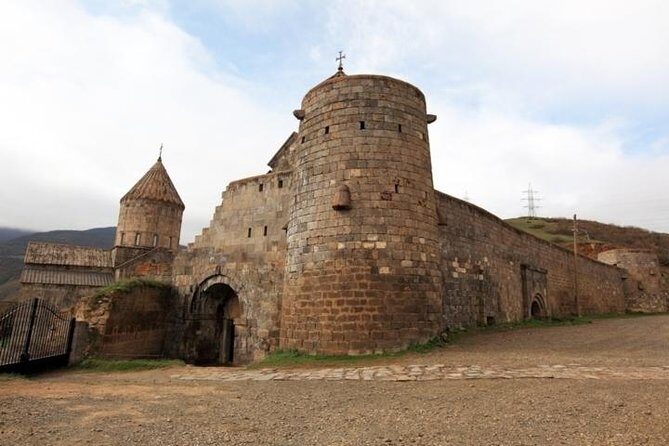
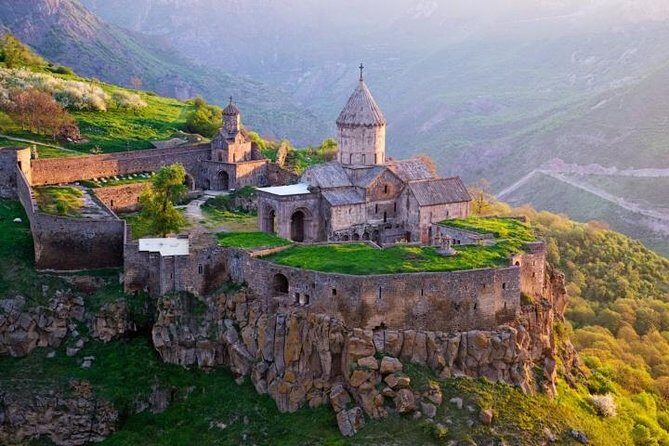
Tatev is one of the big-name medieval Armenian architecture stops, built across the 9th–13th centuries. The meaning of tatev is give wings. The setting helps explain the name: the monastery rises from a high rock position, giving the sense it’s reaching upward.
You get about two hours here, which is enough to do more than glance. Walk around so you can see how the walls relate to the rock itself and how the complex feels integrated with its surroundings.
Wings of Tatev cable car: the modern shortcut with real payoff
Then comes Wings of Tatev. It’s a cable car experience that connects you to the Tatev area, listed as the longest cable car in the world at 5.7 km. The stop is about 30 minutes, and the point is simple: the ride gives you a view that’s hard to recreate any other way.
Money note: Tatev ropeway ticket isn’t included, and the Wings of Tatev admission isn’t included in the stop details either. Plan to pay separately so your day doesn’t end with a surprise.
Kari Lake, Armenian alphabet sculptures, and Amberd Fortress
Day 3 mixes altitude, symbolism, and a fortress that lives in the clouds (that’s the literal name translation).
Kari Lake: a cold high-altitude pause
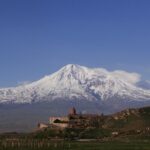
Kari Lake sits on the slopes of Mount Aragats at about 3,190 m elevation. It’s also described as Stone Lake, formed from ice formations, and it’s surrounded by snow most of the time. That’s why the water stays cold.
This isn’t a long hiking day. You’ll have about 40 minutes. But it’s a great mental reset: the lake is simple, and the height makes it feel extra quiet.
Armenian Alphabet Monument: why 39 letters matter
The Armenian Alphabet Monument was built in 2005 for the 1600th anniversary of the Armenian alphabet’s creation. It includes sculptures of 39 letters, made of Armenian tufa. Armenian alphabet was created by Mesrop Mashtots in 405 to make the Bible accessible to Armenians and help spread Christianity.
Don’t skip this if you enjoy learning while you look. It’s a compact cultural stop that helps you interpret what you’re seeing at church sites later in the trip. Even if you don’t read Armenian, the monument gives you a feeling for how writing became part of identity.
Amberd Fortress: fortress in the clouds, and it earns the name
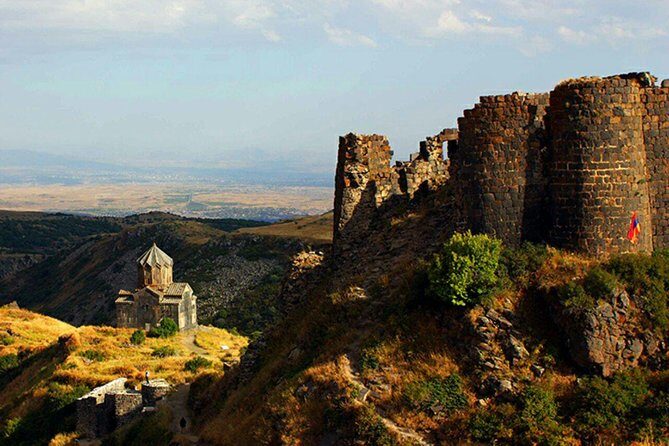
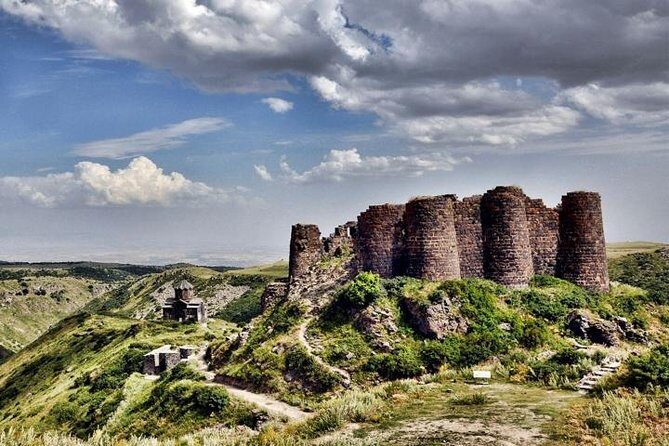
Amberd is a 7th-century fortress located at about 2,300 m on the southern slopes of Mount Aragats. The name translates to fortress in the clouds. It includes buildings like a church, chapels, baths, walls, and gates.
This is where moderate physical fitness comes into play. Not because it’s a marathon, but because you’re at altitude and you’ll want to move around enough to appreciate the layout. The reward is real: it’s an open-air site with natural defenses and a strong sense of history.
Money note: Amberd Fortress admission isn’t included, so budget for that.
Sevanavank and Haghartsin: monasteries shaped by water and detail
Day 4 brings you to the Sevan Lake region and then into the Dilijan area.
Sevanavank Monastery: a peninsula monastery with a view
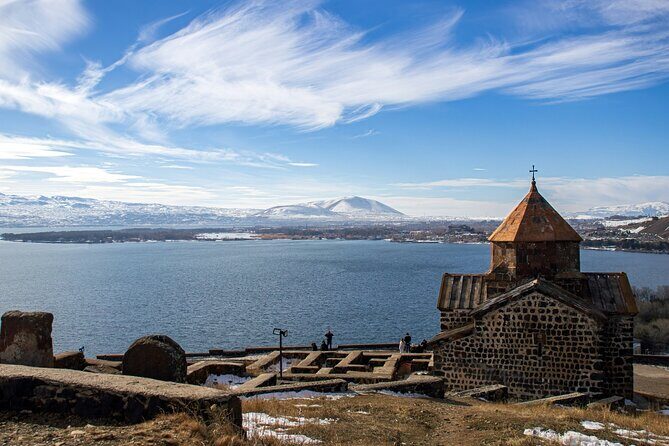
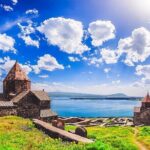
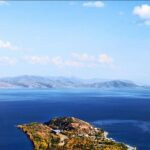
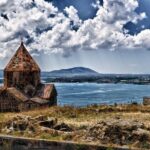
Sevanavank sits on a narrow rocky peninsula in the northwest part of Sevan Lake. It was founded in 874 AD by princess Mariam. The peninsula setting is the feature: you feel the monastery’s relationship to the water quickly.
You get about an hour here, and because Sevanavank is on a peninsula, it’s a good place to take your time walking. The setting makes the architecture feel more human.
Haghartsin Monastery: Dance of the Eagles
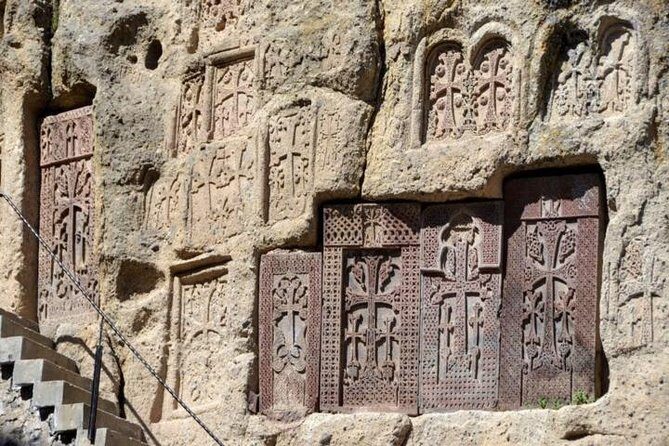
Haghartsin is about 13 km northeast of Dilijan. The name is tied to Dance of the Eagles, and it was built between the 10th and 13th centuries. You’ll find khachkars, a sundial on the wall of St Gregory, a ruined gavit, and a refectory with a stunning arched ceiling.
This stop is one of the better ones for people who like carved stone and small architectural clues. The khachkars aren’t just decoration; they help make the monastery feel like a living cultural space rather than a museum object.
Both Sevanavank and Haghartsin are listed as free admission.
Echmiadzin: the spiritual center and the churches that shaped everything
Day 5 is all about Echmiadzin, also spelled Etchmiadzin. This is where the trip goes from “beautiful monasteries” to “the core of the Armenian Apostolic Church.”
Etchmiadzin Monastery: why the name is a clue
The word Echmiadzin means place where the only begotten son of God descended. There’s a legend that Jesus pointed to the spot where a church would be built. This area is the residence of the Supreme Catholicos of all Armenians and the center of the Armenian Apostolic Church.
Because this is a working religious center, it helps to be respectful with your body language and your pace. If you’re thinking of this day as a photo shoot, switch gears. It’s more meaningful when you slow down and observe.
Saint Gayane Church: a 7th-century design with continuity
Saint Gayane is a 7th-century church in Vagharshapat (Etchmiadzin), about a walking distance from the Etchmiadzin Cathedral. It was built by Catholicos Ezra I in 630, and the design has remained unchanged despite partial renovations to the dome and some ceilings in 1652.
That detail matters. It tells you the church is not frozen in time. People maintained it over centuries, and the architecture survived those changes.
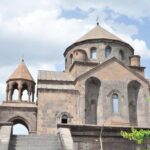
Saint Hripsime Church: classical Armenian style and UNESCO status
Saint Hripsime is another major church in the area. It was completed in 618 AD and is one of the oldest surviving churches in Armenia. The church was erected by Catholicos Komitas to replace an earlier mausoleum tied to the martyred Saint Hripsime.
This one has UNESCO World Heritage status (along with nearby churches, including Etchmiadzin Cathedral), listed as UNESCO in 2000.
Why you’ll care: Hripsime isn’t just old; it’s influential. The architectural style of this church helped shape later Armenian churches.
Zvartnots Temple: the bright medieval landmark
Zvartnots Temple dates to the 7th century and is described as one of the brightest landmarks of medieval Armenian architecture. This is one of those sites where you’ll get more from it if you let your eyes move slowly across forms rather than rushing to one perfect angle.
Money note: Zvartnots Temple admission isn’t included.
Haghpat and Sanahin in Lori: UNESCO monasteries with a real sense of place
Day 6 is the north-country finale: Haghpat, Sanahin, and then Odzun Church.
Haghpat Monastery: founded in 976 and built for function
Haghpat was founded in 976 by Queen Khosrovanush, wife of King Ashot III. The monastery includes a narthex, corridor-sepulchers, a refectory, a scriptorium, the Chapel of Hamazasp, a belfry, chapel-tombs, and khachkars (cross-stones).
It’s on UNESCO’s World Heritage List. That’s not just a badge. The variety of parts you see helps explain why monasteries lasted: they weren’t only for worship; they supported writing, burial traditions, and community life.
Entry is listed as free.
Sanahin Monastery: the administrative and educational center feel
Sanahin was the administrative center and family burial place of the Kyurikyan Bagratids in the 10th–11th centuries, and it served as the episcopal residence for the diocese until the 11th century. The complex includes three churches, narthex, scriptorium, belfry, and an academy.
Again, you can feel the monastery as an institution, not just architecture.
Both Haghpat and Sanahin are UNESCO-listed, and both stops are marked free admission.
Odzun Church: a basilica with a rare gallery feature
Odzun Church is in Odzun village in Lori Province. It’s an Armenian basilica constructed around the 5th–7th century. A key detail is the arched galleries on both the northern and southern sides, described as a rare feature in Armenian temple architecture. There are also khachkars around the church.
You’ll have about 40 minutes. Use that time to look at symmetry and the gallery design, because that’s what makes Odzun worth a place on your final day.
Price and logistics: what $855 buys you, and where you’ll spend extra
The price is $855 per group, up to 3 people, for roughly 6 days. That means the real cost depends on who’s traveling with you.
If it’s just two of you, you’re likely paying more per person than a trio. If you have three people (friends or a family unit), the value gets much better fast. You’re paying for a private vehicle and a guided route that connects a lot of sites efficiently.
Included in the tour:
- Hotel pickup and drop-off
- Transport by air-conditioned vehicle
- Fuel surcharge
- Mobile ticket
Not included:
- Food and drinks
- Lunch
- Tatev ropeway ticket (and a few other admission fees are marked not included, like Garni Temple, Wings of Tatev, Amberd Fortress, and Zvartnots Temple)
My practical advice: treat the tour price as the base for getting you from site to site with guidance. Then set aside extra for paid entries and any lunches you want on the road. This keeps your budget calm instead of constantly checking the math.
What to wear, how to pace, and how to stay comfortable
This tour is listed as smart casual with a moderate physical fitness level.
Dress for churches without overthinking it
Armenian monasteries and churches generally reward respectful dress. Smart casual is what to aim for. If you get cold easily, bring layers. Some of the sites are at higher elevation, and even if the sun is out, temperatures can feel sharp.
Expect altitude moments
Kari Lake and Amberd are at high elevations. You don’t need to do hard hiking, but you will be standing, walking short distances, and taking in views at altitude. Slow down your first minutes at each site, drink water when you can, and don’t try to “power-walk” your way through.
Build lunch into your plan
Food and drinks aren’t included, and lunch isn’t included. If you’re someone who likes sitting down for a proper meal rather than snacking, you’ll want to plan that into your day so it doesn’t eat time.
Should you book this 6-day Armenia monastery route?
I think it’s a strong choice if you want the core Armenia experience in one focused week: pagan history at Garni, cave and rock monasteries at Geghard, the medieval spectacle of Tatev, the spiritual center around Echmiadzin, and the UNESCO pairs of Haghpat and Sanahin.
Book it if:
- You like churches and monasteries more than shopping stops
- You want a private group setup with pickup and transport
- You’re excited about both historic sites and one modern wow moment (Wings of Tatev)
Skip it (or switch plans) if:
- You dislike paying separate admission fees at multiple sites
- You want mostly outdoors-only scenery and minimal time in churches
- You prefer long free hours with no set structure at all
If you go in ready for stone, symbolism, and altitude, you’ll leave with that specific kind of memory Armenia gives you: not just pictures, but the feeling that you walked through layers of time.
FAQ
What areas does this tour cover?
The tour is based in Yerevan and takes you around Armenia to Garni, Geghard, Noravank, Tatev, Kari Lake, Amberd Fortress, Sevanavank, Haghartsin, Etchmiadzin, Zvartnots, Haghpat, Sanahin, and Odzun.
How many days is the tour?
It lasts approximately 6 days.
How much does the tour cost and how big is the group?
The price is $855 per group for up to 3 people. It’s a private tour, meaning only your group participates.
Is hotel pickup and drop-off included?
Yes. Hotel pickup and drop-off are included.
What transportation is provided?
You travel by an air-conditioned vehicle, and fuel surcharge is included.
Are tickets included for all sites?
Not all. The tour includes a mobile ticket, but admission or specific tickets are marked as not included for places like Garni Temple, Wings of Tatev, Amberd Fortress, and Zvartnots Temple. The Tatev ropeway ticket is also not included.
Is food included?
Food and drinks are not included, and lunch is not included.
What dress code should I follow?
The dress code is smart casual.
Do I need strong physical fitness?
The tour recommends a moderate physical fitness level.
Is free cancellation available?
Yes, you can cancel for free up to 24 hours in advance for a full refund.
When do I get confirmation after booking?
Confirmation is received at the time of booking.