REVIEW · YEREVAN
Private tour to Gyumri, Dzitoghtsyan Museum, Black Fortress
Book on Viator →Operated by Jan Armenia Tours · Bookable on Viator
Gyumri feels like a black-and-red time machine. In this private day trip, you get Gyumri city-center sights plus the Black Fortress, with a calm, organized route that helps you see why the city’s architecture matters. I especially like how the tour pairs big-picture context with street-level details, and I love that you see both everyday life (through the Dzitoghtsyan museum) and the military story (through the fortress).
One thing to consider: the Dzitoghtsyan house-museum entrance isn’t included, and the optional Taraz photo stop at Zanan is also extra. The day runs about 10 hours, so plan for a long sit-and-walk rhythm in one outing.
The value is strong for small groups: it’s priced per group (up to 3) and includes hotel pickup and drop-off, an air-conditioned vehicle, bottled water, and Wi‑Fi onboard.
In This Review
- Key Highlights
- Gyumri’s tuff-stone look: where the city’s materials tell the story
- City center walking: Saint Michael Church, Vardanants Square, and Abovyan Street
- Saint Michael Church and the clock tower nickname
- Vardanants Square: the geometry of Gyumri
- Abovyan Street and the layers of names
- Historic barbershop and pharmacy buildings
- Dzitoghtsyan House Museum: everyday life from the 1800s to the 1920s
- What I like about this museum stop
- One budget note
- Black Fortress in Gyumri: an abandoned empire, 8 km from the border
- The emotional tone: what you’ll notice
- Admission
- Taraz costume photos at Zanan Cultural Heritage Center (optional)
- Price and logistics: is $125 per group a smart deal?
- Who should book this Gyumri private tour
- Should you book this Gyumri day trip?
- FAQ
- FAQ
- How long is the Gyumri, Dzitoghtsyan Museum, and Black Fortress tour?
- What is the price for this private tour?
- Is hotel pickup and drop-off included?
- Do you get Wi‑Fi and bottled water during the tour?
- Is the tour private?
- Is the Dzitoghtsyan house-museum entrance fee included?
- Are there any optional paid extras?
- Are there any stops with free admission?
- Do you receive a mobile ticket?
- What is the cancellation policy?
Key Highlights
- Gyumri on black and red tuff: You’ll notice the stone color story all day, from churches to historic buildings.
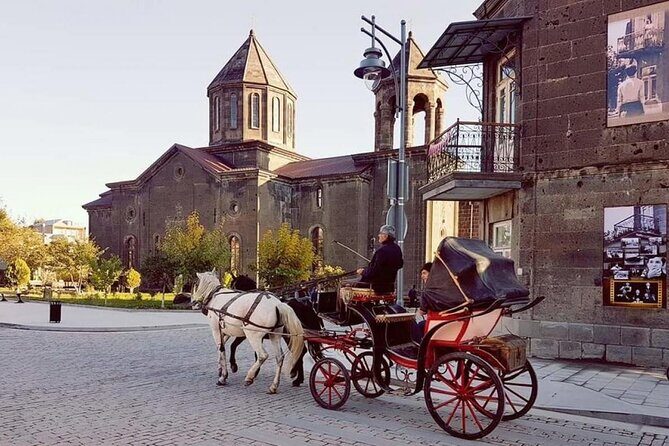
- Saint Michael Church details: A clock tower with a tin dome nickname (Plplan Zham) makes the skyline memorable.
- Dzitoghtsyan family house-museum: Built in 1872 with local Shirak red tuff, it focuses on everyday life from the 1800s into the 1920s.
- Black Fortress at the Turkish-border edge: An abandoned Russian imperial fortress tied to the Russo-Turkish War (1828–1829).
- Optional Taraz photos: Traditional Armenian costume pictures can be added without forcing the whole schedule.
- Small-group comfort: Pickup, drop-off, Wi‑Fi, and bottled water keep the long day from feeling like a chore.
Gyumri’s tuff-stone look: where the city’s materials tell the story
Gyumri doesn’t try to be flashy. It’s more interesting than that. The whole place carries a strong visual identity from its stone—black and red tuff—so even when you’re just walking between sights, you’re reading the city in color and texture.
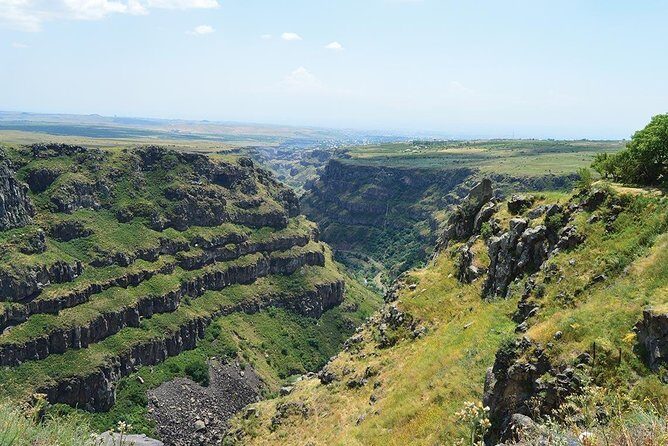
That matters because architecture here isn’t background noise. It’s the clue. You’ll hear the city situated on the Shirak Plateau, in a region crossed by mountain gorges, with its northern spurs near Mount Aragats. Even a few geography notes help you understand why Gyumri feels both inland and exposed, and why fortifications like Black Fortress were built when borders mattered.
I also like the way this tour keeps the pacing practical. Instead of trying to cram in a dozen random stops, you get a focused day: city center first, then the fortress, and time for the Dzitoghtsyan house-museum. It’s a good setup for understanding the city without rushing.
If you’re the kind of person who enjoys old churches, street history, and buildings that still carry meaning, this day fits that mood.
You can also read our reviews of more private tours in Yerevan


City center walking: Saint Michael Church, Vardanants Square, and Abovyan Street
Gyumri’s center is easy to read once someone points out the key landmarks. Your first blocks of time are for orientation: the two famous churches and the street-and-square layout that shapes daily life.
Saint Michael Church and the clock tower nickname
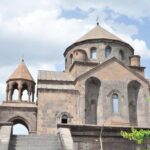
Saint Michael Church is a Russian Orthodox church near what’s now Gorky Park, on the Patvo Blur platform area. What makes it stick in your mind is the clock tower built with local black hewn stone. It has a tin dome that shines, which is why it’s nicknamed Plplan Zham. Even if you’re not a “clock tower person,” this is one of those small details that makes a building feel alive.
Vardanants Square: the geometry of Gyumri
You’ll also spend time at Vardanants Square, Gyumri’s main square. It has a distinctive rectangular layout, positioned at the convergence of eight roads. That’s not just a design trivia point—it explains why squares like this become social anchors. When the streets meet in a grid like that, it’s natural for people to gather, businesses to cluster, and life to happen.
Abovyan Street and the layers of names
Abovyan Street is especially useful for understanding how Gyumri changed over time. The tour notes that Alexandrovsky Street (early 20th century) became what you know as Abovyan. That kind of rename happens in cities all over the world, but here it’s tied to the feeling of a place that still carries layers in its architecture.
You can also read our reviews of more museum experiences in Yerevan
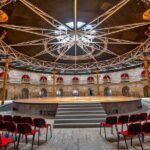
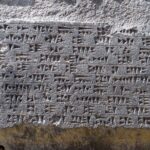


Historic barbershop and pharmacy buildings
The tour also includes historic barbershop and pharmacy buildings. These are the kinds of stops that don’t look important on a map, yet they make a day feel real. When a city has buildings that kept doing their jobs, it tells you more than a monument alone.
Practical tip: since you’re moving through street scenes and square areas, wear shoes that handle uneven pavement comfortably. The day is long, and you’ll want your feet to feel good.
Dzitoghtsyan House Museum: everyday life from the 1800s to the 1920s
The Dzitoghtsyan house-museum is the cultural center of the tour. This is where Gyumri shifts from outdoor “look around” sightseeing to a deeper picture of how people lived.
The house itself is a big part of the experience. It was built in 1872 by four brothers who migrated from the Western Armenian village of Dzitogh to Alexandropol (now Gyumri). The material choice is part of the point: it’s built with red tuff stone from Shirak.
Inside, the focus is on Alexandropol social life characteristics—from the 19th century up into the 1920s. That time span is helpful because it covers a longer stretch than just a single era. You also get cultural, architectural, and religious aspects of city life, so it doesn’t feel like a narrow “one collection” stop. It’s more like a guided snapshot of how the city made sense to people over time.
What I like about this museum stop
This museum’s strength is the way it turns a city into a set of lived details. You don’t just walk past old buildings; you learn what those buildings meant for daily routines and community identity.
Also, you get to connect the museum to the street sights you saw earlier. If Saint Michael Church and the squares made you notice the city’s structure, the house-museum helps you understand what that structure supported.
One budget note
Entrance to the house-museum isn’t included in the tour price. You’ll want to plan for that additional fee so it doesn’t feel like a surprise later.
Black Fortress in Gyumri: an abandoned empire, 8 km from the border
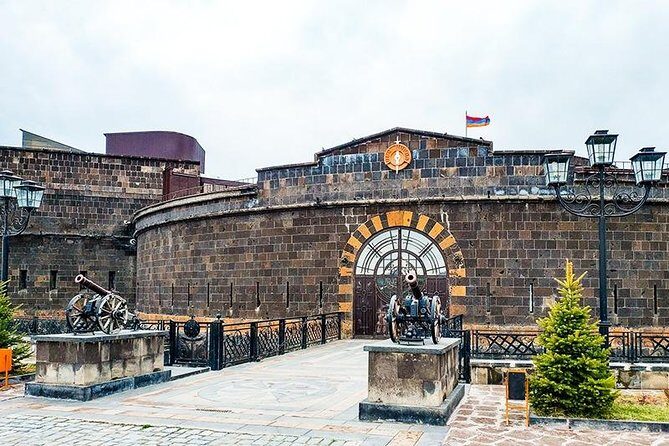
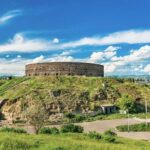
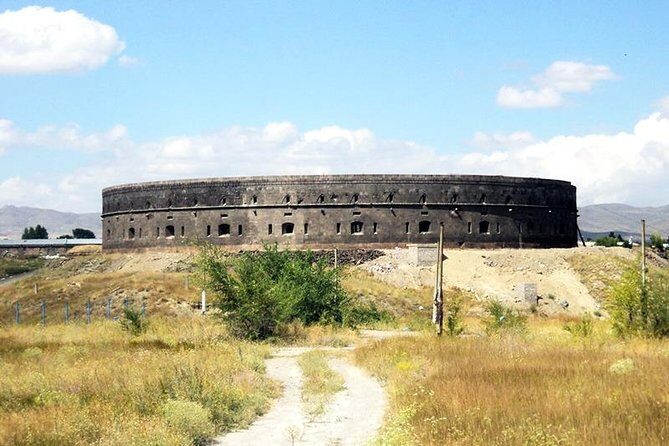
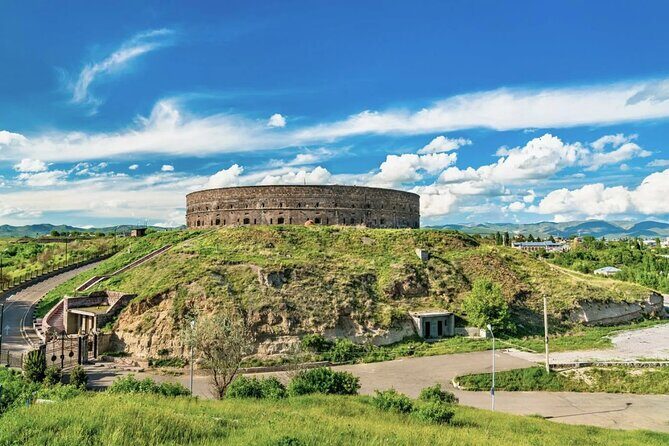
Then the day turns quieter and stranger. Black Fortress is an abandoned Russian imperial fortress in Gyumri, about 8 kilometers from the Turkish border. It was built in response to the Russo-Turkish War of 1828–1829. That timing gives the site a clear historical reason to exist.
The fortress is one of those places where the scale does the talking. Even though it’s abandoned, you can still feel the original military purpose in the fortification logic. And because it’s outside the dense city center, the contrast is strong: from church bells and square corners to an isolated site shaped by 19th-century conflict planning.
The emotional tone: what you’ll notice
Fortresses like this often feel cold in a good way. The stone doesn’t try to please you; it just records decisions. I also like that the tour gives you enough time to look around—about 40 minutes—without rushing you out before you’ve found your angles for understanding the layout.
Admission
The fortress stop is listed with free admission ticket, which makes it a high-value historical site in the day’s mix.
Taraz costume photos at Zanan Cultural Heritage Center (optional)
After the “serious stone” stops, there’s a lighter optional piece. At the end, you can add a photoshoot in traditional Armenian costumes called Taraz at Zanan Cultural Heritage Center.
This part is optional, and it’s not included in the ticket price. Still, it can be a fun way to close the day if you like costume photography or want a visual reminder that feels more personal than a standard souvenir photo.
If you’re on the fence, here’s how I’d decide: if you enjoy dressing up for a few minutes and you like having something concrete to take home, choose it. If you prefer pure sightseeing and hate time spent standing still, skip it and keep that hour for another walk through the city center backstreets.
Price and logistics: is $125 per group a smart deal?
The price is $125 per group for up to 3 people, with hotel pickup and drop-off included. The tour runs about 10 hours and uses an air-conditioned vehicle, bottled water, and onboard Wi‑Fi.
That “per group” structure can be a big deal. Two or three people sharing the cost makes the day feel closer to what you’d pay for a normal day tour, but with more control and less compromise on pacing. Also, pickup saves time and hassle in Yerevan, especially if you don’t want to figure out the shuttle logic on your own.
Two small costs to watch:
- Dzitoghtsyan house-museum entrance is not included.
- Taraz photos at Zanan are not included.
If you’re budgeting carefully, this tour can still work well because two main sightseeing stops (city-center segments and Black Fortress) list admission as free. Then you’re only paying for the museum entry and any optional costume time.
On the timing side, this is the kind of day trip you book in advance. The tour is typically booked around 55 days ahead, which is a hint that decent slots can go quickly when people want a focused Armenia day outside Yerevan.
Who should book this Gyumri private tour
This fits best if you:
- want a small-group day with hotel pickup
- like history that’s grounded in real buildings (not just facts on a sign)
- enjoy architecture plus everyday-life context
- prefer a schedule that mixes city streets with a specific out-of-town site
It’s also a good choice if you’re visiting Armenia for the first time and want one day that teaches you a lot about how regional culture shows up in stone, squares, and homes.
Should you book this Gyumri day trip?
If your idea of a great day is old churches, meaningful local architecture, and an abandoned fortress with a clear historical link, book it. The route is structured around high-impact sights, and the small group format keeps the pacing sensible for a long day.
Skip it only if you strongly dislike long outings (it’s about 10 hours) or you’re not interested in adding separate museum admission. If you’re mostly looking for quick photo stops with minimal time in heritage spaces, you might feel it’s more than you need.
FAQ
FAQ
How long is the Gyumri, Dzitoghtsyan Museum, and Black Fortress tour?
It lasts about 10 hours.
What is the price for this private tour?
The price is $125 per group, up to 3 people.
Is hotel pickup and drop-off included?
Yes, hotel pickup and drop-off are included.
Do you get Wi‑Fi and bottled water during the tour?
Yes. The tour includes bottled water and Wi‑Fi on board.
Is the tour private?
Yes. It’s a private tour/activity, so only your group participates.
Is the Dzitoghtsyan house-museum entrance fee included?
No. Entrance ticket for the Dzitoghtsyans museum is not included.
Are there any optional paid extras?
Yes. The Taraz photoshoot at Zanan Cultural Heritage Center is optional and not included.
Are there any stops with free admission?
Yes. The Gyumri stop and Black Fortress are listed with admission ticket free.
Do you receive a mobile ticket?
Yes. The tour includes a mobile ticket.
What is the cancellation policy?
You can cancel for free up to 24 hours in advance for a full refund. If you cancel less than 24 hours before the start time, the amount paid is not refunded.