REVIEW · YEREVAN
Private tour to Garni – Geghard – Tsaghkadzor (Kecharis)
Book on Viator →Operated by Hyur Service · Bookable on Viator
A day that mixes pagan Armenia, UNESCO rock-cut churches, and mountain resort air. What makes this tour feel special is the private setup (just your party of up to 3), plus the easy hotel pickup/drop-off that keeps you moving without wasting time. You get two big wins right away: a guided loop through Garni and Geghard, then a Tsaghkadzor stop with optional ropeway time. The one catch to plan around: Garni entrance and the Tsaghkadzor ropeway are not included, so your day can cost a bit more once you add those.
I also like that the pacing is practical. You’re not trying to cram everything into 90 minutes; you get focused time at each site, with bottled water and an air-conditioned ride smoothing out the longish day. If weather turns rough, the operator notes the experience depends on good conditions, so you’ll want flexibility.
In This Review
- Key highlights worth knowing
- Entering Armenia’s Timeline in One Long, Scenic Day
- Garni Temple: Greco-Roman Shape, Armenian Meaning
- Geghard Monastery: Rock-Cut Churches and UNESCO-Level Craft
- Tsaghkadzor: Valley of Flowers and Optional Ropeway Time
- Kecharis Monastery: A Short Finish with Real Atmosphere
- Price and What You’ll Really Spend
- The Guide Makes or Breaks the Experience
- Timing and Logistics: How to Keep the Day Smooth
- Who This Tour Suits Best
- Should You Book This Tour?
- FAQ
- Is this tour private or shared?
- How many people is the tour for?
- How long does the tour take?
- Does it include hotel pickup and drop-off?
- What languages are available for the guide?
- Are tickets to the sites included?
- What happens if weather is bad?
Key highlights worth knowing
- Private group of up to 3 means you can move at your pace and ask questions without feeling rushed
- Free hotel pickup and drop-off in Yerevan makes the itinerary feel low-stress from the start
- Geghard Monastery is free to enter and includes UNESCO-listed rock-cut churches and khachkars
- Tsaghkadzor is timed for either free time or a ropeway ride, so you can choose scenery vs. convenience
- Kecharis Monastery is included for a shorter, calmer stop with multiple churches and a notable mausoleum
- A guide can add real context, and one standout name you might get is Ruben, known for warm, personal storytelling
Entering Armenia’s Timeline in One Long, Scenic Day
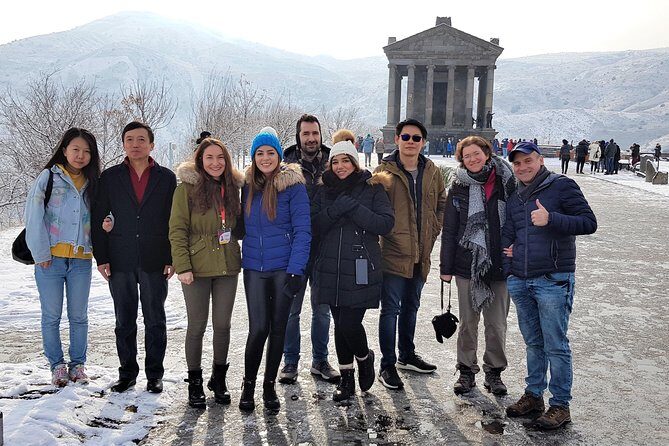
This tour works because it doesn’t treat Armenia like a checklist. It moves through time: first the sun-temple world of Garni, then the 13th-century craftsmanship of Geghard, then the mountain resort rhythms of Tsaghkadzor, finishing at Kecharis.
The private format matters. With a small group, your guide can tailor how much time you spend looking at carvings, mosaics, or the layout of church interiors. That’s the difference between seeing a place and understanding how it was built for worship, defense, or ceremony.
The route also gives you a sensible trade-off: one longer day outside Yerevan (around 7 to 8 hours), but with multiple high-impact stops. If you’re staying in Armenia for a short time, this is an efficient way to get breadth without feeling like you’re sprinting.
You can also read our reviews of more private tours in Yerevan

Garni Temple: Greco-Roman Shape, Armenian Meaning
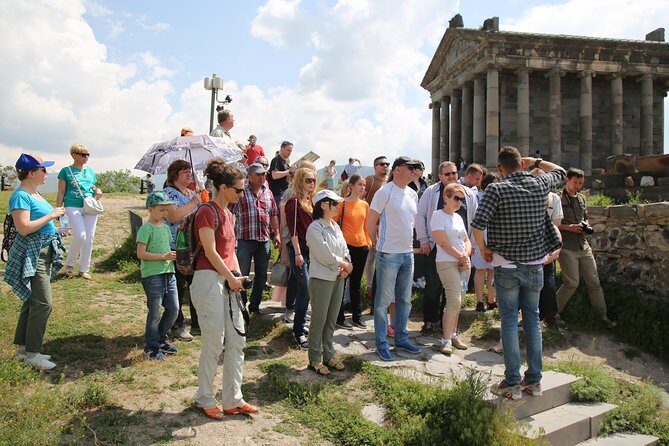
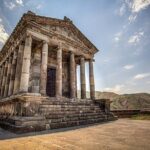
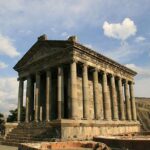
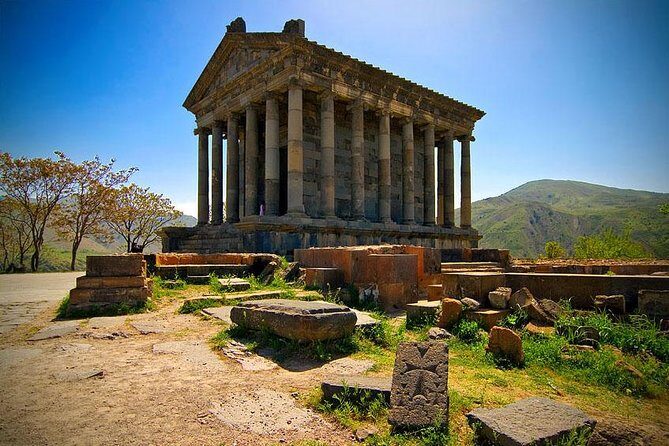
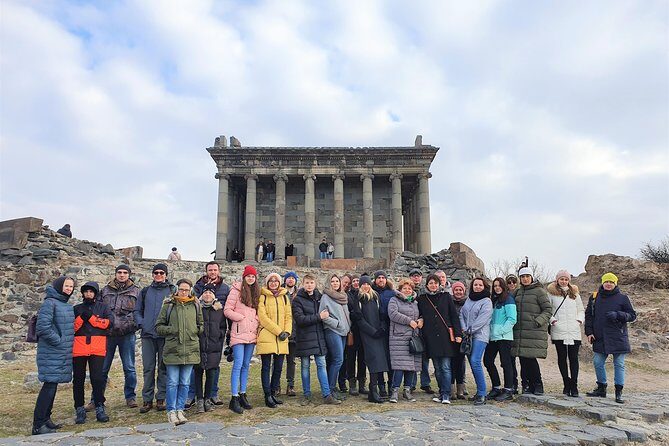
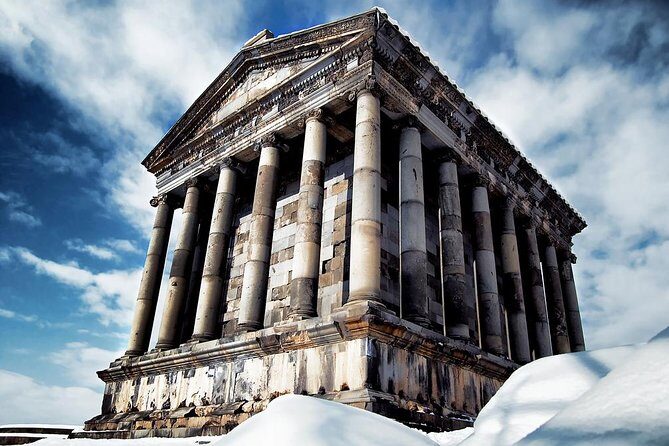
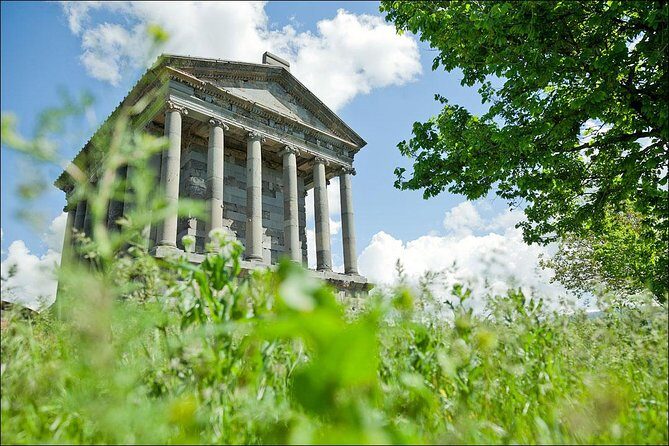
Garni Temple sits above a triangular cape, and it’s one of Armenia’s rare surviving examples of pre-Christian temple culture. The story here is tightly connected to who had power when: it was ordered by King Trdat the First in the first century AD and dedicated to the God of the Sun.
What I like about this stop is how clearly it shows cultural mixing. The temple is described as a blend of Greco-Roman and Armenian styles. That matters because it’s not just an old building; it’s evidence of how influences moved through the region and how local rulers interpreted them.
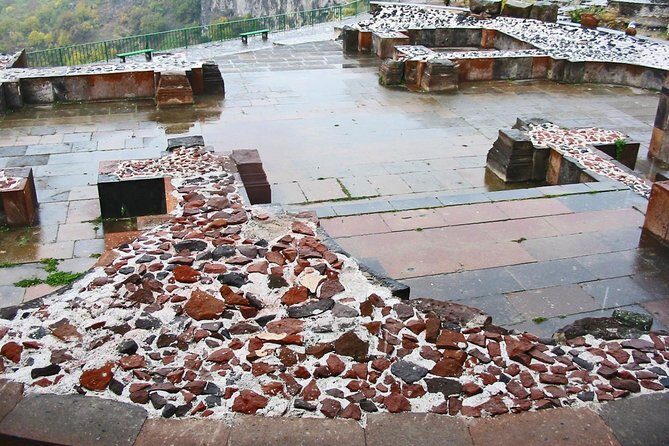
You’ll also see how religion changed the meaning of places. After Armenia adopted Christianity in 301, Garni’s pagan significance faded, and the fortress became a summer residence of the kings. Near the temple area, you can find ruins of the royal palace and the bathroom with stunning mosaic work.
How to get the most out of your hour:
Arrive thinking like a detective. Look at the temple first for form and symmetry, then shift your attention to the nearby palace and mosaic details. If you like art history, you’ll get more by slowing down rather than snapping photos and moving on fast.
Possible drawback to plan around: Garni entrance is not included. Budget for the ticket so you don’t get stuck deciding at the door.
Geghard Monastery: Rock-Cut Churches and UNESCO-Level Craft
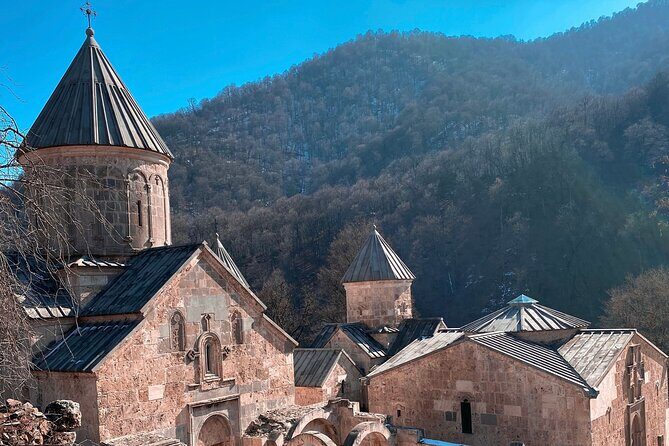
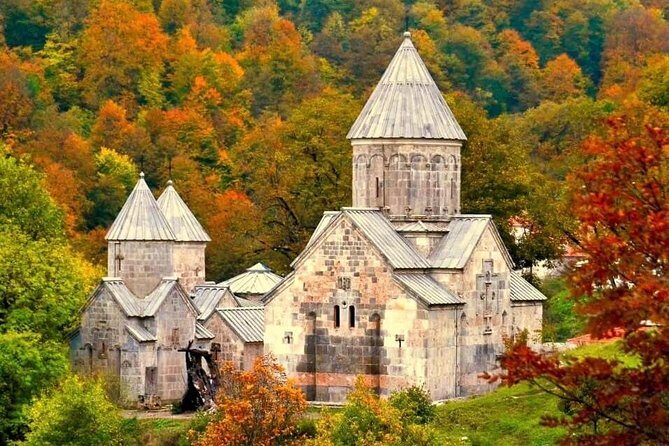
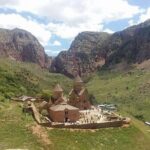
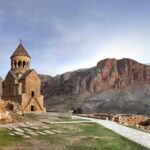
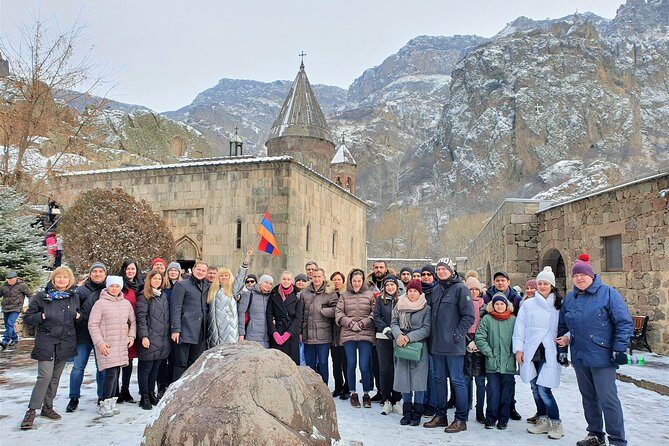
If Garni is about form and visible power, Geghard is about stone and devotion. This monastery is widely described as a 13th-century masterpiece of Armenian architecture, including churches that are masterfully hewn directly into rock.
The site has layers of identity. It began as Ayrivank, a cave monastery, and later became known as Geghard, meaning lance. The name ties to a tradition that the lance used by a Roman soldier to sting Jesus’s side was kept here for many centuries.
One detail you don’t want to miss: the setting is said to be a great place for singing spiritual songs. Even if you don’t catch music in the moment, it helps you understand why acoustics and space design would matter to the people who built these sacred areas.
You’ll also notice the small-to-medium details that make Armenian churches feel alive—khachkars (cross-stones) and subtle sculptural embellishments across the complex. And yes, the site is included on the UNESCO World Cultural Heritage list, which is your cue that you’re seeing something internationally recognized, not just locally admired.
A practical tip: Geghard is scheduled for about an hour. That’s enough time to take in the rock-cut elements and catch the major features, but not enough for long wandering without focus. If you care about carvings, spend your first minutes orienting yourself, then go back for slower looking.
Value note: Geghard entrance is free on this itinerary. That’s a rare and welcome win, since the other two ticketed items on the day (Garni and the ropeway) can add up.
Tsaghkadzor: Valley of Flowers and Optional Ropeway Time
Tsaghkadzor translates to valley of flowers, and it has a different tempo from the monasteries. It’s also known as one of Armenia’s most popular winter resorts, set about 60 km north of Yerevan on the eastern slope of Teghenis Mountain, surrounded by woods and alpine meadows.
This stop is deliberately flexible. You’ll have roughly an hour for either free time or an optional ropeway ride. That flexibility is smart because people travel differently:
- If you want a straightforward stretch and a break from walking, choose free time.
- If you want higher views without spending extra time hiking, consider the ropeway.
Why this choice makes the tour feel good: It prevents the classic problem where a tour forces everyone into the same activity. Here, you can pick based on how your legs and attention are holding up after Garni and Geghard.
Possible drawback to plan around: The ropeway ride isn’t included in the base cost. If you choose it, add the extra expense at approximately 4500 AMD, or around $12 per person.
Kecharis Monastery: A Short Finish with Real Atmosphere
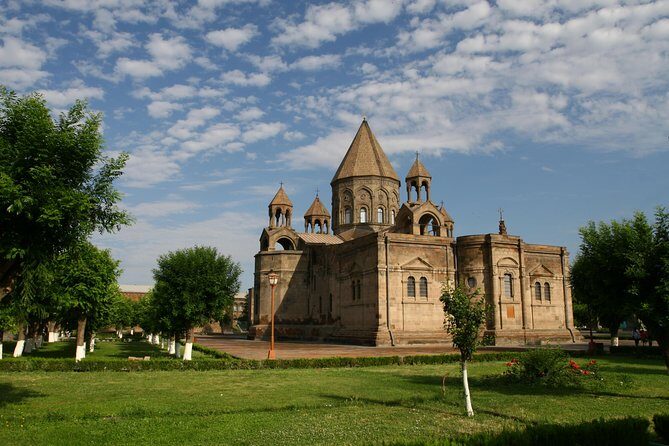
Kecharis Monastery is in the north-western part of Tsaghkadzor. It’s a shorter stop—about 30 minutes—which actually works well as a wind-down after two heavier sites.
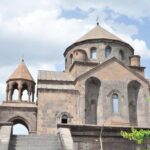
Kecharis was built across the 11th to 13th centuries. The monastery complex includes four churches and a half-destroyed mausoleum connected to Grigorius Pahlavuni. He financed the building of the monastery, which gives you another thread to notice: these places weren’t only religious centers; they were also shaped by patrons with resources and influence.
What I like about ending here is that it keeps you from feeling rushed. You’re not expected to absorb the entire story of Armenia’s medieval church architecture in half an hour. Instead, you get enough time to see the main complex elements and get that quiet, reflective stop before heading back.
Value note: Kecharis entrance is free on this itinerary.
Price and What You’ll Really Spend
The tour price is $126 per group, up to 3 people, for about 7 to 8 hours. That pricing is where the private format can become genuinely good value—because the cost scales with the number of people you bring.
If you’re a solo traveler, it’s still a solid buy for comfort and logistics. If you’re traveling as two or three, it becomes easier to compare with shared shuttles or bus tours that limit your control over pace.
Here’s the straightforward cost picture based on what’s included vs. not:
- Included: guide service (English or Russian, if you choose the with-guide option), air-conditioned vehicle and driver, bottled water, free pickup/drop-off within Yerevan, and vehicle/passenger insurance
- Not included: lunch (listed as $18 per person), Garni entrance ticket, and the Tsaghkadzor ropeway ride
The day’s ticket add-ons are roughly: Garni entrance and the ropeway at 4500 AMD (around $12) per person, plus lunch if you want it. If you skip the ropeway, you’ll likely spend less than if you take it.
My take: The best value comes when you use the private setup as intended—ask questions, take your time at each stop, and choose the ropeway if it helps you see Tsaghkadzor with less effort.
The Guide Makes or Breaks the Experience
One of the most praised aspects of this tour is the guide experience. A name that stands out is Ruben, described as caring, attentive, and proud of Armenian culture. In the real world of tours, that kind of warmth matters. It’s not just facts on a card; it’s someone who helps you connect dots.
Even when language doesn’t match perfectly, the reviews point to the way a good guide can still keep the experience meaningful. That’s a big deal if you don’t speak Armenian or Russian. The tour is offered in English, and the operator also provides English or Russian speaking guide options, but the key lesson is: a strong guide can still bridge the gap through enthusiasm, storytelling, and practical help.
If you get Ruben, you might notice a more personal travel vibe—things like on-the-route moments, joking around, and getting help with photos. Those small touches turn a day trip into something you remember.
Driver note: There’s one comment about driving pace during snow, including hard braking. If you’re traveling in winter or shoulder season, that’s worth keeping in mind. You can’t control weather, but you can control your expectations: go slow, wear layers, and give the driver room to manage road conditions.
Timing and Logistics: How to Keep the Day Smooth
This is a pickup-and-drive day. You’ll arrange your pick-up address, and you’ll get free pick-up and drop-off within Yerevan. The vehicle is air-conditioned, and you’ll have bottled water along the way.
This matters because the itinerary has three main walking zones:
- Garni Temple area
- Geghard Monastery complex
- Kecharis Monastery plus a short Tsaghkadzor break
When you start with hotel pickup, you remove the biggest friction point: getting to the right roads on time. You also avoid the stress of finding local transport between distant points.
Weather matters here. The operator notes the experience requires good weather. If skies turn bad, you may need an alternate date or a refund. For you, that means packing for changing conditions and booking with a bit of flexibility.
Who This Tour Suits Best
This is a great fit if you:
- Want a private day without turning it into a two-car taxi scramble
- Care about seeing Armenia’s different eras in one outing: ancient temple culture, medieval rock-cut architecture, and mountain resort life
- Prefer guided context, not just photo stops
- Travel with a partner or small group (up to 3) and want cost to stay reasonable
It might not be ideal if you:
- Want to spend zero money on entrances and optional activities (because Garni and the ropeway have extra costs)
- Hate all ticket lines and like to move strictly on your own schedule (this tour is designed around guided time blocks)
Should You Book This Tour?
Yes—if you want an efficient private day with real cultural context. The combination of Garni and Geghard gives you two standout historical experiences, and Tsaghkadzor plus Kecharis keeps the day balanced so it’s not only about monuments.
I’d book especially if you value personalized guidance. When the guide connects the details—like how Garni shifted from pagan temple to royal summer residence, or why Geghard’s rock-cut design makes the place feel built for ritual—you end the day feeling like you understood more than you just looked.
If you’re price-sensitive, plan your add-ons in advance: Garni entrance and whether you’ll take the ropeway. Then you can enjoy the day without last-minute decisions.
FAQ
Is this tour private or shared?
This is a private tour/activity. Only your group participates.
How many people is the tour for?
The price is per group, up to 3 people.
How long does the tour take?
The duration is about 7 to 8 hours.
Does it include hotel pickup and drop-off?
Yes. Free pick-up and drop-off are offered within Yerevan.
What languages are available for the guide?
The tour offers English. It can also include a professional guide service in English or Russian if you choose the with-guide option.
Are tickets to the sites included?
Geghard Monastery and Kecharis Monastery have free admission on this itinerary. Garni entrance and the Tsaghkadzor ropeway are not included.
What happens if weather is bad?
The experience requires good weather. If it’s canceled due to poor weather, you’ll be offered a different date or a full refund.