REVIEW · YEREVAN
Private Tour to Garni Temple, Geghard Monastery, Echmiadzin Cathedral, Zvartnots
Book on Viator →Operated by Jan Armenia Tours · Bookable on Viator
One day, four sacred stops near Yerevan. I love the private feel with hotel pickup and a small-group ride, and I love the Ararat panorama at Charents Arch. The only snag: some major entrances (Garni, Zvartnots, and the Echmiadzin Treasury Museum) are extra, so you’ll want to budget.
From pagan columns to cave churches, you cover a lot in about 7 hours. I also like that the vehicle is air-conditioned and has WiFi on board, which makes the road time feel less long. If you choose the guide upgrade, you get an English or Russian-speaking guide, and the team includes people like Arev (noted for being friendly and very informative) plus drivers like David.
In This Review
- Key highlights
- Why this day tour hits the right buttons near Yerevan
- Charents Arch: the quick free stop with the big Ararat payoff
- Garni Temple: pagan columns, sun symbolism, and a UNESCO badge
- Geghard Monastery: walking into stone that feels hollowed by time
- Etchmiadzin Cathedral and the Treasury Museum: where the faith shows its artifacts
- Saint Hripsime and Saint Gayane: two UNESCO churches in 60 minutes
- Saint Hripsime Church
- Saint Gayane Church
- Zvartnots ruins: a UNESCO site where imagination does the heavy lifting
- Timing, pacing, and how to plan for tickets and lunch
- Price and value: $105 for up to 3, plus what you should budget
- Guide options and what the day is like in the car
- Should you book this private Garni–Geghard–Echmiadzin–Zvartnots tour?
- FAQ
- How long is the tour from Yerevan?
- What is the price and group size?
- Do you pick me up from my hotel?
- Is there an English-speaking guide?
- What’s included in the tour price?
- Are entrance fees included for all the sites?
- Is lunch included?
- What tickets do I receive?
- Can I cancel for free?
Key highlights
- Charents Arch free stop with a classic Ararat viewpoint
- UNESCO-heavy day hitting major heritage sites in one loop
- Geghard’s cave monastery plus the spear story tied to Etchmiadzin
- Etchmiadzin Cathedral grounds with the Treasury Museum option (ticket extra)
- Church-courtyard circuit at Saint Hripsime and Saint Gayane
- Up to 3 people for $105 per group with pickup, transport, water, and WiFi
Why this day tour hits the right buttons near Yerevan
This private tour is a smart way to see Armenia’s big-name sites without spending your whole day on logistics. You get a full loop of religious and cultural highlights that feel connected, not random. And because it’s private (up to 3), you can move at a pace that works for you.
I also like the practical setup: hotel pickup and drop-off, bottled water, an air-conditioned vehicle, and WiFi. It’s a small thing, but when you’re bouncing between hilltop ruins and stone churches, comfort matters.
One more plus is that the day is built for sightseeing. You’re not just driving by. You get time at each place to look, take photos, and understand what you’re seeing—especially with the optional English or Russian guide upgrade.
You can also read our reviews of more private tours in Yerevan


Charents Arch: the quick free stop with the big Ararat payoff
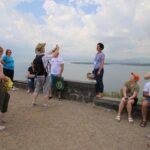
Most people rush right past “arches.” Don’t. Charents Arch is one of those spots where the view makes the whole stop worth it. It sits near Yerevan, between Garni’s pagan temple area and Geghard’s monastery complex, and it frames Mount Ararat in a way that feels almost symbolic.
You get about 30 minutes here, and admission is free. The key is to take a moment on the platform area inside/at the arch so you can see the panorama as the place was meant to be used. If your phone camera tends to overexpose bright skies, spend the first minute dialing it in—you’ll thank yourself later.
Also, this is a “good energy” break. You’re not deep in a museum yet. You’re outside, you’re stretching your legs, and the scenery sets up what comes next: pagan Garni, Christian Geghard, then the holy centers of Echmiadzin and beyond.
Garni Temple: pagan columns, sun symbolism, and a UNESCO badge
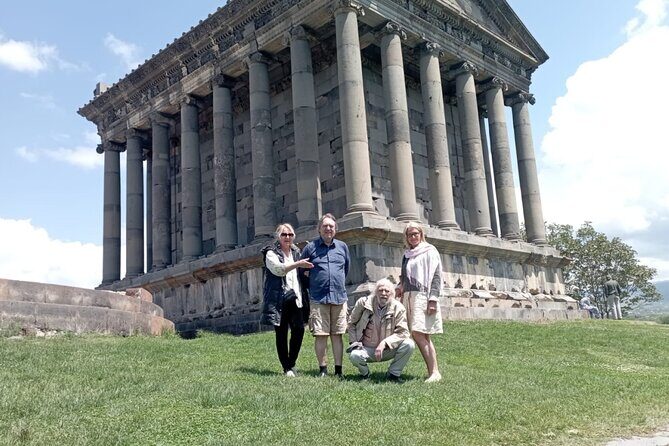
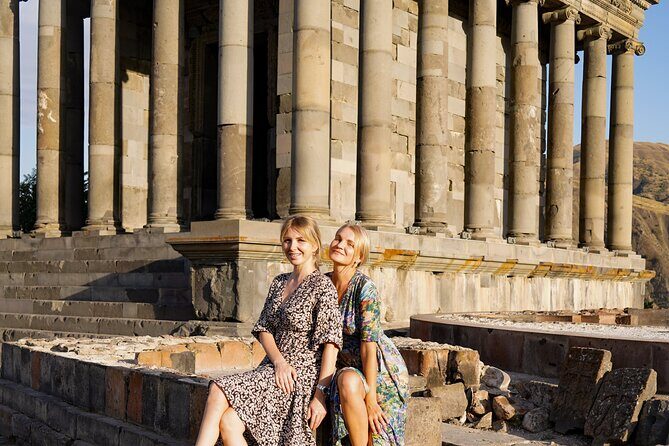
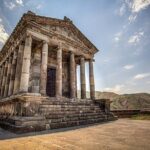
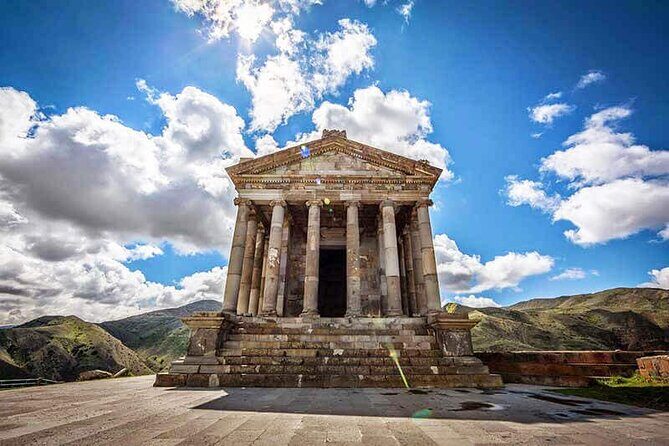
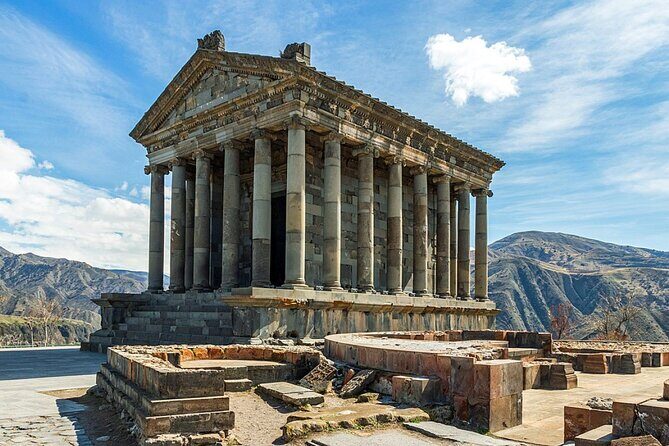
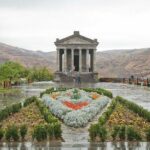
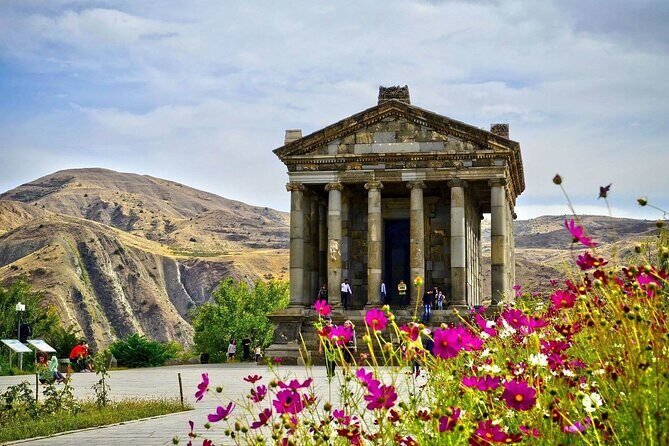
Garni Temple is the one pagan temple in Armenia that’s preserved well enough to really register. Built in the second half of the 1st century by King Trdat III, it survived long enough to become a UNESCO World Heritage site. After Christianity spread, it reportedly shifted roles as a summer residence for Khosrovadukht.
What I like most is that you don’t just see old stones—you get the story of what they meant. The temple is thought to be dedicated to Mithra, the sun god. That matters because it changes how you look at the whole structure. It’s not only architecture. It’s a belief system built into stone.
Expect around 1 hour on-site. Entrance fee for Garni isn’t included, so plan for that. If you’re visiting in hotter months, wear sun protection—Garni is exposed compared to the cave monastery later in the day.
And here’s a practical tip: this is usually one of the best places to grab lunch nearby because your timing works well. Lunch itself isn’t included, but the schedule gives you a real window for it.
Geghard Monastery: walking into stone that feels hollowed by time
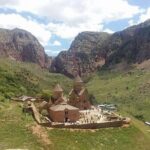
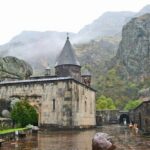
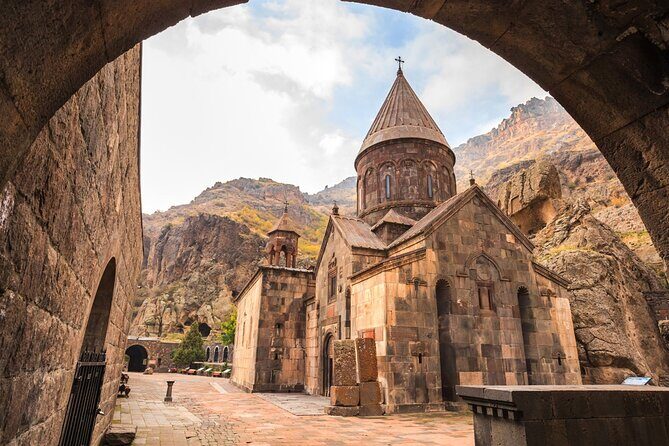
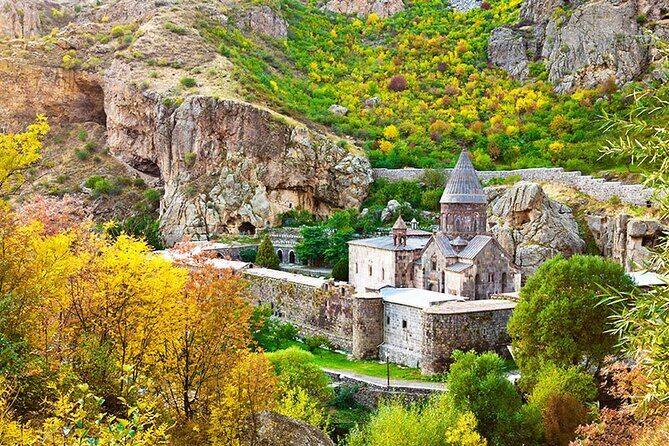
Geghard is the stop that tends to make people go quiet—in the good way. The monastery is carved into rock and described as completely hollowed out in a cave, which is why it’s often called a cave monastery.
It’s a major medieval architectural site, founded in the 4th century AD at the location of a sacred spring originating in the cave. That origin story helps you understand why the site feels “built around” something spiritual, not just around buildings.
Geghard also carries one of the day’s most specific religious links: the name Geghard (spear) is connected to the spear that pierced Jesus’ body on the cross. The spear itself is kept in the museum at Etchmiadzin, so when you reach Echmiadzin later, it won’t feel like a random museum stop. You’ll recognize the connection.
You’ll have about 1 hour here, and admission is free. That’s great value because the site is UNESCO-listed and still feels like you’re stepping into the past rather than into a theme park.
Etchmiadzin Cathedral and the Treasury Museum: where the faith shows its artifacts
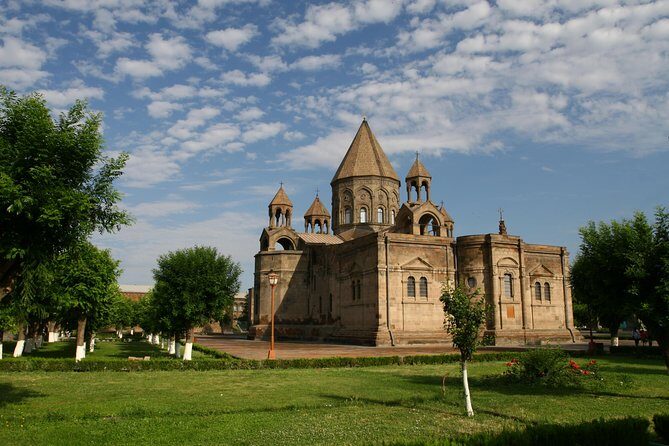
Echmiadzin is Armenia’s key Christian center, and the Cathedral grounds pack a lot into one area. The cathedral was founded in the IV century BC (as the tradition of its founding is presented), and the name means place of the descent of the Only Begotten. That meaning is reflected in how the altar areas are arranged.
One detail I find useful when you’re walking around: besides the main altar in the eastern part, there’s another altar in the middle at the site of the descent of Christ. When you know that, the layout makes more sense, and you don’t just feel like you’re touring “pretty buildings.”
The Treasury Museum is another story layer. Entrance fee for the Treasury Museum is not included, but if you choose to add it, you’ll see relics and ceremonial items such as gold and pearl embroidered church clothes, catholicos’ staffs and crosses, and other ritual objects made of gold, silver, and ivory. There are also cross-stones on the monastery grounds, including Amenaprakich (1279) and a cross-stone devoted to the victims of the 1915 genocide.
Also pay attention to the fact that this is still an active spiritual center. The residence of the Armenian patriarch (the Catholicos of all Armenians) is on the monastery complex, so the vibe here is living and maintained—not only historical.
You’ll spend about 1 hour total here. Admission is free for the cathedral grounds, but budget for the Treasury Museum ticket if you want the museum-side artifacts.



Saint Hripsime and Saint Gayane: two UNESCO churches in 60 minutes
After Echmiadzin, you’ll visit two church stops that keep the day feeling structured. Both are shorter, both are meaningful, and they help you see the variety of Armenian church design styles without dragging out the schedule.
Saint Hripsime Church
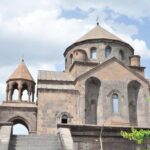
Saint Hripsime’s temple was founded in the 7th century by Catholicos Komitas I Aghtsetsi, at the sepulcher of Saint Hripsime. It has a UNESCO connection since 2000. You’ll also see that prominent Catholicos figures are buried in the courtyard, including Astvatsatur (1715–1725) and Garaped II Oolnetzi (1725–1729).
You’ll have about 30 minutes. This is a “look, read, breathe” stop. If you don’t have long, focus on the courtyard and the surrounding stonework. That’s where the site’s character shows up.
Saint Gayane Church
Saint Gayane Temple was built in the 7th century in honor of Saint Gayane, on the place of a 4th-century chapel. The relics of Saint Gayane are kept in the southern wall near the altar niche. Above the western entrance, there are preserved 17th-century murals connected to the birth of Christ.
There’s also a detail that can feel unusual if you’re not expecting it: nearby is a special room tied to the matah rite, an animal sacrifice and stabbing ritual described as customary for occasions like weddings or births, linked to the time of Saint Gregory the Illuminator.
You’ll have about 30 minutes here too. If this topic isn’t for you, you can still enjoy the architecture and murals without lingering in the ritual room area. You’re in control of how long you spend where.
Zvartnots ruins: a UNESCO site where imagination does the heavy lifting
Zvartnots Temple sounds grand because it was. Built in the 7th century—meaning Temple of Vigil Forces—it took about 20 years to construct. And then an earthquake destroyed it (described as occurring in the XX century), leaving ruins rather than a fully standing temple.
This is where the tour becomes very practical: you’re not just looking at rubble. The site is an archaeological reserve and museum founded in 1937, and you can see model versions of reconstructions plus sculptural fragments. Even without the full building, the scale of the remaining pieces helps you “rebuild” the place mentally.
You’ll spend about 1 hour, and admission is not included for Zvartnots. If you like photos, this is a good place for them—ruins give you strong angles, and the museum models can help you understand where things once stood.
Timing, pacing, and how to plan for tickets and lunch
A day like this can feel intense, so the pacing matters. The schedule is built to keep you moving while still letting you stop and absorb each site. In practice, you’ll be hopping between viewpoints and churches, so plan for a steady flow rather than long, slow hangs.
Entrance fees are the main surprise cost. Garni Temple is not included. The Zvartnots entrance fee is also not included. And the Echmiadzin Treasury Museum has an extra ticket. Some other stops are free, including Geghard, Echmiadzin grounds, and the Saint Hripsime and Saint Gayane church visits.
Lunch is not included either. The good news is that the timing works well for grabbing a meal around Garni. If you like to avoid decision fatigue, look up simple lunch options near Garni ahead of time, or ask your guide (if you chose the guide option) for what’s easiest and fastest.
One more small but real tip: wear shoes you can walk in comfortably. You’ll be on uneven stone in church areas and on outdoor paths around viewpoints.
Price and value: $105 for up to 3, plus what you should budget
The price is $105 per group (up to 3) for about 7 hours. That’s where the private part can actually pay off. If you’re traveling as a couple, you might effectively pay $52.50 per person. If you’re three friends, it drops to about $35 per person.
What you’re getting for that money is more than “a ride.” You get hotel pickup and drop-off, a professional driver, an air-conditioned vehicle, bottled water, and WiFi on board. You also get mobile tickets, which is one less thing to manage with paper vouchers.
What isn’t included is also clear, so there are no nasty surprises:
- Lunch
- Echmiadzin Treasury Museum entrance fee
- Zvartnots entrance fee
- Garni Temple entrance fee (and Symphony of the Stones, if you choose that component)
In other words: the base price covers the logistics and most site time. Then you add a few entrance tickets based on what you want to see inside.
Guide options and what the day is like in the car
This is private transportation, and the guide service is optional. You can upgrade to include an English or Russian-speaking guide. If you do, you’ll get more context and smoother transitions between stops, especially at places like Echmiadzin where details like altars, cross-stones, and the Treasury Museum make a big difference.
In the experiences I’ve seen tied to this route, the best days often include an enthusiastic guide. Arev is one name that has been highlighted for being friendly and informative, and drivers like David have been praised for doing their job well while keeping the day running on time.
If you don’t choose a guide upgrade, you’ll still have the driver handling movement between sites, but you might find that the interpretive layer depends more on what you read on-site.
Either way, the car setup helps. WiFi and air conditioning take the edge off travel between the sites, and bottled water keeps you from feeling “stuck” when you’re out walking.
Should you book this private Garni–Geghard–Echmiadzin–Zvartnots tour?
Yes—if you want a high-hit day focused on Armenia’s major heritage sites without dealing with transportation juggling yourself. It’s especially good if you’re short on time in Yerevan but still want more than one church complex and more than one ruin.
Skip it, or at least consider a different format, if you hate entrance fees and don’t want to think about extras. A few of the biggest-ticket items (Garni and Zvartnots) are not included, and lunch isn’t included either.
I’d also book this when you’re traveling with up to three people. The group price makes it feel fair, and the private pickup/drop-off keeps your day from turning into a public-transport scavenger hunt.
FAQ
How long is the tour from Yerevan?
It runs about 7 hours (approx.), with time allocated for each main stop.
What is the price and group size?
The price is $105 per group (up to 3 people).
Do you pick me up from my hotel?
Yes. Pickup is offered from your hotel, apartment, or hostel.
Is there an English-speaking guide?
English (or Russian) guide service is optional. You can upgrade to include the guide if you want that extra context.
What’s included in the tour price?
Hotel pickup and drop-off, bottled water, an air-conditioned vehicle, WiFi on board, private transportation, and a professional driver are included. Mobile tickets are also provided.
Are entrance fees included for all the sites?
No. Entrance fees are not included for Garni Temple and Zvartnots, and the Echmiadzin Treasury Museum has an entrance fee not included. Other stops listed are free.
Is lunch included?
Lunch is not included.
What tickets do I receive?
You’ll get a mobile ticket.
Can I cancel for free?
Yes. Free cancellation is available up to 24 hours in advance for a full refund. Canceling less than 24 hours before the start time does not receive a refund.