REVIEW · YEREVAN
Group Tour: Khor Virap, Garni temple, Geghard, Lavash baking
Book on Viator →Operated by Hyur Service · Bookable on Viator
Khor Virap to Garni in one day means you’ll get your Armenia bearings fast. This Yerevan tour strings together four major stops with a friendly, bilingual guide, plus comfort perks like on-board WiFi, light snacks, and air-conditioning.
I love how the day balances big-name sights with real time to look around. You’ll get free admission at several key sites (Khor Virap, Geghard, and Azat Reservoir) and you also get a hands-on lavash baking master class where you taste what you learn. That’s a solid intro to Armenian culture in just 8–9 hours.
One thing to plan around: views depend on the weather. If you hit fog or clouds, your hoped-for Ararat moment from Khor Virap may be muted.
In This Review
- Key highlights to pay attention to
- Starting in Yerevan: Hyur Service, WiFi bus comfort, and a smooth schedule
- Khor Virap: the story behind the dungeon and the Armenia view
- Azat Reservoir: a 20-minute breather for photos and legs
- Lavash baking at Abelyan’s House: UNESCO bread you can actually taste
- Geghard monastery: rock-carved churches and the way sound carries
- Garni temple: pagan ruins, Greco-Roman style, and royal remnants
- Guide quality and what the bilingual setup means for you
- Price and what $38 buys in real value
- Should you book this Khor Virap–Garni–Geghard day tour?
- FAQ
- What is the duration of the tour?
- How much does the tour cost?
- Are guide services included, and is it bilingual?
- Is lunch included?
- Do I need to buy admission tickets separately?
- Is WiFi available during the tour?
- Do I need hotel pickup?
- What time does the tour start?
- Is the tour outdoors all day?
Key highlights to pay attention to
- WiFi on the bus plus bottled water and pastries make the long drive feel shorter
- Bilingual guiding (English + Russian) with clear instructions keeps a group of up to 49 moving
- Khor Virap and Geghard are big cultural stops with free admission
- Lavash at Abelyan’s House is a UNESCO-recognized craft, and you’ll taste the result
- Photo time is built in at each major viewpoint, not just quick photo stops
Starting in Yerevan: Hyur Service, WiFi bus comfort, and a smooth schedule
This is a straightforward day trip that starts at Hyur Service on Nalbandyan Street (96 Nalbandyan poxoc). The start time is 10:00am, and the tour returns to the same meeting point. It runs about 8 to 9 hours, so it’s a good choice if you want a full day without worrying about multiple tickets, transport planning, or which road to take.
The bus setup is part of the value. You get air-conditioned vehicles, bottled water, and light refreshments like pastries. On top of that, there’s WiFi in the vehicle, which is handy for messaging, uploading photos, or just keeping the day comfortable (especially if you’re traveling solo and want to stay in contact).
Group size matters too. This tour caps at 49 travelers, and the experience is designed to handle that with consecutive English and Russian commentary. One practical tip: you won’t know your seat in advance. If you care about being near an outlet (if any) or prefer a window seat for photos, arrive a bit early so you can pick what’s available.
You can also read our reviews of more tours and experiences in Yerevan.
Khor Virap: the story behind the dungeon and the Armenia view
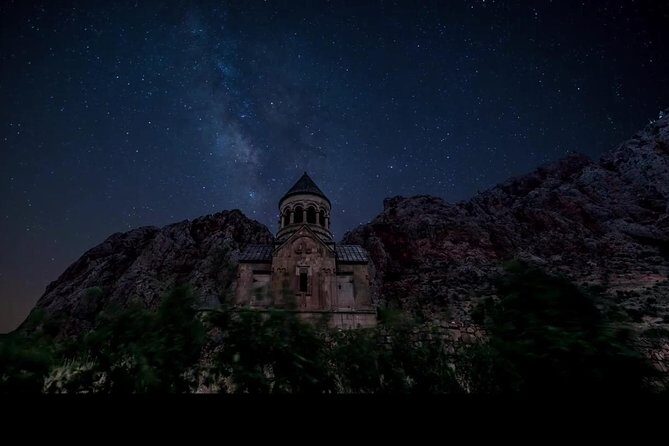
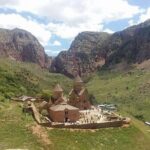
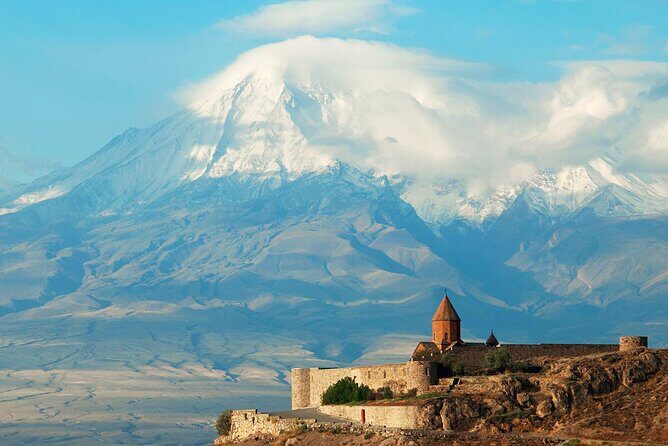
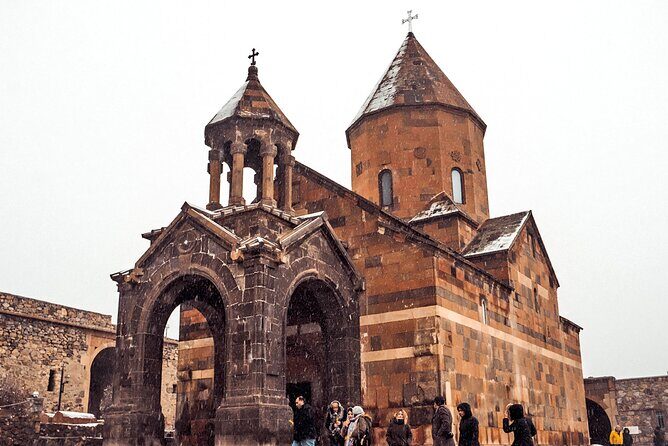
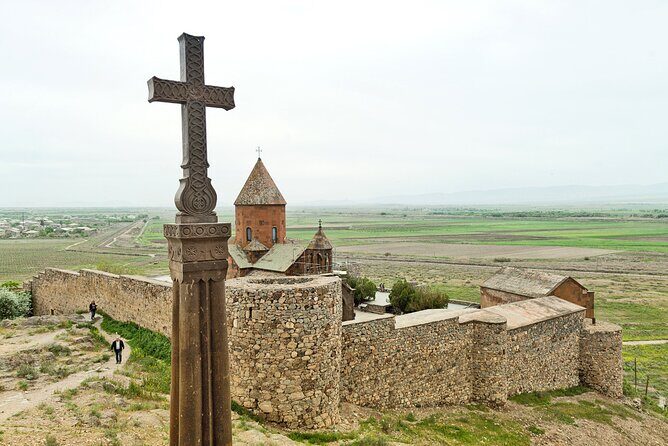
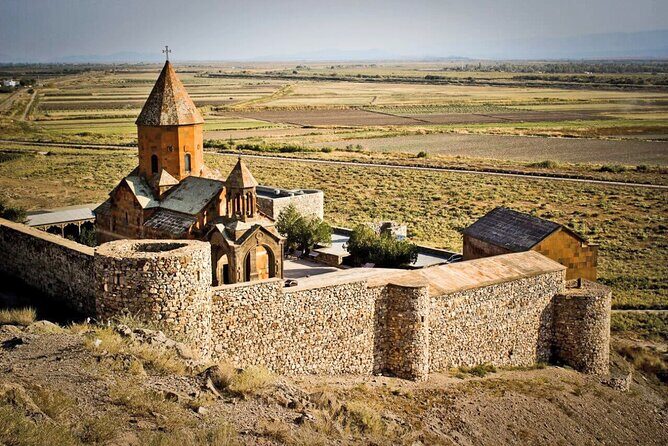
Khor Virap is the pilgrimage site people mention first for a reason. This is where Armenia’s adoption of Christianity connects to the legend of Saint Gregory the Illuminator. The key idea is simple and powerful: before the conversion of King Trdat III, Gregory was imprisoned in a dungeon. The monastery church at Khor Virap was built over that site, centuries later, and the whole place carries that religious weight.
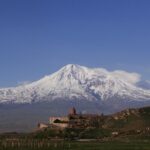
What makes it a standout stop is the combination of story and sight. From the monastery area, you can look toward Mount Ararat. That doesn’t mean you’ll always see it perfectly—weather can get in the way. If you’re visiting when the sky is hazy, foggy, or cloudy, your view may be limited, and the photos won’t look as dramatic as you hoped. Still, the site itself remains worth it for the atmosphere and the context you get from the guide.
You’ll have about 1 hour here. That’s enough time to slow down, listen, and take pictures without feeling rushed.
Azat Reservoir: a 20-minute breather for photos and legs
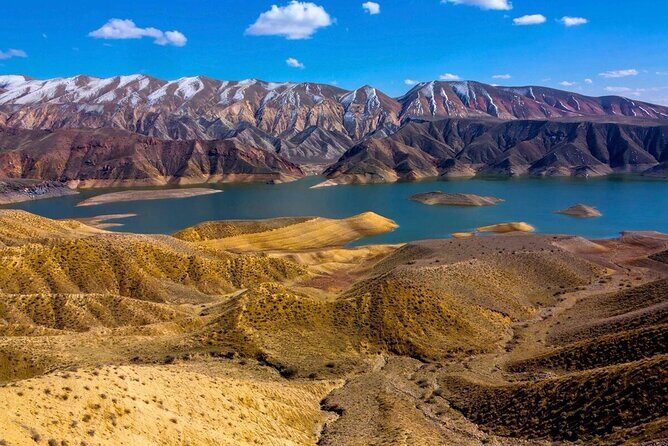
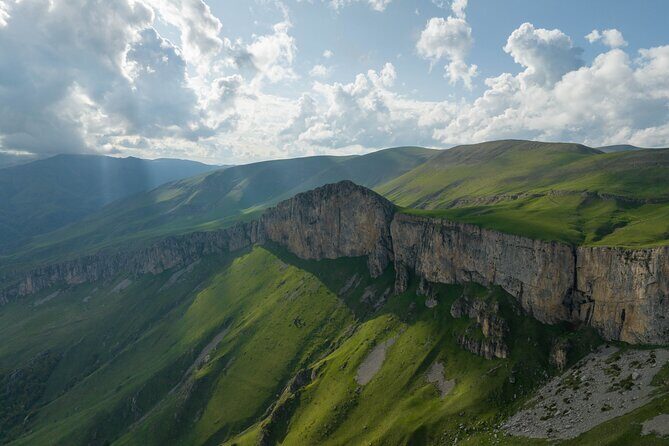
Between the big stops, there’s a short break at Azat Reservoir. It’s only about 20 minutes, and the point is mainly viewpoints and photos rather than a long visit. If your day has felt heavy on driving time, this stop acts like a reset button.
Since the admission is free, you’re not losing value by treating it as a quick stretch. I’d use the time to check the direction of light and take wide shots from a few angles, because it’s the easiest place to improve your photo set without extra effort.
Lavash baking at Abelyan’s House: UNESCO bread you can actually taste
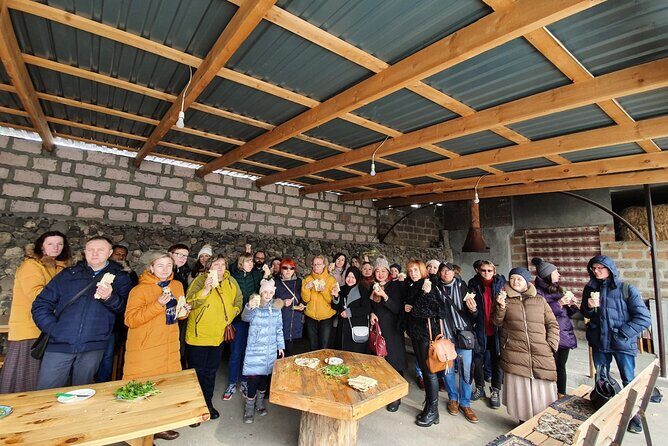
This is the stop that turns the tour from sightseeing into something you remember with your senses. At Abelyan’s House, you’ll learn how lavash is made. Lavash is a thin, soft Armenian flatbread traditionally baked in a tonir (a special ground oven). The craft takes skill, and it’s traditionally done by women—so you’re seeing a real cultural practice, not a performance for tourists.
You’ll spend about 30 minutes here, and the best part is that tasting is included. Along with the lavash, you’ll get fresh greens and local cheese. If you only have one cultural food moment on this trip, this is the one I’d prioritize.
Now, let’s talk lunch, because this is where people often get surprised. Lunch is not included, and the tour runs through the area where options are limited. You may find that you end up eating where the lavash program takes place. The lunch price is listed as 3900–4900 AMD (about 10–13 USD). If lunch is offered as part of the setting, order something from the available options in that moment, since there aren’t close alternatives right next door.
If you’re traveling with food allergies or strict preferences, ask questions early and be clear. The program includes tasting, and you’ll want to know what’s in the cheese and sides.
Geghard monastery: rock-carved churches and the way sound carries
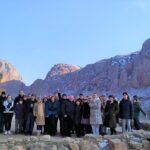
Geghard is one of those places where architecture does the talking. The monastery complex is famous for its 13th-century Armenian design, including churches that are hewn into a huge rock. Even without a long technical explanation, you can feel the difference between Geghard and a typical monastery visit: the rock itself becomes part of the structure.
This is also a cultural setting for commemoration and song. The complex’s construction is known for making it a strong place for spiritual songs. That matters because it changes how you experience the space. Instead of just looking, you start to imagine what it sounded like when ceremonies filled the air.
You’ll have about 1 hour, and admission is free for the stop. There are also plenty of details to spot: khachkars (cross-stones) and subtle sculptural work. If you’re a slower walker, Geghard rewards it. If you’re rushing, you’ll miss the small carvings that make the site feel lived-in rather than staged.
Garni temple: pagan ruins, Greco-Roman style, and royal remnants
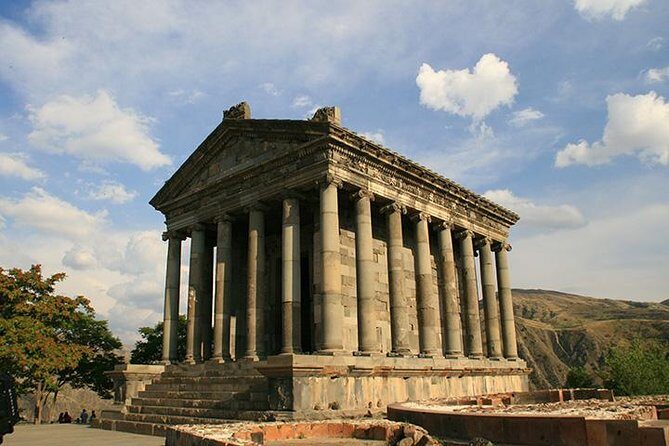
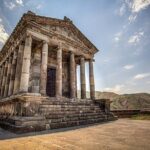
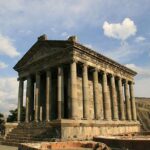
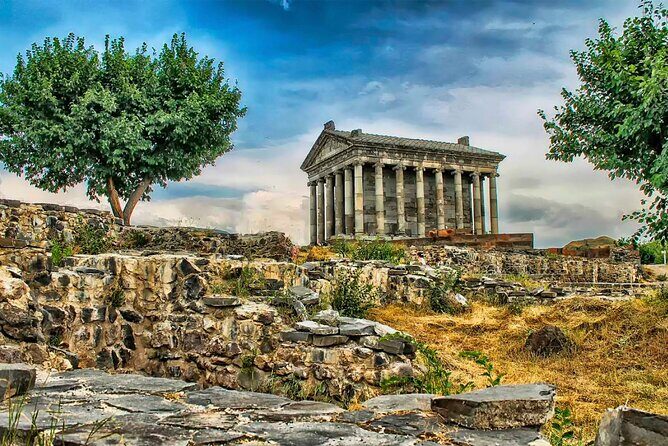
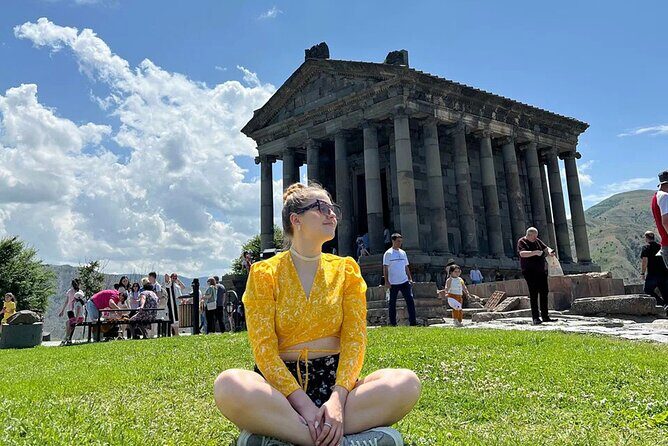
After Geghard, the day shifts to Garni, and it’s a different mood. Garni is described as the unique surviving example of heathen culture in Armenia, and it blends Greco-Roman and Armenian styles. The temple dates to the first century AD, ordered by King Trdat the First, dedicated to the God of the Sun.
Then history pivots. After Christianity was adopted in 301, the pagan temple lost its role, and Garni became a summer residence for kings. Even if you’re not deep in architectural history, you’ll see the timeline in what’s left: the temple ruins, plus nearby remnants like the royal palace ruins and the so-called bathroom area with a stunning mosaic.
Garni’s admission is included, and you’ll have about 1 hour here. I’d use at least part of that hour to get a few angles on the triangular cape setting. The temple sits in a way that rewards moving around instead of shooting from one spot.
Guide quality and what the bilingual setup means for you
The guide can make or break a day tour like this, and this one is built around a strong, practical explanation style. The format is English + Russian consecutively, meaning you’re not stuck listening to one language the whole day. On departures where guides like Tigran were mentioned, the result was smooth bilingual handling even when the tour ran under quieter seasonal conditions.
You may also get helpful support from an intern or assistant guide. One example that came up was Jasmine, who was praised for answering lots of niche questions. That tells me the operation expects travelers to ask things, and the team is ready for it.
Another detail I appreciate: the tour keeps the group organized without micromanaging everyone. In bigger groups, it can be tempting to herd people like luggage, but here the experience is set up for both listening time and independent wandering time at each major stop. It’s the best of both worlds if you like structure but also want to breathe.
Price and what $38 buys in real value
At $38 per person, this isn’t trying to be a luxury private tour. It’s more like a smart, efficient sampler of Armenia’s most famous landmarks.
Here’s the value logic I see:
- You get admission included for some stops (like Garni) and free admission for others (like Khor Virap, Geghard, and Azat Reservoir). That reduces the risk of feeling like you’re paying for “views only.”
- Transport is included via an air-conditioned vehicle, and you don’t need to arrange local driving yourself.
- Comfort extras are meaningful on a long day: bottled water, pastries, and WiFi. Those are small items, but they add up fast when you’re out for 8–9 hours.
- You also get a cultural experience that’s not just walking through buildings: lavash baking with included tasting.
The main extra cost you should plan for is lunch (3900–4900 AMD, 10–13 USD). If you budget for that from the start, the day feels complete rather than “nickel-and-dimed.”
Should you book this Khor Virap–Garni–Geghard day tour?
Book it if:
- You’re a first-timer in Yerevan and want a high-impact overview without assembling logistics.
- You care about real Armenian culture, not just quick photo stops, and you’ll enjoy lavash as a hands-on food memory.
- You want a guide-driven day with clear timing, plus time to wander.
Skip or reconsider if:
- You’re chasing a guaranteed Ararat view. Your chances are weather-dependent, and fog can flatten the drama.
- You hate group travel. This caps at 49, but it’s still a group. If you want quieter pacing, you might prefer a smaller private option.
If you want my bottom line: this is a strong introduction day. It’s efficient, well-organized, and it gives you at least one experience—lavash baking—that goes beyond monuments and turns into something you’ll remember at dinner.
FAQ
What is the duration of the tour?
The tour runs about 8 to 9 hours.
How much does the tour cost?
The price is $38.00 per person.
Are guide services included, and is it bilingual?
Yes. You’ll have a professional guide who provides English plus Russian consecutively.
Is lunch included?
No. Lunch is not included, and you should expect to pay around 3900–4900 AMD.
Do I need to buy admission tickets separately?
No. Admission tickets are included where noted, and some stops are described as having free admission.
Is WiFi available during the tour?
Yes. There is WiFi in the vehicles.
Do I need hotel pickup?
No. Hotel pick-up and drop-off are not included. You meet at Hyur Service.
What time does the tour start?
The tour starts at 10:00am.
Is the tour outdoors all day?
Most of the time you’ll be outside at the sights, and the tour operates in all weather conditions, so dress appropriately.