REVIEW · YEREVAN
Private Day Trip from Yerevan to UNESCO World Heritage Sites
Book on Viator →Operated by Explora Armenia · Bookable on Viator
Armenia’s sacred sites, plus Ararat views, in one day. This private route strings together UNESCO World Heritage sites with clear, story-driven stops, from Etchmiadzin to Geghard. I really like how the day is guided and paced, and I also appreciate the human touches like a guide-led local pie surprise that’s been noted before. The main thing to watch for: Zvartnots and Garni have separate entrance fees, so your all-in cost will be a bit higher than the headline price.
You’ll start with hotel pickup and use a comfortable, air-conditioned vehicle with WiFi and bottled water on board. It’s also genuinely private, so you won’t be stuck timing your day around strangers, and that makes the long religious-and-ruins day feel easier to manage. One more practical consideration: the stops are about an hour each, so you’ll want to be ready to move when the group does.
This is priced like a full day of door-to-door service, English guiding, and UNESCO-heavy sightseeing without you having to plan the route yourself. If you want a smooth, high-value highlights day—without feeling rushed the whole time—this is a strong fit.
In This Review
- Key things to know before you go
- Value and what you’re really buying for $89.36
- Pickup, vehicle comfort, and how the day keeps moving
- Holy Etchmiadzin Cathedral: Armenia’s Christian center
- Saint Hripsime Church: a martyr story turned into Armenian architecture
- Zvartnots Temple ruins: what a 7th-century cathedral looks like as ruins
- Charents’ Arch: Mount Ararat in one neat viewpoint
- Geghard Monastery: rock-carved faith in a canyon setting
- Garni Temple: Armenia’s pagan stone—and the story behind it
- Lunch, timing, and the small things that make the day easier
- Should you book this private Yerevan UNESCO day trip?
- FAQ
- Is this a private tour?
- How long is the day trip?
- What’s included in the price?
- Are lunch and drinks included?
- Do I have to pay entrance fees for all sites?
- What language is the tour in?
- Can I cancel and get a refund?
Key things to know before you go
- Private group day trip from Yerevan, so your schedule stays in your control.
- Hotel pickup and drop-off plus air-conditioned transport and WiFi on board.
- Two paid entrances: Zvartnots and Garni (both listed as not included).
- Six UNESCO stops and sites centered on early Christianity and Armenian architecture.
- Charents’ Arch is a great breather with one of the best Mount Ararat views on the route.
- Language and format: English offered, with a mobile ticket.
Value and what you’re really buying for $89.36
At $89.36 per person, you’re not just paying for transport. You’re paying for a guided day that’s built around specific World Heritage stops, with pickup, on-the-road comfort, and the kind of “what am I looking at?” context that turns monuments into stories. The time is also practical: about 6 to 7 hours, which is long enough to feel complete but not so long that you lose the whole day.
The trade-off is simple. Two of the big sights require extra entry fees (Zvartnots and Garni are each listed at 1500 AMD). That doesn’t ruin the value, but it’s the one part you’ll need to budget for up front. Also, lunch isn’t included (it’s optional), so if you tend to get hungry, plan to snack or buy lunch during breaks.
You can also read our reviews of more private tours in Yerevan


Pickup, vehicle comfort, and how the day keeps moving
This tour runs on hotel pick-up and drop-off, which matters in Armenia more than people expect. Yerevan sites and viewpoints don’t all sit right next to public transit, so door-to-door logistics makes the day feel effortless. You’ll travel in an air-conditioned vehicle, and there’s WiFi on board plus bottled water, so you’re not scrambling for basic needs while you’re on the move.
The pacing is built around roughly one-hour blocks per stop. That’s ideal if you want to see a lot and keep momentum, but it also means you won’t have hours to wander at a slow pace. If you’re the type who likes to sit quietly and read every plaque, you’ll still enjoy it—you just may want to show up ready to absorb more quickly.
Holy Etchmiadzin Cathedral: Armenia’s Christian center
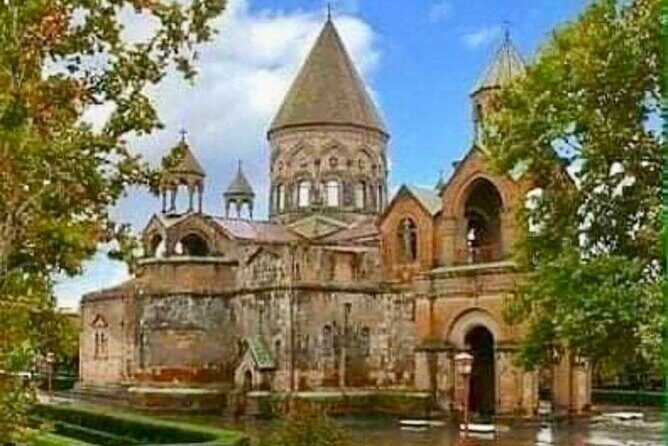
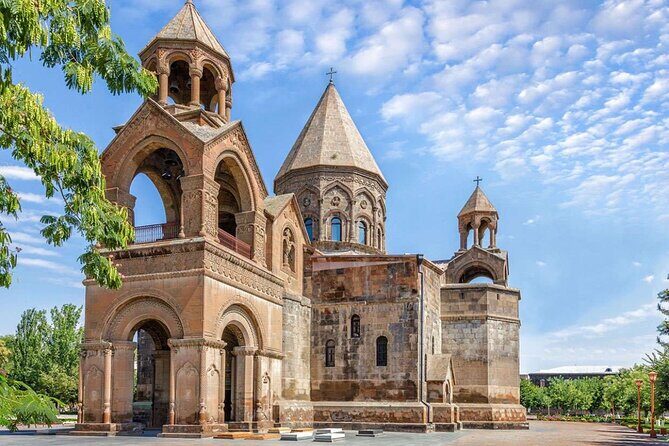
Holy Etchmiadzin is more than a pretty cathedral. It’s the religious center for Armenians, and it marks a major milestone in world Christianity. Armenia adopted Christianity as a state religion in 301, and that timeline sits behind everything you see here. The Etchmiadzin Cathedral itself was listed by UNESCO in 2000, which helps explain why it’s treated with such care.
You’ll spend about one hour, and admission is listed as free. That’s a rare perk, because it lets you spend your time on the building and its setting rather than worrying about additional costs. The key value of this stop is the framing: the guide can tie the architecture and the role of the Church to the country’s identity, so later stops feel less like separate monuments and more like one long story.
Practical tip: since this is a working religious center, keep your schedule respectful and be ready for brief transitions. Comfortable shoes help too, because time adds up across a full day.
Saint Hripsime Church: a martyr story turned into Armenian architecture
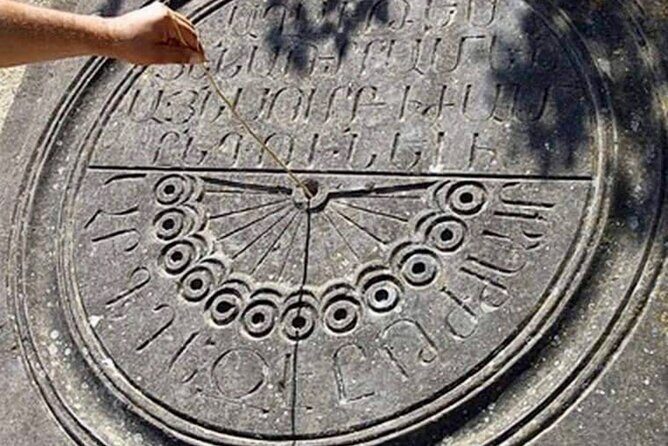
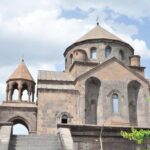
Hripsime Church is another UNESCO-listed site, and it comes with a strong legend that dates back to early Christianity. The story centers on Hripsime fleeing persecution under Roman Emperor Diocletian. She’s described as devoted and refusing to marry Trdat III, choosing martyrdom instead. A small chapel is said to have been built over the spot connected to her death, and later—by the order of Catholicos Komitas—a remarkable church was built in its place in the 7th century.
You’ll have about one hour here, with admission also listed as free. I like this stop because the legend gives you a lens for noticing details. If you only see it as a church, it can feel like one more stop. If you understand the narrative, it turns into a living piece of belief and art history.
Consideration: churches can feel visually similar on a long day. This is where the guidance helps most—make sure you’re paying attention to how the Hripsime story explains why the site matters to Armenia.
Zvartnots Temple ruins: what a 7th-century cathedral looks like as ruins
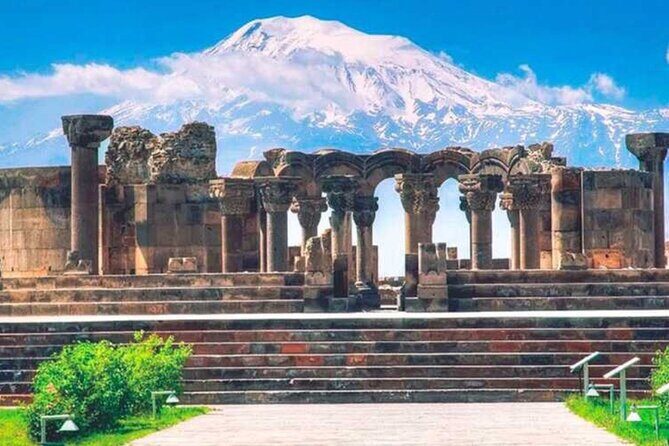
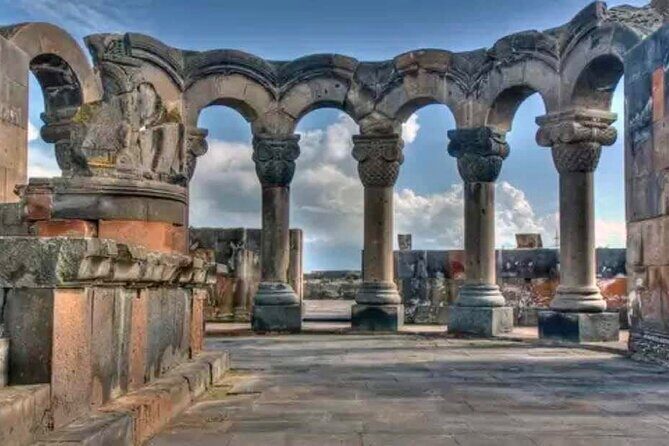
Zvartnots is the “wow, this used to be bigger” stop. The ruins belong to a medieval Armenian cathedral built in the 7th century, and UNESCO recognizes the site for its historic value. It’s listed as a stop where the entrance is not included, with an admission fee of 1500 AMD.
Expect about one hour. This is enough time to understand the scale and appreciate the craftsmanship, even if you’re not seeing a fully intact building. Ruins can sometimes feel like a walk-and-hope situation. Here, the value is that the ruins are still tied to a specific story and time period, so you’re not left wondering what you’re meant to notice.
Practical tip: bring a bit of patience. Ruins reward attention, but you don’t need long hours—just a couple of focused minutes at key viewpoints.
You can also read our reviews of more historical tours in Yerevan
Charents’ Arch: Mount Ararat in one neat viewpoint
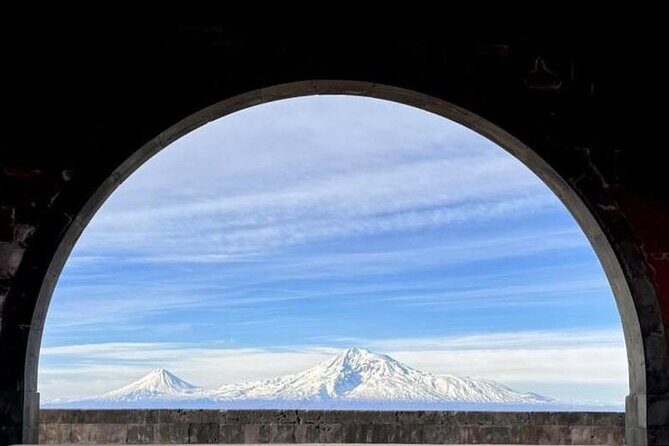
Charents’ Arch is where the day takes a breath. You get a chance to admire the view of Mount Ararat, one of the most recognizable symbols tied to Armenia’s geography and identity. This stop runs about one hour, and admission is listed as free.
This is a smart inclusion because it balances the heavier religious stops with scenery. It also helps reset your eyes after hours of stone details. If your day includes multiple early-Christian sites, a viewpoint stop can prevent the “same feeling, different church” effect that sometimes happens on UNESCO-heavy tours.
Practical tip: Ararat views can depend on weather and light. If you’re sensitive to temperature, layers help, since viewpoint weather can change quickly.
Geghard Monastery: rock-carved faith in a canyon setting
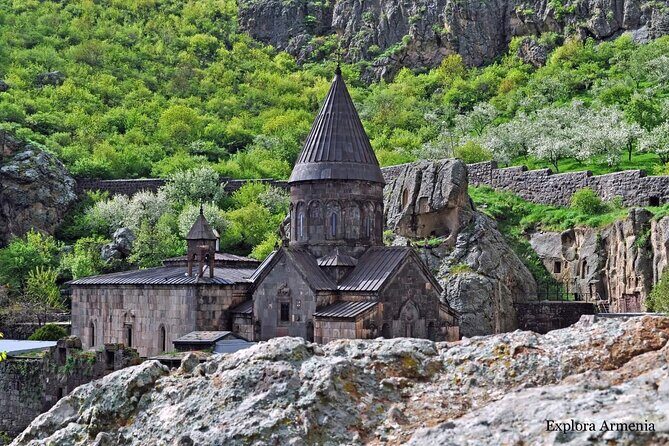
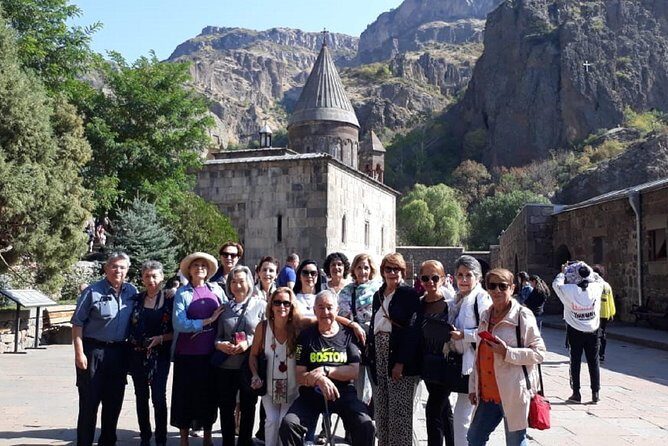
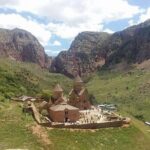
Geghard Monastery is where the day turns from history lesson into something more atmospheric. It’s a UNESCO World Heritage Site, and tradition places its founding in the 4th century on the site of a sacred spring connected to Saint Gregory. The current monastery structures date mainly from the 13th century, and some parts are carved or built into the rock.
You’ll spend about one hour, and admission is listed as free. I like this stop because it’s not just religious architecture. The setting matters: you’re surrounded by precipices and curved cliffs, and the monastery’s austerity matches the rugged canyon environment. That contrast is the point. It makes Geghard feel like it belongs to the landscape as much as to the faith.
Consideration: Geghard can involve uneven ground and stone surfaces. Take your time where you step, especially if you’re visiting when the ground is slick.
Garni Temple: Armenia’s pagan stone—and the story behind it
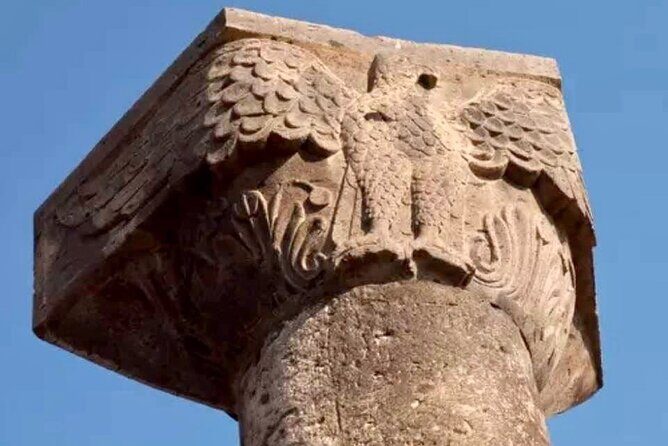
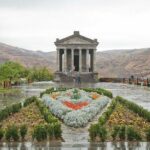
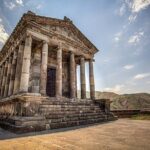
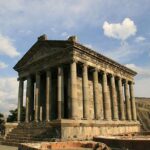
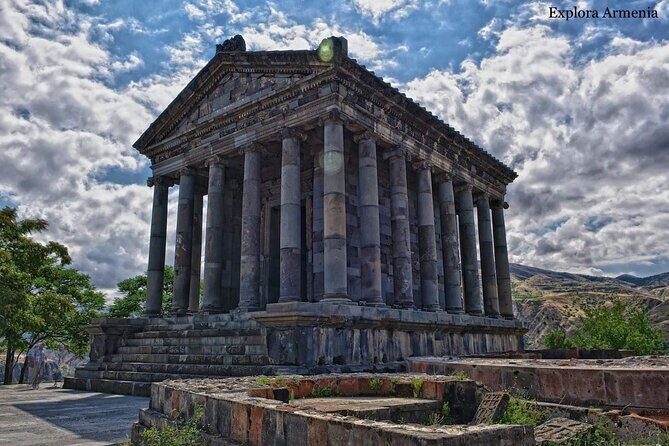
Garni Temple is described as the only preserved pagan temple in the Caucasus. The construction is dated to the second half of the 1st century, dedicated to the Sun God. After Armenia was Christianized, the temple later served as a royal residence. That transformation is part of why Garni sits well at the end of this route: it gives you a different angle on Armenian history, moving from early Christianity to older traditions and their later reuse.
Expect about one hour at this stop. Admission is not included, with an entry fee of 1500 AMD. Even if you’re not into ancient religion, Garni works because the stones are dramatic and the context is clear. You’re not just looking at remnants; you’re seeing how cultural layers build on top of each other.
Practical tip: this is also a good time to ask questions about how Armenia’s different religious eras influenced daily life and architecture, since the tour already set up that timeline earlier.
Lunch, timing, and the small things that make the day easier
Lunch is listed as optional with an additional fee. That means you can keep flexibility, but it also means you should think ahead about when you might eat. With six stops plus driving time, waiting until you’re starving usually leads to a rushed meal that’s less satisfying.
Here’s what I recommend to keep things smooth:
- Plan on a quick snack or water refills during transitions, since bottled water is included.
- If you choose lunch, pick something that’s quick and easy to digest so you don’t feel wiped out for Geghard or Garni.
- Wear comfortable footwear. Churches, ruins, and monastery terrain all add up over the day.
One thing that elevates this tour is the guidance style. In past experiences with guides like Mari (also written Marya), the storytelling has been praised for being precise, with context about the country and its culture. There’s also been mention of a local pie surprise, which feels like a small but memorable way to end the day.
Should you book this private Yerevan UNESCO day trip?
Book it if you want a structured, high-value day that hits major UNESCO Armenian sites without planning stress. It’s especially good for first-time Armenia visitors who want a clear narrative from early Christianity (Etchmiadzin, Hripsime) to Armenian architectural achievements (Zvartnots, Geghard) and then the older pagan past at Garni. The private format, hotel pickup, and air-conditioned comfort make it feel like a real service, not a bus tour with guesswork.
Skip or rethink it if you hate extra entrance fees. Zvartnots and Garni cost extra, and lunch isn’t included. Also, if you need long free time at each monument to roam slowly, the roughly one-hour rhythm may feel tight.
If your goal is a complete UNESCO highlights circuit in a single day, this one is a solid match.
FAQ
Is this a private tour?
Yes. It’s a private day trip, meaning only your group participates.
How long is the day trip?
It runs about 6 to 7 hours.
What’s included in the price?
Hotel pick up and drop off, comfortable transportation, WiFi on board, air-conditioned vehicle, and bottled water.
Are lunch and drinks included?
Lunch is not included (it’s optional with an additional fee). Alcoholic beverages are also not included.
Do I have to pay entrance fees for all sites?
No. Admission for Etchmiadzin, Saint Hripsime Church, Charents’ Arch, and Geghard is listed as free. Entrance for Zvartnots and Garni is not included, and both are listed at 1500 AMD.
What language is the tour in?
English is offered.
Can I cancel and get a refund?
Yes. Free cancellation is available up to 24 hours in advance for a full refund.