REVIEW · YEREVAN
Private tour to Garni Temple, Geghard Monastery, Tsaghkadzor, Kecharis Monastery
Book on Viator →Operated by Jan Armenia Tours · Bookable on Viator
Ararat views start fast on this day trip. You’ll start with Charents Arch for that famous panorama, then move through ancient sites and end in Tsaghkadzor’s mountain monastery atmosphere. The best part is the pacing: sites are close enough that the day feels full, not rushed.
I love how the route mixes eras in a clean order: Garni Temple (pagan Roman-era stone) then Geghard (cave monastery and UNESCO site). I also like the practical setup for the day, with pickup, an air-conditioned car, and bottled water.
The only real heads-up: key entrances are extra (Garni, Symphony of stones, and the Tsaghkadzor ropeway), so you’ll want cash/card ready for onsite tickets.
In This Review
- Key things to know before you go
- From Yerevan to Charents Arch: the Ararat warm-up
- Garni Temple: a pagan Roman ruin that survived earthquakes
- Geghard Monastery: cave-carved churches and UNESCO gravity
- Tsaghkadzor: gorge of flowers, ski air, and a resort rhythm
- Kecharis Monastery: St. Gregory and a 220-year building saga
- How the private format keeps the day smooth (and why it’s worth it)
- Price and value: what $110 per group gets you
- Should you book this Garni–Geghard–Tsaghkadzor day?
- FAQ
- What places are included in this private tour?
- How long does the tour take?
- Is pickup from Yerevan included?
- Is the tour private or shared?
- What language is the guide?
- What entrance fees are not included?
- What’s included in the tour price?
- Is there a cancellation window?
- Do I need special physical fitness for the cave monastery?
Key things to know before you go
- Ararat panorama first: Charents Arch is your quick payoff before the long sightseeing legs.
- Cave monastery factor: Geghard is carved into a cave, so expect a different feel than a typical church.
- One-day mountain change of pace: Tsaghkadzor shifts you from historic ruins to a resort town with cool altitude air.
- Monastery complexity at Kecharis: multiple churches and chapels tied to a long building timeline.
- Comfort built in: private vehicle with AC and onboard WiFi keeps the travel part easy.
- Extra tickets to budget: Garni, Symphony of stones, and ropeway aren’t included in the tour price.
From Yerevan to Charents Arch: the Ararat warm-up
This tour is built around one simple idea: hit the best views early, while you still have energy. You’ll be picked up in Yerevan and taken by private vehicle to the first stop near the Garni and Geghard area. That matters because Armenia’s sight angles can be picky—if weather or clouds shift, you’ll want your big panorama done sooner rather than later.
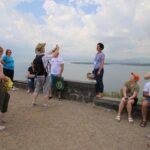
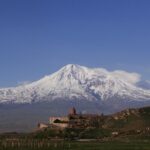
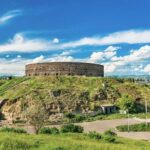
Charents Arch is one of those places that looks ordinary until you step inside and look out. The arch frames the mountains like a camera viewfinder. And the payoff is the chance to take in Mount Ararat from the best kind of angle: wide, atmospheric, and very “this is why people come here.” You don’t need to be a history buff to enjoy it. It’s just good geography and good placement.
Plan about 20 minutes here. It’s enough time to walk the area, take photos, and enjoy the stillness. If you’re the type who likes a slow moment with a view (not just a selfie-and-go), this stop helps you start the day right.
Practical tip: bring a light layer. Even when Yerevan feels mild, hilltop viewpoints can feel cooler.
You can also read our reviews of more private tours in Yerevan

Garni Temple: a pagan Roman ruin that survived earthquakes
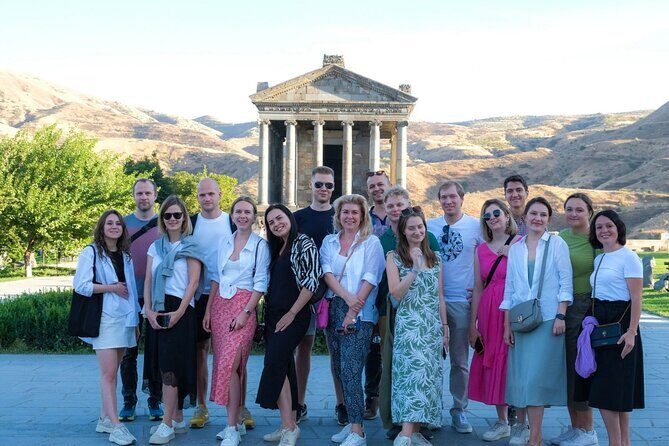
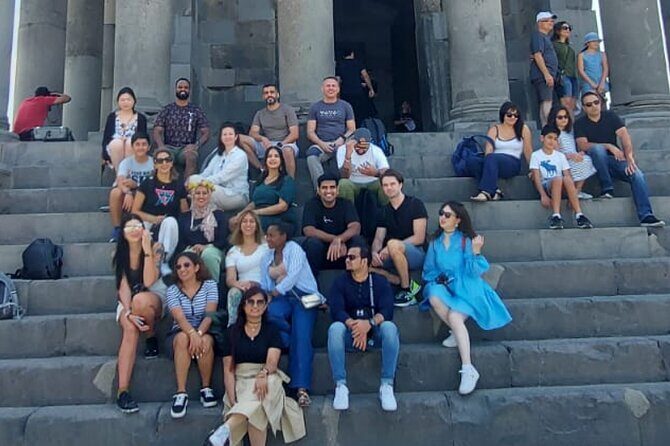
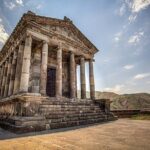
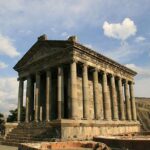
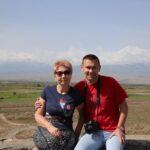
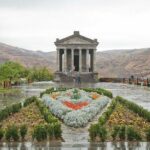
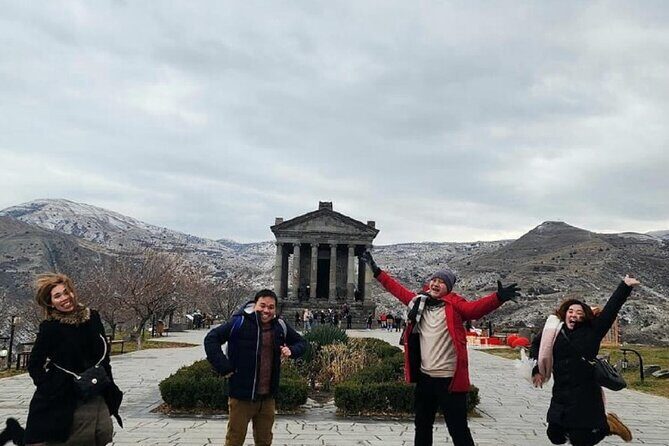
Next comes Garni Temple, the only surviving pagan temple on Armenia’s territory. It’s a rare setup: a 1st-century structure tied to King Trdat III, built in the second half of the 1st century, with connections to the Sun god Mithra. When Christianity spread, Garni shifted roles and became a summer residence connected to Khosrovadukht, the sister of Trdat III.
Then the landscape changed again. In 1679, an earthquake destroyed much of the temple, leaving fragments and scattered column pieces. What you see now is part ruin, part miracle—enough to imagine the scale, but still honest about what time did to it.
Why I think Garni is worth your money and time: it’s not just “old stones.” It’s a visible timeline. You can stand there and feel the layer-cake of Armenian history—pagan worship, later Christian use, destruction, and preservation.
One drawback: the entrance fee is not included. That’s also true for some other stops later, so budget for tickets and keep your schedule flexible if there’s a line. A useful strategy is to buy tickets directly from the office onsite so you can avoid standing around waiting at the entrance.
Expect around 2 hours including time to walk, photograph, and read a bit at your own pace.
Geghard Monastery: cave-carved churches and UNESCO gravity
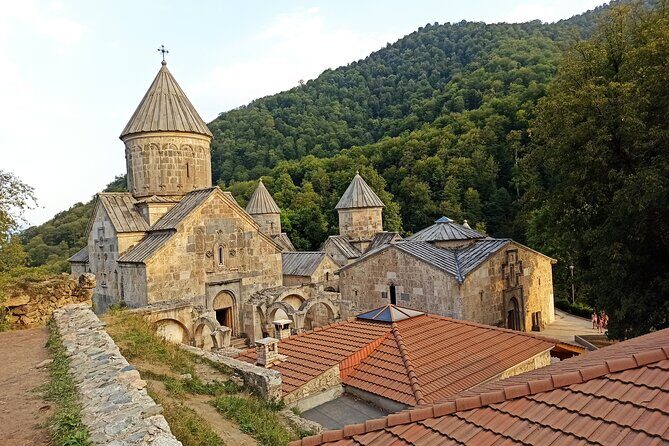
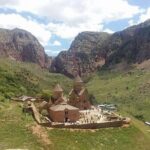
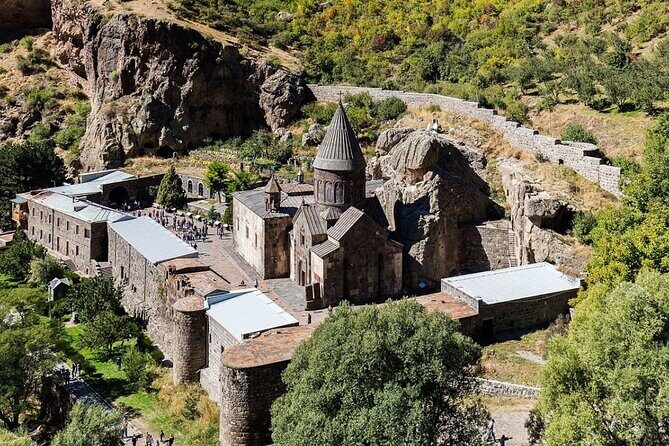
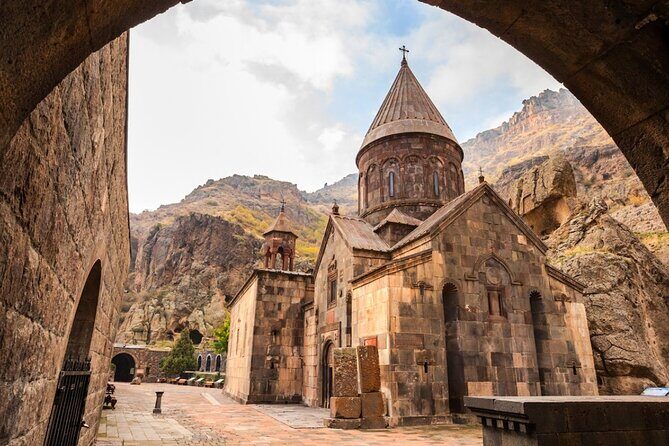
Geghard is where the day becomes more than scenic. This monastery complex is carved completely into a cave—often called a cave monastery—and it’s one of Armenia’s most dramatic medieval sites. The setting is part of the architecture: it changes the acoustics, changes the light, and changes your sense of scale.
Geghard dates back to the 4th century AD, built around a sacred spring that originates in the cave. The name Geghard (meaning spear) connects to a Christian story linked to the spear that pierced Jesus. Whether you connect through faith or just through architecture, the atmosphere hits.
This is also a UNESCO World Heritage site, and that label is useful here in a practical way. It usually means the place is protected, interpreted, and recognized for its significance—not just locally interesting.
You’ll spend about 2 hours. That gives you time to move slowly through the cave areas and take in the stonework. The site layout can include stairs and uneven surfaces, so moderate physical fitness helps. You don’t need to be a hiker, but you should be comfortable walking a bit and watching your footing.
Entrance is free here, which makes the stop easier to fit into a day budget. Still, go in expecting a quieter, more reflective pace than the open-air view stops. Geghard is the kind of place where your photos look better when you pause and look at them with your own eyes, not just through the camera.
Tsaghkadzor: gorge of flowers, ski air, and a resort rhythm
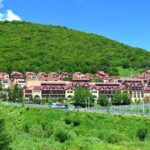
After the monastery intensity, Tsaghkadzor shifts the tone. It’s a cozy town in Kotayk province known as a ski and climatic resort. The Armenian name translates to Gorge of Flowers, and the idea of a therapeutic local climate has been around since at least the V century BC—old enough that it’s not just modern marketing.
Here’s why Tsaghkadzor belongs in this route: it breaks the “only ancient stones” rhythm. You get a change of scenery and a different kind of Armenia—mountain air, open views, and a town designed for getting outside.
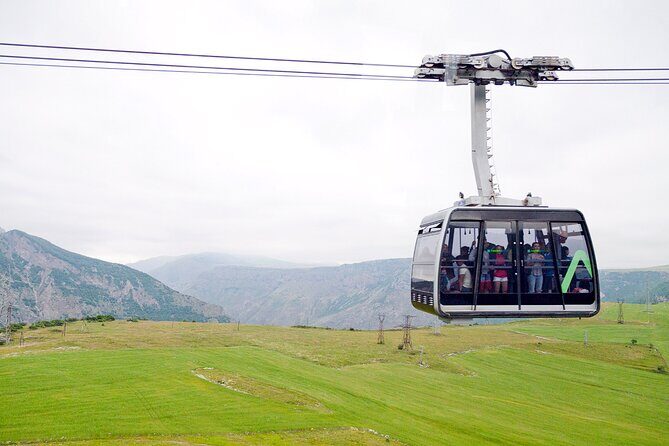
In this tour day, Tsaghkadzor can also include a ropeway ride. The ropeway entrance fee isn’t included, so treat it as a budget add-on if you want that higher-altitude viewpoint. If you go in colder months, expect the mountains to feel colder than Yerevan. A good rule: bring gloves and plan for wind. Even when you’re excited, cold hands make the experience worse.
You’ll spend time in Tsaghkadzor as a stop (the itinerary calls for a chunk of the day here). I’d use that time to take a gentle walk, enjoy the resort vibe, and avoid trying to cram everything into 20 minutes. The value is in the scenery shift, not in speed.
Kecharis Monastery: St. Gregory and a 220-year building saga
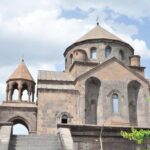
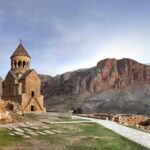
You finish with Kecharis, another major medieval monastery complex, located in the northwestern part of Tsaghkadzor. Kecharis was erected in the 11th century, and in the 12th-13th centuries it became an important cult center and school—basically, not just worship space, but a place with a learning role.
The complex is laid out with three churches, two chapels, and a porch, plus another church to the west with its own porch. That “cluster” feeling is part of what makes Kecharis special. You’re not looking at one standalone church—you’re seeing a system of spaces.
The main church is St. Gregory, with the earliest building attributed to Grigor Magistros Pahlavuni in 1003. That timeline detail helps you understand what you’re seeing: it’s not just ancient, it’s specific ancient.
Another detail that I appreciate: the monastery’s formation lasted 220 years, with over 150 years of interruption. That’s a huge reminder that building projects didn’t roll forward like clockwork. Politics, economics, and conflict mattered. So if you notice differences in parts of the complex, it’s not your imagination—it’s the result of a long, uneven history.
Kecharis entrance is listed as free, so once you reach Tsaghkadzor, your money stress drops a bit. You’ll have enough time (the itinerary notes about 30 minutes at one point and about 2 hours at another, so plan for flexibility depending on your pace and the day’s flow).
If you like monasteries that feel more like quiet study rooms than big tourist stages, this stop will make you happy.
How the private format keeps the day smooth (and why it’s worth it)
This is a private tour for up to 3 people, with pickup and drop-off in Yerevan. That’s not a luxury-only detail. It changes the whole experience. You don’t have to match your pace to strangers, and you can linger when you want—especially at the view points.
The day is designed around a rough 8-hour timeframe. In practical terms, it means you’ll be in the car some, but not so long that you feel drained before Geghard and Kecharis. The stops are also close enough that you’re not doing constant high-stress transit.
On the comfort side, you get an air-conditioned vehicle, WiFi onboard, bottled water, and a professional driver. That matters in Armenia’s hills. A little comfort goes a long way when you’re walking in and out of stone sites.
What I also like is that a guide service in English or Russian is offered (optional). When a guide is present, the explanations make the stones easier to read. Even if you’re not a talk-listener, a good guide can help you prioritize what to see first when you’re standing in front of something ancient and confusing.
And you’ll find the operation tends to be organized and punctual, which is exactly what you want on a full day. In a day like this, timing is everything: you want daylight for the Ararat views and enough time to move through cave spaces calmly.
Price and value: what $110 per group gets you
At $110 per group (up to 3), this tour can be very good value—mainly because the heavy lifting is taken care of. Your price covers taxes and fees, hotel pickup and drop-off, private transportation, onboard WiFi, bottled water, and an air-conditioned car with a professional driver.
That’s the real value: you’re paying to remove friction. You don’t have to coordinate buses, manage long cab rides, or figure out where ticket lines are forming.
The big catch is what’s not included:
- Garni Temple entrance
- Symphony of stones entrance
- Tsaghkadzor ropeway entrance (if you do it)
- Lunch
So what you’re really buying is the route, the transport, and the structured day. Then you budget a smaller amount for specific attractions where fees apply.
If you’re traveling as a duo or small family, the per-group pricing helps a lot. If you’re solo, it’s still often workable because the private format can be worth it for the pace and comfort.
Money-saving approach: treat the paid stops as “must-do vs nice-to-do.” Garni and Symphony of stones are likely top priorities if you like seeing dramatic rock formations. The ropeway is more of a scenic add-on, especially if you enjoy viewpoints.
Should you book this Garni–Geghard–Tsaghkadzor day?
If you want a one-day blend of ancient ruins, a cave UNESCO monastery, and an end-of-day finish in Tsaghkadzor’s mountain atmosphere, this route is a strong pick. The private setup makes it feel like your schedule, not a bus tour.
Book it if:
- You want Ararat views early at Charents Arch
- You care about both pagan and Christian sites in one day
- You like having a driver do the navigation while you focus on the sights
Consider a different option if:
- You hate paying separate entrance fees and want everything bundled
- You’re very sensitive to cold (the ropeway can be brisk in winter)
- You want a slow, deep dive with long museum-style stops (this is a full day, not a wandering half-week)
For most people, the sweet spot is right here: a well-paced private circuit that hits the big landmarks without wasting half your day on logistics.
FAQ
What places are included in this private tour?
You’ll visit Charents Arch, Garni Temple, Geghard Monastery, Tsaghkadzor, and Kecharis Monastery. The day also references other paid attractions like Symphony of stones and the Tsaghkadzor ropeway.
How long does the tour take?
The duration is about 8 hours.
Is pickup from Yerevan included?
Yes. Hotel pick-up and drop-off in Yerevan are included.
Is the tour private or shared?
It’s private. Only your group participates, up to 3 people.
What language is the guide?
English or Russian speaking guide service is offered (optional).
What entrance fees are not included?
Garni Temple entrance, Symphony of stones entrance, and the Tsaghkadzor ropeway entrance fee are not included.
What’s included in the tour price?
The price includes taxes/fees, private transportation in an air-conditioned vehicle, WiFi onboard, bottled water, and professional driver service.
Is there a cancellation window?
Yes, free cancellation is available up to 24 hours in advance for a full refund.
Do I need special physical fitness for the cave monastery?
The tour calls for moderate physical fitness level, which is relevant for walking around and spending time at cave-carved areas like Geghard.