REVIEW · YEREVAN
7 Day Tour through Armenia
Book on Viator →Operated by Ari Tour · Bookable on Viator
Seven days, one Armenia, zero time wasted. This 7-day Armenia route is built around a smart mix of big-name sights and quieter monastery stops, all starting and ending in Yerevan. You also get a guide-led flow (with English service), plus easy logistics like pickup offered and a mobile ticket.
What I like most is how much ground you cover without feeling like a checklist. I love the combination of monastery architecture and museums in one stretch, especially the way Day 5 pairs Garni Temple with Geghard. I also like that the early Yerevan sights set the mood fast, like climbing the Cascade Complex for city views and then moving into centuries-old Armenian sites with context.
One thing to consider: this itinerary is packed with religious and historical stops, so if you want lots of free time or long, slow afternoons, you may feel the pace. The good news is the stops are varied enough that it usually stays interesting.
In This Review
- Key highlights I’d plan around
- How this 7-day Armenia tour works (and who it suits)
- Yerevan opener: Cascade, ARARAT Museum, and old-city walking
- Cascade Complex and the city-at-the-top effect
- ARARAT Museum and a brandy-focused tasting break
- Mesrop Mashtots Avenue: center-city architecture walk
- Day 2’s religious history power swing: Holy Archangels, Zvartnots, and the roots of the church
- Holy Archangels Church: built on layered history
- Zvartnots Temple: UNESCO-level ruins with a long building story
- Day 3: Lake Sevan and a monastery circuit that feels like a change of season
- Sevanavank Monastery: the view-first welcome
- Haghartsin Monastery: medieval learning in Dilijan nature
- Goshavank Monastery: scholarly center and Mkhitar Gosh
- Day 4: Gyumri old-town streets and three monastery stops with different moods
- Gyumri Main Square and earthquake-survivor houses
- Marmashen Monastery: Ani school architecture surviving from the 10th–11th centuries
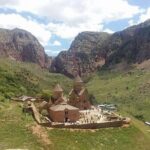
- Harichavank Monastery: rocky cape, canyon split-by-earthquake story
- Day 5: Garni Temple and Geghard’s cave churches (UNESCO pair for the win)
- Charents Arch view and Garni Temple’s pagan-Hellenistic roots
- Geghard Monastery: cave-built churches and khachkars
- Day 6: Four churches, a bridge picnic zone, plus Amberd Fortress altitude drama
- Church stops by color and location
- Ashtarak Bridge: built in 1664 and made for a pause
- Amberd Fortress: 2,300 meters above sea level
- Day 7: Parajanov Museum, Erebuni history, and Vernissage handmade browsing
- Parajanov Museum: filmmaker art you can’t summarize in one photo
- Erebuni Museum: the foundation of Yerevan via Urartian Erebouni
- Vernissage Market: free time that stays local
- What value $885.13 per person buys (and what to check before you book)
- Guide quality and the human side of the trip
- Should you book this Armenia 7-day tour?
- FAQ
- Is the tour offered in English?
- Do you get pickup?
- How long is the tour?
- What’s the group size?
- Are tickets included for the stops?
- Can I cancel for a full refund?
Key highlights I’d plan around
- Cascade Complex views plus the chance to get your bearings fast from the highest point
- ARARAT Museum tasting time that breaks up the sightseeing with a very Armenian experience
- UNESCO-heavy days featuring Zvartnots, Sevanavank, Haghartsin/Goshavank, Garni, and Geghard
- Medieval monastery trio around Lake Sevan and Dilijan with strong scenery built in
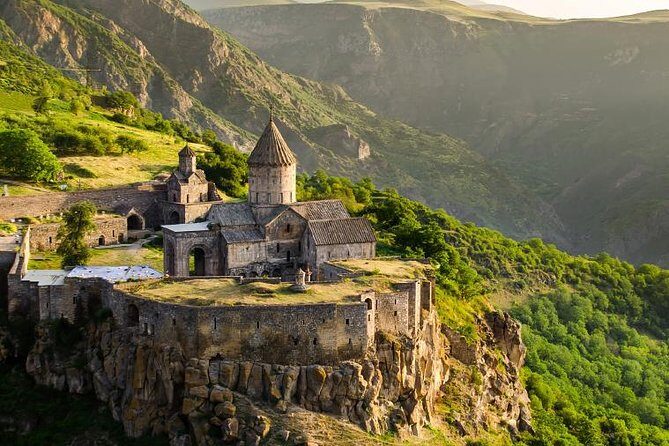
- Geghard’s cave churches and khachkars for architecture you can’t really fake with photos
- Vernissage open-air market for a low-pressure last-day browse of handmade work
How this 7-day Armenia tour works (and who it suits)
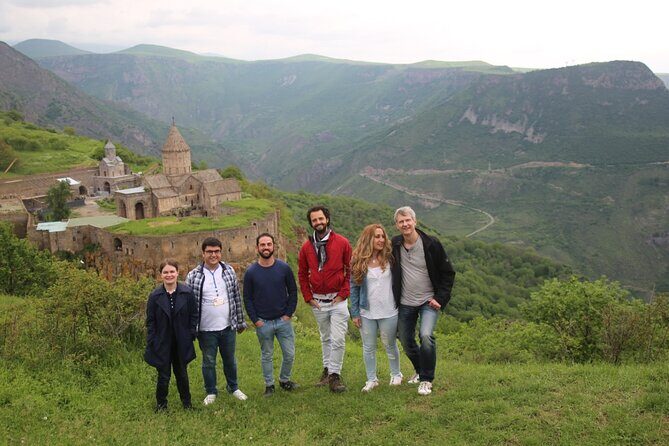
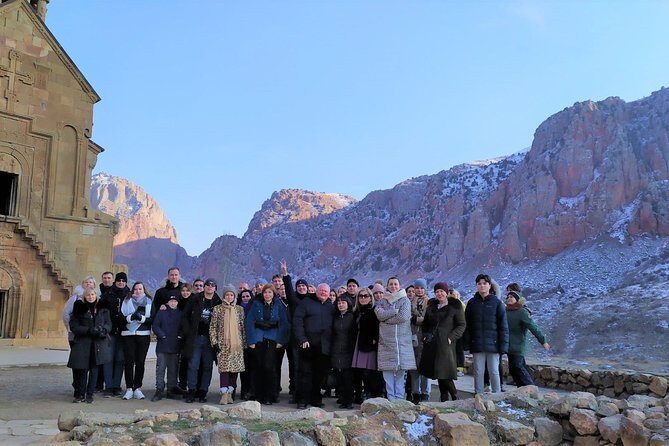
This is a 7-day group tour based in Yerevan, designed for people who want to see major Armenian history and beautiful old churches without having to plan every link in the chain. With a maximum of 30 travelers, you should get a guide who can keep things moving while still explaining what you’re looking at.
The itinerary is split across days with a rhythm: Yerevan city sights first, then strong “outside Yerevan” touring blocks (monasteries, fortresses, and UNESCO sites), then museum and market time at the end. Because most admissions are included for the sights on the route, you spend less energy deciding tickets and more energy actually enjoying the places.
Who it’s best for:
- First-timers to Armenia who want the highlights and the meaning behind them
- Travelers who like architecture + history + nature in the same trip
- People who would rather follow a route than hunt for the next place on their own
If you’re someone who prefers to stay in one area and do fewer stops at a slower pace, you may want to compare your style before booking.
A few more Yerevan tours and experiences worth a look
Yerevan opener: Cascade, ARARAT Museum, and old-city walking
Your first day is built to show you two things: Yerevan’s modern energy and Armenia’s deeper layers right next to it.
Cascade Complex and the city-at-the-top effect
The Cascade Complex is a long stairway in front of the Opera House, and it’s one of those places where the view does half the talking. You’re not just walking stairs—you’re climbing toward a wide panorama of Yerevan. The complex also has seven elevators inside, which matters if you want to manage energy.
Two practical tips:
- Wear shoes that handle stairs without slipping.
- If you’re tired after the climb, don’t rush out—take a minute to enjoy the city perspective you paid for.
Admission is listed as free for this stop, which makes it a low-cost way to start strong.
ARARAT Museum and a brandy-focused tasting break
Then you head to ARARAT Museum, where the experience includes tasting different aged cognacs (the itinerary ties it to famous Churchill wordplay, but the key part for you is the tasting). This is a useful break in the pace because it turns sightseeing into something sensory.
If you like food and drink as part of culture, this stop will feel like a smart pivot rather than a random museum add-on. (And if you’d rather avoid alcohol tastings, you might still find the museum content interesting—just plan to choose what you’re comfortable with.)
Mesrop Mashtots Avenue: center-city architecture walk
Finally, there’s a walk on Mesrop Mashtots Avenue to see the center’s architecture. This is not a heavy-duty site; it’s more about getting your bearings and watching how the city looks and moves at street level. You also get a free admission note here, which keeps the day balanced.
Day 2’s religious history power swing: Holy Archangels, Zvartnots, and the roots of the church
Day 2 is all about Armenian religious history—big, foundational sites that help you understand why monasteries matter here.
Holy Archangels Church: built on layered history
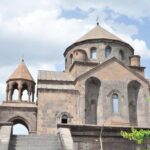
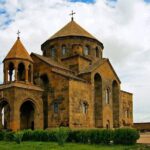
The Holy Archangels Church is described as the main religious and administrative center of the Armenian Apostolic Church. The itinerary points out it was founded on the site of a pagan temple by Gregory the Illuminator in 303 A.D. It also notes related history like the St. Hripsime monastery built in 618 A.D.
What you’ll likely appreciate here is the idea of continuity: the same ground gets reused across eras, and the architecture you see is only part of the story.
Admission is included, so this is a “no extra decision” stop.
Zvartnots Temple: UNESCO-level ruins with a long building story
Next comes Zvartnots Temple, a church tied to the “vigil forces” concept in Armenian description. Construction is given as beginning around 641–643, taking intermittent work for about twenty years, with Catholicos Nerses III as an initiator. The itinerary also mentions architectural influence from Dvin (also a UNESCO World Heritage List location).
If you enjoy ruins and can read buildings like history, Zvartnots should hit the sweet spot. It’s the kind of place where time feels physical—what remains teaches you how grand it once was.
Admission is included here too.
Day 3: Lake Sevan and a monastery circuit that feels like a change of season
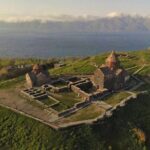
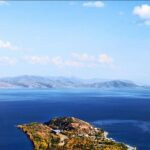
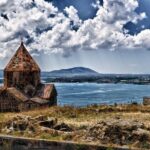
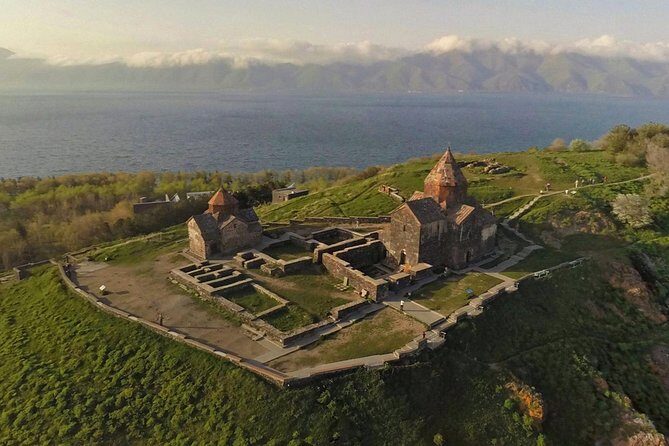
Day 3 shifts you away from Yerevan’s urban rhythm. You start at Lake Sevan, described as a “pearl” with astonishing blue water and noted as the 2nd high-altitude lake in the world in the itinerary’s framing.
Sevanavank Monastery: the view-first welcome
At Sevanavank Monastery, the main point is the setting: you get the monastery visit and the atmosphere of Lake Sevan at high altitude. This stop works well as a mental reset after Day 1–2’s church centers and city walks.
Admission is included.
Haghartsin Monastery: medieval learning in Dilijan nature
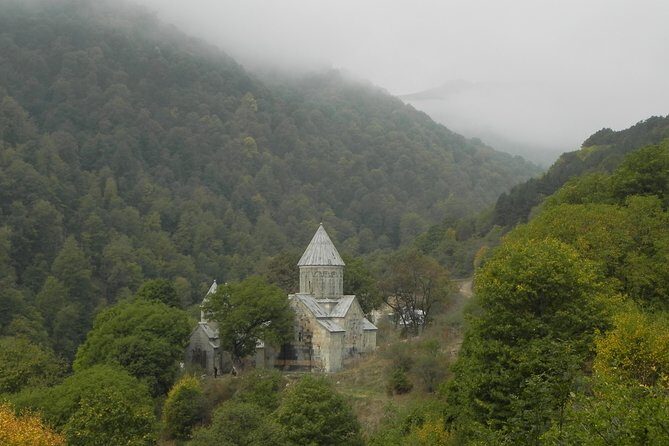
Then the route moves toward Haghartsin Monastery, described as a religious and educational center in medieval Armenia (10th–13th centuries). It’s also noted as being surrounded by nature near Dilijan.
Even without extra interpretation, the placement matters. If you like monasteries because they’re quiet and scenic, you’ll likely enjoy Haghartsin’s built-in calm.
Admission included.
Goshavank Monastery: scholarly center and Mkhitar Gosh
Finally, Goshavank Monastery brings in a strong intellectual angle. The itinerary explains it became a famous religious and scholarly center in the 12th–13th centuries, led by Mkhitar Gosh (1130–1213), highlighted as a scholar, legal expert, and scientist.
Admission included.
This day gives you a monastery trio across different atmospheres: water, forested region, and historical scholarship. If you enjoy seeing how Armenian culture isn’t only in cities, Day 3 makes that point.
Day 4: Gyumri old-town streets and three monastery stops with different moods
Day 4 starts in Gyumri, Armenia’s older heart of art and craft energy—at least in the way the itinerary describes it.
Gyumri Main Square and earthquake-survivor houses
You walk around Gyumri Main Square and old streets where it still feels like the sound of hammers could pop around the corner. The itinerary mentions old houses that partially survived the devastating 1988 earthquake, and points to architectural features: colorful stones and bas-reliefs.
If you want Armenia that feels handmade and human-scale, this is your day. Not every stop has to be monumental to be memorable.
Admission is included.
Marmashen Monastery: Ani school architecture surviving from the 10th–11th centuries
Next is Marmashen Monastery, built during 988–1029 and located on the left bank of the Akhurian River. It’s described as consisting of five churches, and it’s flagged as one of the best surviving examples of the Ani school of medieval Armenian architecture.
This is a great stop for architecture lovers, because the itinerary sets you up to notice multiple churches and a distinct style.
Admission included.
Harichavank Monastery: rocky cape, canyon split-by-earthquake story
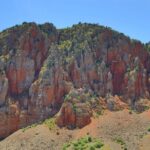
Then comes Harichavank Monastery, on the western slope of Mount Aragats, on a rocky cape. The itinerary says studies suggest a founding in the 7th century, with the main church built in the 13th century, and later use as a summer residence for Catholicoses.
The detail that will likely stick with you: a small chapel built on rock that later split from the cape during an earthquake, leaving it towering over the canyon.
Admission included.
Day 4 gives you variety: city texture, river-bank architecture, and then dramatic rock-and-canyon setting.
Day 5: Garni Temple and Geghard’s cave churches (UNESCO pair for the win)
Day 5 is one of the tour’s strongest “I came to Armenia for this” days.
Charents Arch view and Garni Temple’s pagan-Hellenistic roots
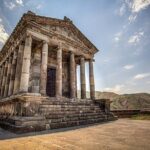
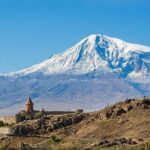
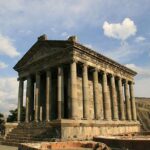
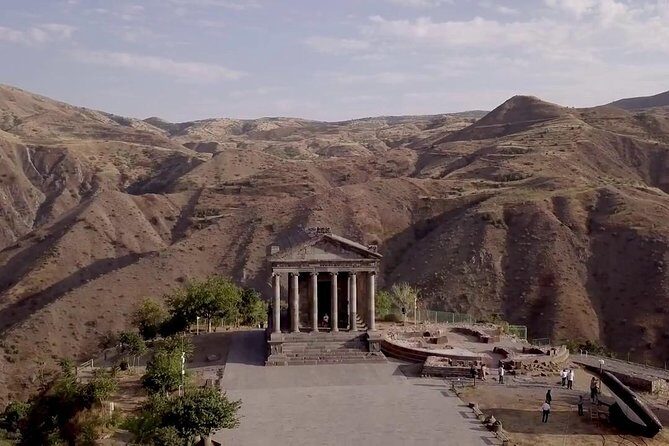
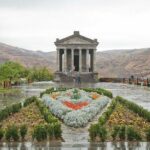
You start with a short stop at Charents Arch, which gives a view over Ararat valley and Mount Ararat. Then you visit Garni Temple, described as the only extant temple in Armenia dating back to paganism and Hellenism. It’s noted as dedicated to the sun god Mithra, built by Greek slaves in 76 B.C., and later serving as a summer residence of Armenian kings over four centuries.
If your brain loves cause-and-effect, Garni is a good lesson in how cultures layer on top of each other over time.
Admission included.
Geghard Monastery: cave-built churches and khachkars
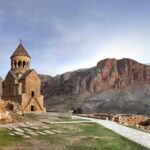
Next is Gegard (Geghard) Monastery, described as the miracle of Armenian architecture, with a unique complex of cave structures in a picturesque valley, flagged as UNESCO. It’s said to have been originally known as Ayri vank (Cave Monastery), with present buildings dating from the 10th–13th centuries, later renamed Geghard meaning lance.
The itinerary gets specific about the oldest building (main church constructed in 1215) and another church carved right into solid rock: Avazan church (1283). It also describes medieval dwellings along the walls and the presence of hundreds of khachkars and caves.
This is the stop you’ll feel in your legs—because it’s physically built into the rocks—and in your eyes, because the variety of carved spaces gives you something new every time you look.
Admission included.
If you care about UNESCO and you like architectural storytelling, this day is worth the price on its own.
Day 6: Four churches, a bridge picnic zone, plus Amberd Fortress altitude drama
Day 6 is another long day, but it’s structured like a sequence of “color and shape changes,” not just random stops.
Church stops by color and location
You visit:
- Tsiranavor Church (apricot-colored), a partly ruined 5th-century church at the edge of a gorge
- Karmravor Church (red-colored), a 7th-century Armenian Apostolic church
- Spitakavor Church of Ashtarak (white-colored), a partly ruined 13th-century church at the edge of a gorge
- Saint Gevorg Church, built to house remains of Saint George, with 17th-century frescoes
Then there’s Saghmosavank Monastery, known for great acoustics, called Saghmosavank because Armenian clergy used songs (saghmos) in churches.
Finally, you go to Saint Mesrop Mashtots Cathedral in Oshakan village, noted as the burial place of Saint Mesrop Mashtots, credited as the creator of the Armenian alphabet.
Admission is included for each of these stops.
If churches are your thing, this day is built for you: names hint at visual themes, and the gorge edges mean you’ll likely get frequent shifts in light and views.
Ashtarak Bridge: built in 1664 and made for a pause
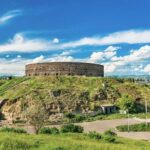
One of the more practical stops is Ashtarak Bridge, built in 1664, with three arches of unequal size over the Kasagh River. The itinerary notes the area underneath and around the bridge is a great place for picnics.
So even though it’s a packed day, this is your natural breather: step off the schedule for a moment and enjoy the river area.
Admission included.
Amberd Fortress: 2,300 meters above sea level
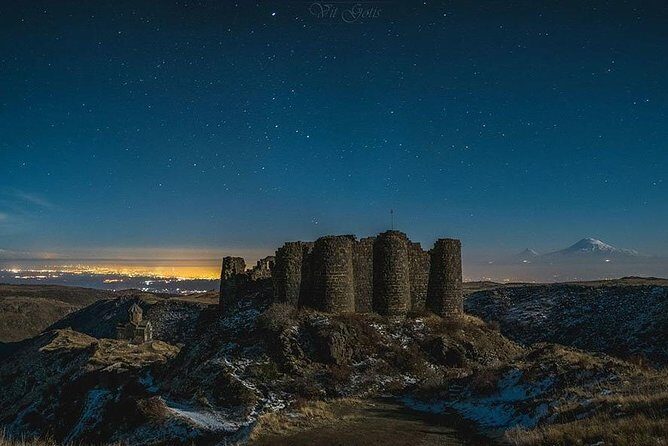
Then you finish with Amberd Fortress, a 10th-century fortress at about 2,300 meters above sea level on Mount Aragats slopes, at the confluence of the Arkashen and Amberd rivers.
This is the kind of finish that rewards you for being patient. Fortress views tend to hit harder when the altitude makes the sky feel bigger and the angles sharper.
Admission included.
Day 7: Parajanov Museum, Erebuni history, and Vernissage handmade browsing
Your final day is split between modern Armenian art and deep-rooted city history, then ends with the easy, social part: shopping and people-watching.
Parajanov Museum: filmmaker art you can’t summarize in one photo
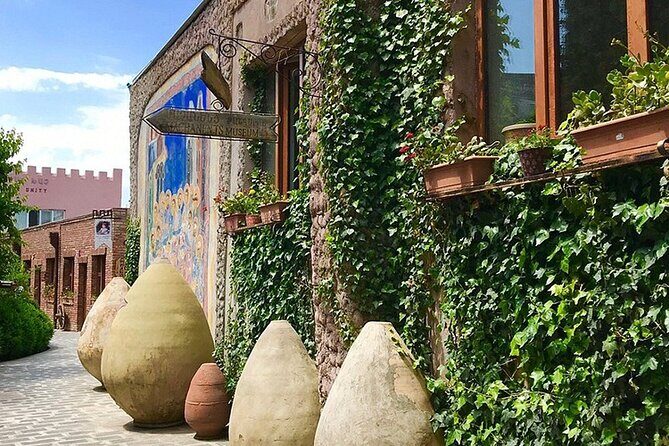
The Parajanov Museum focuses on the filmmaker Parajanov, described as the greatest Armenian filmmaker in the itinerary’s framing. The works are described in detail: assemblages, flat and three-dimensional collages, drawings, dolls, and film sketches.
If you like art that feels strange in a good way, this should be a strong last-day pivot away from churches and ruins.
Admission included.
Erebuni Museum: the foundation of Yerevan via Urartian Erebouni
Then comes Erebuni Museum, covering the history of Yerevan’s foundation. It sits at the foot of Arin Berd hill, where the Urartian fortress Erebouni was constructed.
This stop gives you a different kind of historical map: instead of only medieval Armenia, you get the long timeline behind Yerevan itself.
Admission included.
Vernissage Market: free time that stays local
Finally, there’s Vernissage Market, described as an open-air market where locals sell their handmade works. Admission is listed as free, which is a nice way to keep the last hours relaxed and within your control.
If you want a final memory that isn’t just a photo, pick up a small handmade item—something that feels like Armenia rather than a generic souvenir.
What value $885.13 per person buys (and what to check before you book)
This tour costs $885.13 per person for about 7 days. On paper, that sounds like a lot—until you price out the kind of route you’re getting.
Here’s the value logic I’d use:
- You’re covering a lot of high-demand sites across multiple regions, not just Yerevan
- Most admissions on the itinerary are included, including many featured historical and religious monuments
- Pickup is offered, and the group size is kept to a maximum of 30, which usually means smoother guiding and less waiting
- You get English service and a mobile ticket, which reduces hassle on the ground
Before booking, I’d sanity-check your own preferences:
- Are you okay with a packed schedule that moves through multiple churches and monasteries in one trip?
- Do you like structured guide time, or do you prefer to roam freely more often?
If yes, this route looks like good money spent.
Guide quality and the human side of the trip
The reviews don’t give guide names, but they do repeat patterns: helpful and smart guides, a sense that everything is handled well by Ari Tour, and real warmth from people in Armenia. One review specifically calls out that kids were interested too, which is a good signal that the guides do more than read facts—they make places understandable.
There’s also a clear theme of safety and hospitality. I can’t promise your exact experience, but when you see the same strengths repeated across multiple independent accounts, it’s a sign the trip runs smoothly rather than feeling improvised.
Should you book this Armenia 7-day tour?
I’d book it if you want:
- A focused sampler of Armenia’s best-known history sites (Garni and Geghard, Zvartnots, Erebuni)
- Lots of UNESCO and monastery time, not just museums
- A guided route that reduces decision fatigue and keeps the trip moving
I wouldn’t book it if:
- You want large blocks of free time and a slower pace
- You dislike religious sites or you get tired from visiting multiple gorges-and-church stops in a single day
If you’re a first-timer aiming for a “real Armenia” mix—old stone, modern Yerevan energy, and a final market stroll—this is a strong, practical option.
FAQ
Is the tour offered in English?
Yes. The tour is offered in English.
Do you get pickup?
Yes, pickup is offered.
How long is the tour?
It’s a 7-day tour (approximately).
What’s the group size?
The tour has a maximum of 30 travelers.
Are tickets included for the stops?
Admission tickets are listed as included for most sights on the itinerary. A couple stops are listed as free, such as Cascade Complex and Vernissage Market.
Can I cancel for a full refund?
Yes. You can cancel up to 24 hours in advance for a full refund.