REVIEW · YEREVAN
Group Tour: Must see of Georgia in 2 days from Yerevan
Book on Viator →Operated by Hyur Service · Bookable on Viator
Two days, Georgia history from Yerevan. This is a practical fix for the tricky no-car problem: you ride in an air-conditioned vehicle, follow a guide through major sites, and sleep in Tbilisi instead of trying to squeeze everything into day trips. I love how the plan strings together UNESCO-level stops with real street time, so you get context and not just photos.
I also like the “you’re taken care of” parts. With a 4-star hotel for 1 night, plus breakfast and lunch, the day feels structured in a way that’s rare on cross-border trips. You can focus on the places instead of hunting for meals or timing transport.
One possible drawback to keep in mind: dinner isn’t included, and the tour doesn’t offer hotel pick-up or drop-off in Yerevan. You’ll be starting from the meeting point at 8:00 am, so you’ll want a plan for getting there calmly.
In This Review
- Key Highlights You’ll Actually Feel On This Trip
- Why Georgia Feels Close When You Start in Yerevan
- Price and Value: What $186 Buys You in Real Terms
- The Tbilisi Hotel Plus Included Meals (How It Changes Your Day)
- Day One: Jvari, Mtskheta, and Old Town Tbilisi in One Flow
- Jvari Church (Holy Cross): UNESCO Setting and a View Moment
- Mtskheta: The First Christian Capital at the River Junction
- Old Town Tbilisi: Walking Time That Helps You Orient
- Day Two: Rabati Castle’s Fortified Mix in Akhaltsikhe
- Vardzia Cave Town: The Historic Site You’ll Remember
- Guide, Language, and Group Size: How the Day Feels
- Practical Tips Before You Book (Visa, Meeting Point, What to Wear)
- Should You Book This Tour?
- FAQ
- What’s included in the tour price?
- Is dinner included?
- Where do we meet, and when does the tour start?
- Do they pick you up from your hotel in Yerevan?
- How long is the tour?
- Are admission tickets included?
- What language will the guide speak?
- Can I cancel for a full refund?
Key Highlights You’ll Actually Feel On This Trip
- Air-conditioned transport for long drives: less stress than DIY routes, especially between regions
- Tbilisi base in a 4-star hotel: one easy overnight keeps the schedule sane
- Meals included (breakfast + lunch x2): you’re fed without detours
- UNESCO sites on both days: Jvari and Mtskheta on day one, with major historic architecture throughout
- Cave-city wonder at Vardzia: a full 100+ meters above the foothills, built into the rock
Why Georgia Feels Close When You Start in Yerevan
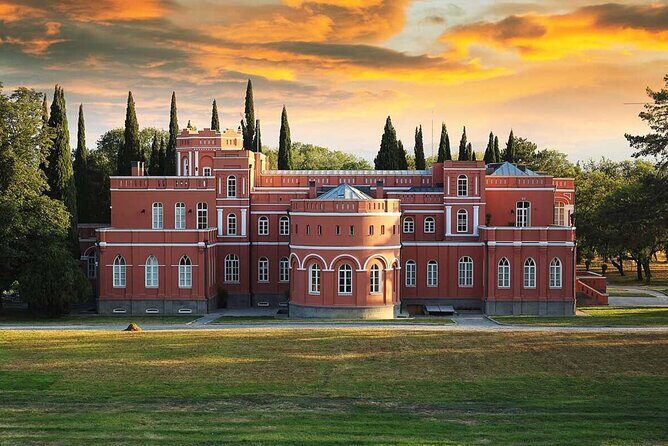
Crossing from Armenia into Georgia is the part that can slow you down. Roads, borders, and local transport add up fast when you don’t have a car. This tour solves the big issue with a guided, vehicle-based format, so you’re not spending your time figuring out logistics you could spend looking at the views and the stonework.
What you get here is a fast, focused “greatest hits” itinerary. Day one lands on two foundational stops: Jvari and Mtskheta, both tied to early Christianity and UNESCO recognition. Day two pushes farther into Southern Georgia for Rabati Castle and the famous Vardzia cave town. It’s a lot of ground, but the schedule is built around set visits, not open-ended roaming.
Also, the tour operates in all weather conditions. That’s helpful because if the day gets rainy or cool, you’ll still have a plan, rather than losing your whole itinerary.
A few more Yerevan tours and experiences worth a look
Price and Value: What $186 Buys You in Real Terms
The price is $186 per person, and value mostly comes from what’s wrapped into it. You’re paying for transportation with an air-conditioned vehicle, a professional guide (English plus Russian consecutively), a 4-star hotel in Tbilisi for one night, and key admissions.
Here’s the practical value math:
- Hotel + breakfast + lunch matters a lot on a two-day trip.
- Admission tickets are included where required (for example, Vardzia is included, while others are listed as free).
- Bottled water and pastries are included, which helps you get through the day without running out of energy between stops.
What’s not included is also important. There’s no dinner, so you’ll either plan your own meals near your hotel area or grab something light after the day’s last site.
If you’ve been thinking about doing Georgia on your own from Yerevan, this package can be cost-effective once you include a hotel night, guided time, and the transportation piece. Even if you don’t love every single stop, you’re likely to feel the benefit of having a ready-made plan.
The Tbilisi Hotel Plus Included Meals (How It Changes Your Day)
Sleeping in Tbilisi for one night is the smart move here. Instead of trying to return the same day from far outside the city limits, you get rest and a calmer rhythm. The hotel is listed as 4-star, and breakfast is included, which means you start day one with food already handled.
Lunch is also included twice (the tour specifies Lunch (2)). That’s a big deal on a packed itinerary, because it reduces the “stop, search, wait, lose time” cycle that can happen when you’re on your own. You can also keep your energy steady for the walking segments, especially on day two where you’ll spend more time moving around historic sites.
The tour includes bottled water and pastries, which is exactly the kind of small comfort that matters on long days. It’s not glamorous, but it keeps the schedule from falling apart when you’re hungry.
One other note: the guide language is ENG + RUS consecutively. In practice, that means you’ll usually get the historical story in both languages, rather than one group being left behind.
Day One: Jvari, Mtskheta, and Old Town Tbilisi in One Flow
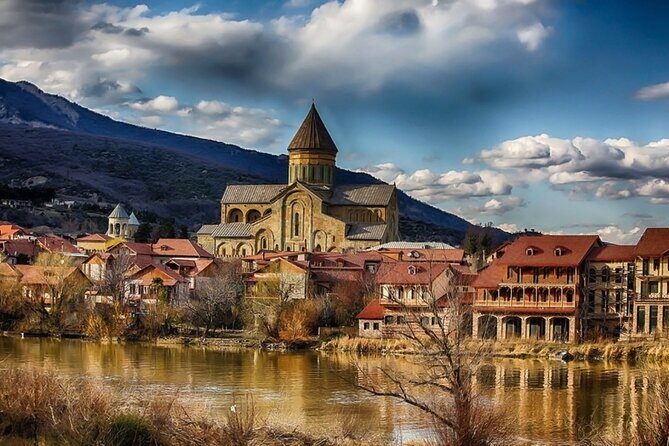
Day one is built around the roots of Christian Georgia, then you shift gears into Tbilisi’s old streets.
Jvari Church (Holy Cross): UNESCO Setting and a View Moment
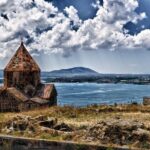
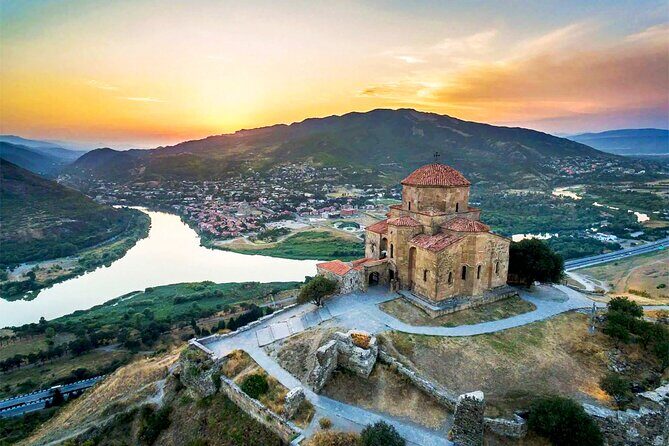
You start with Jvari Church, part of Mtskheta. It’s a UNESCO-listed monument, built in the first half of the 7th century. The story attached to the site is part of why it’s so important: it’s located on the spot where Saint Nino is said to have erected a cross.
Time on site is about 40 minutes, so this isn’t rushed into a quick peek, but it’s also not a long sit-and-stare. You’ll want to use the time for two things: the architecture and the surrounding landscape. Wear shoes you’re comfortable walking in, because the terrain around historic viewpoints can be uneven.
A small consideration: if weather is foggy or rainy, your view might be limited. Still, the stone-and-setting value remains because you’re visiting a major early-Christian monument, not just chasing a photo angle.
Mtskheta: The First Christian Capital at the River Junction
Next is Mtskheta, described as the first capital of Christian Georgia. It sits at the meeting point of the Kura and Aragvi rivers, and the historical monuments of Mtskheta are also on the World Heritage list.
You’ll have about 1 hour here, and this is where a guide becomes more than a translator. Mtskheta can feel like a lot of stone and street corners if you don’t know what you’re looking at. With a guide, you’ll usually catch the “why this mattered” story behind the location and the surviving monuments.
It’s also a stop where timing matters. If you’re the type who likes to read every sign, you’ll run out of time. But if you enjoy a guided hit of context, this hour is a good pace.
Old Town Tbilisi: Walking Time That Helps You Orient
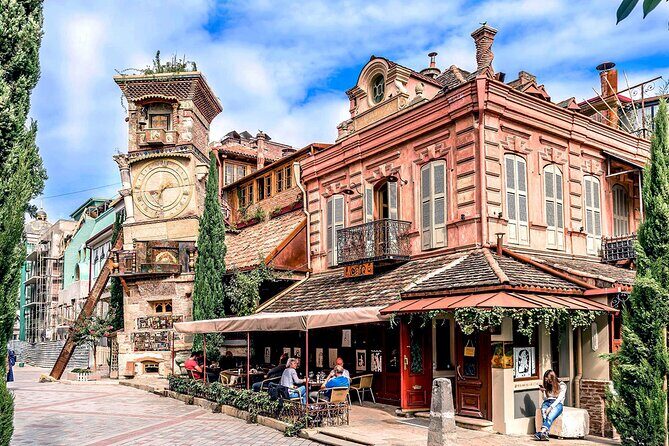
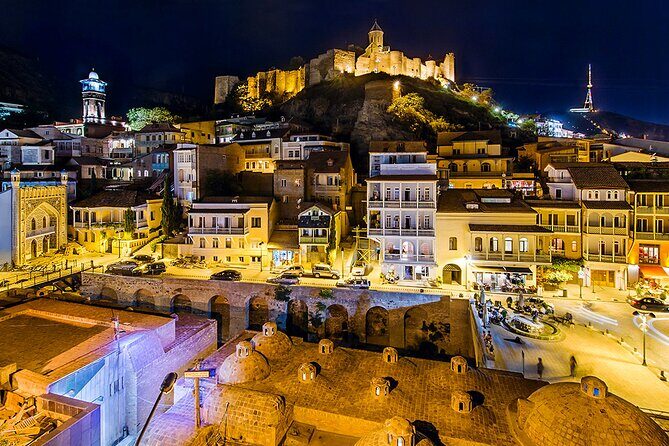
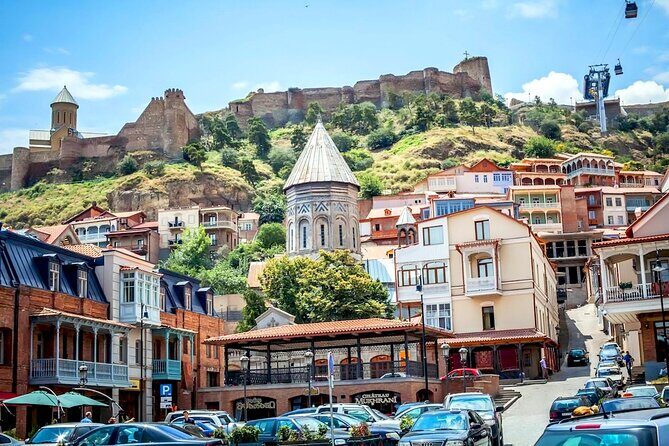
Then comes Old Town Tbilisi, with about 1 hour of walking tour time. This portion is less about big-ticket monuments and more about getting your bearings.
This is where you learn what people mean by Tbilisi’s street character: the tight lanes, the change in elevation, and how historic areas create their own rhythm. You’ll also likely pick up the route logic your next day will rely on, even if you don’t revisit the exact same streets.
Because it’s walking time, your practical advantage is simple: you’re stretching your legs on a guided route instead of trying to figure out where to go after a long drive.
Day Two: Rabati Castle’s Fortified Mix in Akhaltsikhe
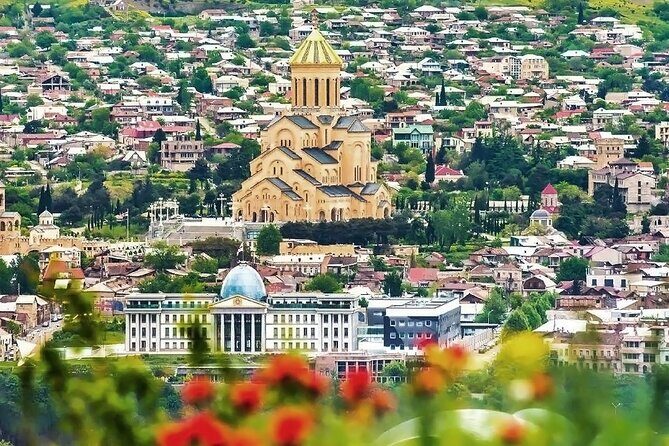
Day two takes you out from Tbilisi and into Akhaltsikhe, with a focus on the Rabati Castle complex.
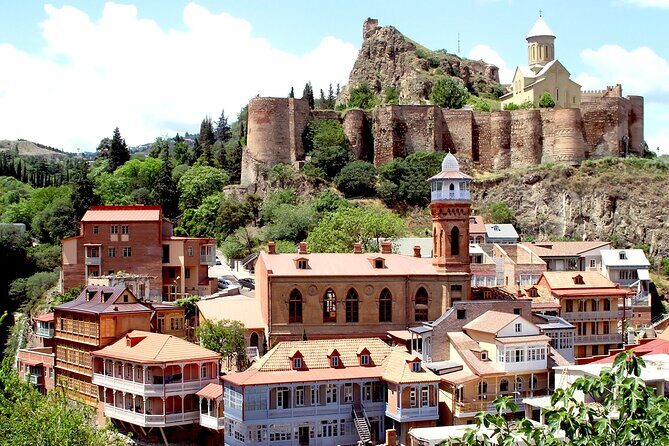
Rabati is a landmark of the region’s historic power, founded in the Middle Ages, and described here as a defensive object on a high hill. The name translates as new fortress, which hints at the role it played as the town’s signature stronghold. Later expansions in the 12th–13th centuries made it a residence for the Jaqeli dynasty.
You’ll have about 1 hour, and that’s a realistic amount for a castle visit where you’re also scanning multiple structures. The description also notes that nearby you can see the Samtskhe-Javakheti history museum, an Orthodox church, a citadel, a mosque, and more visitor-oriented spots like cafes and hotels.
One practical thought: castles are stone-heavy and can be exposed. If the weather is warm, you’ll appreciate a water break. If it’s cool, layers help. The included bottled water is your friend here.
Vardzia Cave Town: The Historic Site You’ll Remember
Then you get Vardzia, the big headline site on day two. Vardzia is a 12th-century cave town carved into rock, located about 1300 meters above sea level at roughly 100 meters above the foothills of the Erusheti Mountain.
Time on site is about 1 hour 10 minutes, which is enough to see how the complex was laid out without needing a full day. What makes Vardzia special is its scale and internal design. The complex once had as many as 13 floors, connected by tunnels. It included living quarters, refectories, barns, wine storage (marani), and even libraries.
You also get a reminder that this wasn’t just a dramatic ruin. The description notes a system for potable water supply and sewerage, which is a detail that makes the site feel more human. You’re not just looking at caves; you’re seeing how a real community was organized.
Admission to Vardzia is listed as included, so you won’t need to plan cash or tickets for this stop. That’s another value win.
Practical caution: cave-town layouts mean uneven steps and tight passages. If you’re dealing with knee issues or struggle with long stair segments, go slowly. Bring whatever grip you can (walking shoes help), and don’t rush to meet the group pace at the cost of your footing.
Guide, Language, and Group Size: How the Day Feels
This is a group tour with a maximum of 49 travelers, and you’ll be grouped with people who have different interests and walking speeds. The good part is that the tour is structured around stops with set time windows. The less-good part is that you may not linger as long as you want at each photo point.
The guide provides professional interpretation in ENG + RUS consecutively. That means you should expect the story to be delivered in a way that supports both language groups rather than only one.
The tour also mentions that it may be operated by a multi-lingual guide. That’s common for group formats, and it’s good to know because your guide might switch emphasis depending on who the group includes.
One detail that can matter: seats are not known in advance. So if you have motion sensitivity or strong preferences about window seats, you’ll want to arrive ready to adapt.
Practical Tips Before You Book (Visa, Meeting Point, What to Wear)
Start with the basics. You meet at Hyur Service, 96 Nalbandyan poxoc, Yerevan 0010 at 8:00 am, and the tour ends back at the meeting point. There’s no hotel pick-up or drop-off in Yerevan, so make sure you’re on time and you’re not relying on a last-minute taxi sprint.
You’ll receive a mobile ticket, which is convenient if you’re already carrying your phone with you. Keep the message accessible offline if your connection is spotty.
Plan for your entry needs. The tour notes that residents of some countries may need to apply for a visa in advance to enter Georgia and possibly obtain one more entry visa to come back to Armenia. Check your requirements early, because approval timing can make or break a trip.
Dress for all-weather operation. That doesn’t mean you’ll be comfortable in extreme conditions, but it does mean you shouldn’t plan on a perfect day. Bring a layer, and wear shoes you trust on uneven historic surfaces.
Also budget for dinner. Since dinner isn’t included, your evening plan in Tbilisi matters. If you want something easy, pick a simple place near where you’ll spend the night, rather than traveling far after a long second day.
Should You Book This Tour?
Book it if you want:
- A well-paced two-day hit of Georgia’s most meaningful historic stops
- Comfort on the road via an air-conditioned vehicle
- The simplicity of one hotel night, plus breakfast and lunches handled
- Guided context for Jvari, Mtskheta, Rabati, and Vardzia without DIY logistics
Consider skipping or switching plans if:
- You want total freedom to linger at sites without fixed time windows
- You strongly dislike walking on uneven stone and steps (especially at cave-town Vardzia)
- You need dinner included, or you’re hoping someone will pick you up from your Yerevan hotel
Overall, this is a good “get it done” route from Armenia. If you show up prepared and pace yourself, you’ll leave with the kind of Georgia impressions that last: early Christian monuments, a fortified castle complex, and a cave city that really feels like it belongs to another era.
FAQ
What’s included in the tour price?
The tour includes breakfast, hotel accommodation for 1 night (4-star hotel in Tbilisi), a professional guide (ENG + RUS consecutively), bottled water and pastries, admission tickets, and lunch (2).
Is dinner included?
No. Dinner is not included.
Where do we meet, and when does the tour start?
The meeting point is Hyur Service, 96 Nalbandyan poxoc, Yerevan 0010, Armenia, and the tour starts at 8:00 am.
Do they pick you up from your hotel in Yerevan?
No. Hotel pick-up & drop-off in Yerevan is not included.
How long is the tour?
The tour is listed as 2 days (approx.).
Are admission tickets included?
Yes. Admission tickets are included as part of the tour. Vardzia is specifically marked as admission included, while Jvari Church, Mtskheta, Old Town Tbilisi, and Rabati Castle are listed with free admission in the provided details.
What language will the guide speak?
The tour includes a professional guide with English and Russian (consecutively). It may also be operated by a multi-lingual guide.
Can I cancel for a full refund?
Yes. You can cancel for a full refund up to 24 hours in advance of the experience start time.